 Blaine Siding
 Decking Built for the Cherry Point Coastline
Cherry Point sits right on the water along the Strait of Georgia, and that location shapes everything about how a deck ages out here. Salt-laden air blows in off the Salish Sea, wind-driven rain hits decks sideways for days at a stretch in the fall and winter, and the region's long, damp shoulder seasons keep horizontal surfaces wet far longer than they'd stay wet inland. Add in the moss and algae season that stretches from roughly October through April across Whatcom County, and you've got a set of conditions that will find every weak point in a poorly built deck within a few years.
Composite decking earns its keep in this environment. It doesn't absorb moisture the way wood does, it won't splinter or cup as it cycles wet and dry, and it resists the graying, staining, and mildew growth that salt air and shade accelerate. But composite decking is not maintenance-free just because the boards are engineered — the framing underneath, the fasteners, the flashing, and the airflow beneath the deck all still have to be done right, or the deck will fail from the structure up regardless of what's on top of it.
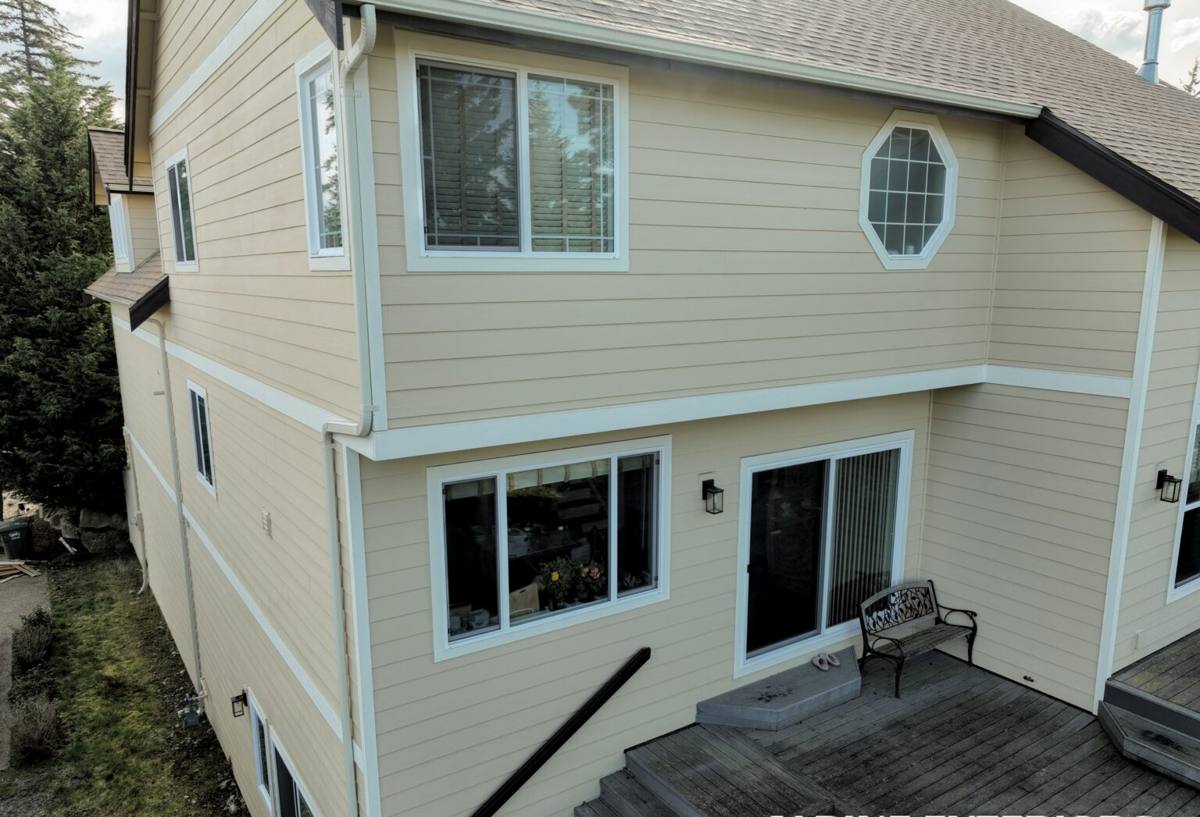
What Cherry Point's Climate Demands From a Deck
Salt Air and Metal Fatigue
Coastal salt air corrodes unprotected or poorly rated fasteners and hardware faster than most homeowners expect. Screws, joist hangers, post bases, and structural connectors need to be rated for coastal or treated-lumber exposure — stainless steel or heavy-duty coated hardware, not standard interior-grade fasteners. A deck that looks fine on the surface can have corroding connections underneath within a handful of seasons if the wrong hardware went in during the build.
Driving Rain and Water Management
Rain that comes in sideways off the water doesn't just fall on a deck — it drives up under rail bases, behind ledger boards, and into any gap where flashing was skipped. Ledger board flashing where the deck attaches to the house is one of the most common failure points on decks in this region, because water intrusion there rots the house's rim joist, not just the deck itself.
Moss, Algae, and Shade
Cherry Point's tree cover and the region's long wet season create ideal conditions for moss and algae growth on any decking surface that doesn't drain and dry quickly. Boards laid too tight, decks with poor slope, or decking installed low to the ground with restricted airflow underneath will grow moss faster than a well-ventilated, properly sloped deck — even with the same composite material.
What a Correct Composite Deck Installation Involves
A composite deck is only as good as the framing and detailing underneath it. Here's what we treat as non-negotiable on every Cherry Point installation:
- Structural framing sized and spaced for composite decking's specific span ratings — composite boards flex differently than wood and often require tighter joist spacing than a traditional wood deck
- Corrosion-resistant, coastal-rated fasteners and structural hardware throughout, not just at visible connection points
- Properly flashed ledger board connection to the house, with a drainage gap or flashing detail that keeps water from tracking behind the siding
- Correct board gapping for expansion, contraction, and drainage — composite decking moves with temperature swings and needs room to do it
- Adequate slope away from the house and sufficient clearance underneath for airflow, so the deck can actually dry out between rain events
- Hidden or capped fastener systems appropriate to the board profile, installed to the manufacturer's exact spacing to preserve the warranty
Skipping any one of these doesn't usually show up as a problem in year one. It shows up as soft framing, staining, or a warranty claim that gets denied because the installation didn't follow the manufacturer's specifications.
Composite vs. Other Decking Materials for This Climate
| Material | Performance in Salt Air & Rain | Moss/Algae Resistance | Long-Term Upkeep |
|---|---|---|---|
| Composite decking | Strong — engineered to resist moisture absorption and swelling | Good, especially capped boards with textured surfaces | Periodic cleaning; no staining or sealing required |
| Pressure-treated wood | Fair — treatment resists rot but surface still absorbs water | Poor without regular treatment | Annual cleaning, staining, and sealing to keep performance |
| Cedar | Fair — naturally rot-resistant but still a wood product | Moderate; needs regular maintenance in shaded, damp areas | Regular oiling or sealing; graying without upkeep |
| PVC decking | Strong — fully synthetic, no wood content to absorb moisture | Good | Low; can look more plastic in appearance than composite |
We install composite decking as our standard recommendation for Cherry Point properties because it strikes the right balance between coastal durability and a natural wood-look appearance homeowners actually want on a waterfront or near-waterfront property. We don't discourage wood outright — some homeowners want that specific look and are willing to keep up with annual maintenance — but we're upfront that a wood deck in this climate is a higher-upkeep commitment than most people expect once they've lived with the salt air for a season or two.
Our Process for Cherry Point Deck Projects
1. On-Site Assessment
We walk the property, evaluate sun and shade exposure, check drainage patterns around the proposed deck location, and look at how close the site is to prevailing wind and rain direction off the water. This tells us how much the moss and drainage detailing needs to be prioritized in the design.
2. Structural Planning
We size the framing, footings, and ledger connection to the specific composite product being used, since span ratings and fastening requirements vary by manufacturer and board profile. This is also where we plan flashing at the house connection and confirm hardware ratings for the site's exposure.
3. Installation
Framing goes in first with coastal-rated hardware, followed by flashing and waterproofing at every connection to the house. Decking is installed with correct gapping and fastening, and railing and stair systems are set to match.
4. Final Walkthrough
We walk the finished deck with the homeowner, cover basic care and cleaning expectations for the local climate, and note anything the manufacturer's warranty requires the homeowner to do to keep it valid.
Living With a Composite Deck in Whatcom County
Composite decking cuts maintenance dramatically compared to wood, but "low maintenance" isn't "no maintenance" on a property exposed to Cherry Point's salt air and moss season. A seasonal rinse with a hose or soft-bristle brush and mild soap keeps organic buildup from taking hold, especially in shaded corners or under furniture that traps moisture. Avoid pressure washing at close range or high pressure, which can damage the board's cap layer over time. Keeping gutters and downspouts clear near the deck also matters more here than in drier climates, since overflow during a heavy driving rain event can dump extra water directly onto or under the deck surface.
What Drives the Cost of a Composite Deck
| Cost Factor | Why It Matters |
|---|---|
| Deck size and shape | Square footage and the number of angles, stairs, or level changes affect labor and material |
| Board tier and brand | Composite lines range from entry-level capped boards to premium multi-tone, textured products |
| Framing condition | New construction vs. rebuilding on an existing footprint with old, undersized, or corroded framing |
| Railing and stair systems | Composite, aluminum, and cable rail options vary widely in material cost |
| Site access and grade | Waterfront and sloped Cherry Point lots can add complexity to footings and access for equipment |
Most composite deck projects fall into a broad mid-to-upper range compared to a basic pressure-treated wood deck, reflecting both material cost and the labor of proper coastal-grade installation. We provide a firm, itemized quote after the on-site assessment rather than a ballpark estimate over the phone, since framing condition and site access swing the price more than most homeowners expect.
Choosing a Contractor for a Cherry Point Deck
A deck built to a generic spec sheet, without accounting for salt exposure and driving rain off the water, tends to show problems within a few years — loose railings, corroding hardware, or moss that won't scrub off no matter how often it's cleaned. Before hiring anyone for a Cherry Point deck project, it's worth asking:
- Do they use coastal-rated fasteners and hardware as standard practice, or only if you ask?
- Can they explain how they'll flash the ledger board connection to the house?
- Do they follow the composite manufacturer's fastening and spacing requirements closely enough to keep the product warranty valid?
- Have they built decks in Whatcom County's coastal conditions before, and can they speak specifically to drainage and moss concerns?
- Do they provide a written, itemized estimate rather than a vague verbal number?
A crew that already works this stretch of coastline knows which details matter here and which don't, and that experience shows up in how long the deck actually lasts, not just how it looks the day it's finished.
Get a Free Estimate
If you're planning a composite deck for a Cherry Point property, we're happy to walk the site, talk through material options, and give you a straightforward, no-pressure estimate. Use the form below to get started.