 Blaine Siding
 Roof Repair Built for Cherry Point's Marine Climate
Cherry Point sits right on the water, which means the homes out here take a different kind of beating than a roof ten miles inland in Blaine or Ferndale. Salt-laden air, wind-driven rain off the Strait, and a moss season that can run most of the year all work against a roof at the same time. A repair that would hold up fine in a drier part of Whatcom County can fail here in a fraction of the time if it isn't done with that exposure in mind.
This page covers roof repair specifically for Cherry Point properties — what tends to go wrong, what a correct repair actually involves, and how we approach the work when we're called out here.
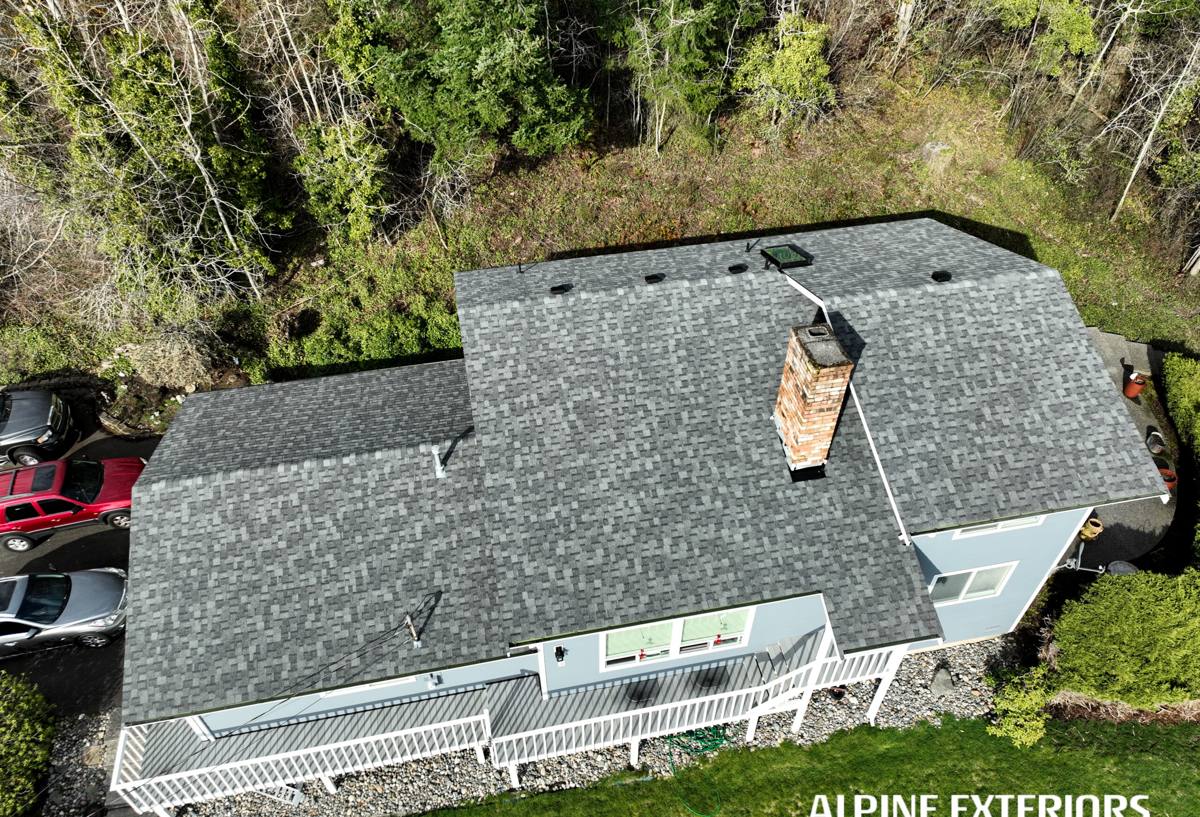
Common Roof Problems We See in Cherry Point Homes
Moss and Organic Growth
The combination of shade, moisture, and mild temperatures along this stretch of coastline gives moss everything it needs. Once it establishes on a roof, it holds water against the shingles or shakes long after the rain has stopped, and it works its way under tabs and around fasteners. Left unaddressed, moss doesn't just look bad — it shortens the life of the roofing material and creates the damp conditions that lead to rot in the decking underneath.
Salt Air and Metal Corrosion
Anything metal on a Cherry Point roof — flashing, fasteners, vent caps, gutter hardware — is exposed to salt air on a daily basis. Standard galvanized fasteners and lower-grade flashing corrode faster this close to the water than they would further inland. We see this most often around chimney flashing, valley metal, and nail heads that have started to rust and back out of the decking.
Wind-Driven Rain and Flashing Failures
Storms coming off the water tend to drive rain sideways, not straight down. That matters because a lot of roofs are built to shed water moving in one direction, and wind-driven rain finds every gap in flashing, every lifted shingle edge, and every place where a roof penetration wasn't sealed with that kind of exposure in mind. Most of the active leaks we investigate in this area trace back to flashing, not the field of the roof itself.
What a Correct Roof Repair Actually Involves
A roof repair that only addresses the visible symptom — a stain on the ceiling, a curled shingle — often misses the actual cause. Here's what should happen before any material goes back on the roof.
Inspection Beyond the Leak Point
Water travels. A stain in one room can originate from a failure point several feet away, higher up the roof plane or along a different valley. We trace the path before we start patching, because repairing the wrong spot means the same leak shows up again after the next storm.
Decking and Structural Check
If water has been getting in for a while, the plywood or plank decking underneath may be soft, delaminated, or rotted. Fastening new shingles or shakes over compromised decking doesn't hold, and it hides a problem that gets more expensive the longer it sits. Any legitimate repair includes checking the decking at and around the failure point.
Underlayment and Flashing
The underlayment and flashing are doing more of the actual waterproofing work than most homeowners realize — the visible roofing material mostly sheds bulk water and takes the weather. In a wind-driven-rain environment like Cherry Point, flashing details around chimneys, skylights, vents, and valleys deserve extra attention, since that's where most repairs originate in the first place.
Ventilation
Poor attic ventilation traps moisture, which accelerates decking rot from the underside and can worsen moss growth on the roof surface by keeping the deck cooler and damper than it should be. A repair that ignores ventilation sometimes fixes the leak but leaves the underlying moisture problem in place.
Our Roof Repair Process
- Inspection and diagnosis. We get on the roof (weather permitting) and in the attic if accessible, and trace the actual source of the problem rather than assuming it's where the stain shows up.
- Written scope and honest recommendation. We tell you what's actually needed — a targeted repair, a larger section replacement, or in some cases that a full re-roof makes more sense than continuing to patch an aging roof.
- Repair work. Damaged decking is replaced, flashing and underlayment are corrected at the failure point, and matching roofing material is installed correctly, not just laid over the problem.
- Moss and debris cleanup. If moss or built-up debris contributed to the failure, we address it as part of the job rather than leaving it to grow back into the same spot.
- Final check. We confirm the repair is watertight and walk you through what we found and what we did.
Repair or Replace? How to Tell the Difference
Not every roof problem in Cherry Point needs a full replacement, and not every leak can be permanently solved with a patch. Here's a general guide to how we think through it.
| Situation | Repair Usually Makes Sense | Replacement Worth Considering |
|---|---|---|
| Age of roofing material | Roof is well within its expected service life | Roof is at or past the age where the material is failing broadly |
| Extent of damage | Isolated to one section, valley, or penetration | Multiple areas failing independently across the roof |
| Decking condition | Solid decking around the repair area | Widespread soft spots or rot found during inspection |
| Moss and staining | Surface growth without underlying material breakdown | Moss has been established long enough to degrade the shingles or shakes themselves |
| Leak history | First occurrence, clear single cause | Recurring leaks in different spots over time |
Materials and Approach We Use
For repair work, we match the existing roofing material where that's the right call — there's no reason to mix materials on a roof if the current one is performing fine and simply needs a targeted fix. Where corrosion-prone fasteners or lower-grade flashing are part of the problem, we upgrade those components as part of the repair, since replacing like-for-like in a salt air environment just sets up the same failure again down the road.
We're straightforward with homeowners about trade-offs rather than steering everyone toward the newest product on the market. Some roofing materials handle moss and moisture better than others, some are more forgiving of imperfect ventilation, and some require more regular maintenance to perform well long-term near the water. We'll walk you through what fits your roof, your budget, and how much upkeep you actually want to take on.
What Roof Repair Costs in Cherry Point
Costs vary a lot based on what's actually wrong, so treat this as a general guide rather than a quote. Most straightforward repairs — a section of flashing, a small area of damaged decking and shingles — tend to land in the low hundreds to low thousands of dollars. Repairs involving multiple failure points, extensive decking replacement, or moss remediation across a large roof area run higher. We'll always give you a written number before any work starts.
| Cost Factor | Why It Matters |
|---|---|
| Extent of decking damage | Rotted decking has to be cut out and replaced before new roofing goes on, which adds labor and material |
| Roof pitch and access | Steeper roofs and difficult access take longer and require more safety equipment |
| Material match | Some roofing materials are easier to source and match than others, especially on older roofs |
| Flashing complexity | Roofs with multiple valleys, chimneys, or skylights have more flashing detail to get right |
| Moss and debris removal | Heavy moss buildup adds cleanup time before the repair itself can start |
Homeowner's Roof Repair Checklist
Between visits from a contractor, here's what's worth keeping an eye on if you're in Cherry Point:
- Check for moss buildup on north-facing or shaded roof sections, especially after the wetter months
- Look at attic insulation and any visible decking after heavy wind-driven rain for signs of moisture
- Watch for granule buildup in gutters, which can mean shingles are wearing faster than expected
- Note any rust streaks below metal flashing or vent caps — an early sign of corrosion
- Keep gutters and downspouts clear so water isn't backing up under the roof edge
- Have a roof looked at after any major windstorm, even if nothing looks obviously wrong from the ground
Why Hiring a Crew That Already Works in Cherry Point Matters
A roof repair crew that mostly works drier, inland jobs doesn't always think about salt air corrosion or wind-driven rain as a first consideration — it's not what they run into every day. Working regularly in Cherry Point and along this part of Whatcom County means we're used to diagnosing moss-related decking damage, specifying flashing and fasteners that hold up to salt exposure, and building repairs around wind patterns that come straight off the water rather than assuming a standard inland approach will hold.
We also know that on this part of the coast, a "small" leak rarely stays small for long once moisture gets under the roofing material — the same conditions that create the leak keep working on it year-round. Getting a repair done right the first time, with the local climate factored in, generally costs less over the life of the roof than repeated patch jobs.
If you're dealing with a leak, moss buildup, or storm damage on a Cherry Point roof, we're happy to take a look and give you a straight answer on what it actually needs. Reach out for a free, no-pressure estimate using the form below.