 Blaine Siding
 Siding Built for Cherry Point's Coastline, Not Just for a Catalog Photo
Cherry Point sits along the Strait of Georgia in Whatcom County, on open, low-lying shoreline with very little to break the wind coming off the water. Homes out here take a different kind of weathering than properties tucked further inland toward Blaine proper — more salt in the air, harder-driving rain, and a damp season that runs long even by Whatcom County standards. Siding that performs fine on a sheltered inland lot can start showing problems years earlier on a property like this, and that gap is exactly why we treat Cherry Point as a different install, not just a different drive.
We install James Hardie fiber cement siding exclusively. Not as one option among several, but as the only siding product we put on homes, in Cherry Point or anywhere else we work. This page is about what that means specifically for a Cherry Point property: what the local exposure actually does to an exterior wall, what a correct Hardie installation involves, and why hiring a crew that already understands this stretch of coastline matters more here than it does on a typical residential street.
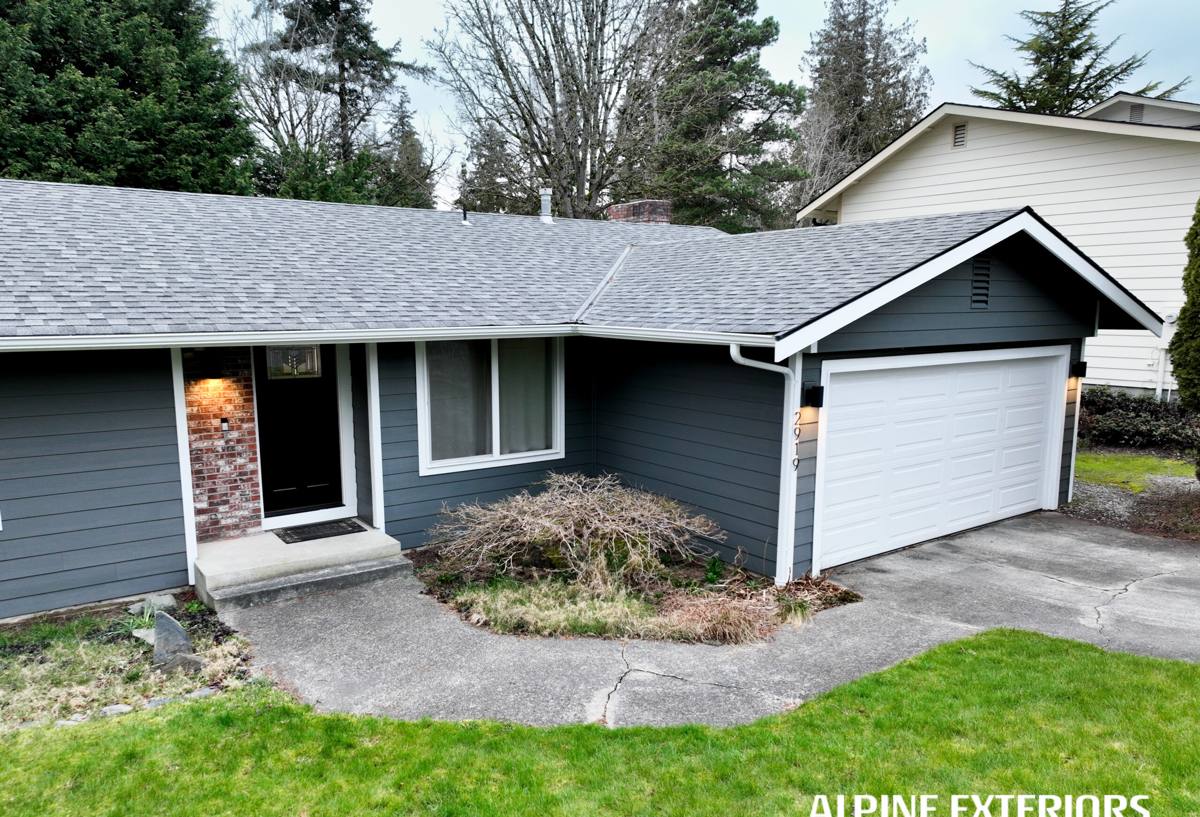
What Cherry Point's Exposure Does to a House
Salt Air From an Open Shoreline
Open water exposure means salt-laden air reaches Cherry Point properties more consistently than it does homes set back a few miles from the coast. Salt accelerates corrosion in fasteners, flashing, and trim hardware, and it breaks down lower-grade paints and finishes faster than a drier or more sheltered site would. On an exposed shoreline lot, every material and hardware choice needs to account for that corrosion risk from day one — retrofitting for it later is a lot more expensive than specifying it correctly the first time.
Wind-Driven, Sideways Rain
With little tree cover or terrain to slow it down, wind off the Strait pushes rain sideways into wall assemblies instead of letting it fall straight down. That's a heavier moisture load on joints, laps, and window and door flashing than the region's rainfall totals alone suggest. Installation details that hold up fine on a calmer, more sheltered lot can fail on an open Cherry Point property specifically because water is finding its way in horizontally, through seams that were never tested against that kind of pressure.
A Long Moss and Mildew Season
Mild year-round temperatures and near-constant humidity add up to a moss and mildew season that runs most of the calendar across this part of Whatcom County. Roofs and any porous or moisture-retentive siding material are usually the first places it shows up, especially on north-facing walls or areas with limited direct sun. Left alone, organic growth on a wall surface holds moisture against the material behind it, which is where a lot of long-term siding problems actually start.
Why James Hardie Is the Only Siding We Install Here
We used to offer a broader range of siding products. We stopped, and that change came directly from what we kept finding on service calls and tear-offs on exposed, coastal Whatcom County properties — not from a supplier relationship or a promotional push.
- Non-combustible core: Fiber cement doesn't feed a fire the way wood-based siding products can, which matters for both safety and, in many cases, insurance underwriting.
- Factory-applied ColorPlus finish: Color is baked on under controlled factory conditions rather than brushed on in the field, and it holds up longer against fading, chalking, and moisture intrusion than site-applied paint exposed to salt air.
- Climate-engineered HZ5 formulation: Hardie's HZ5 product line is built specifically for regions with heavy moisture exposure and freeze-thaw cycling, which is a reasonable description of coastal Whatcom County winters.
- Dimensional stability: Fiber cement doesn't swell, cup, or warp the way engineered wood products can after repeated wetting over a long wet season.
- A strong, transferable warranty: Hardie backs its product with one of the more substantial warranty structures in the industry, as long as the installation follows their published specification.
We don't install LP SmartSide, vinyl siding, Cemplank, Allura, primed spruce, or cedar. Each of those has a legitimate place in the broader market, and plenty of homeowners elsewhere are happy with them. But on an open, salt-exposed property like a Cherry Point home, we've made a professional call that we'd rather stand fully behind one system than offer a lower-cost alternative that quietly shifts long-term maintenance risk onto the homeowner.
Choosing the Right Hardie Product for a Cherry Point Home
James Hardie makes several distinct siding profiles, and the right one depends on the home's architecture, its specific exposure to wind and water, and the look the homeowner wants. We walk through these options on-site rather than defaulting to whatever's easiest to install.
| Hardie Product | Typical Use | Why It Fits Cherry Point |
|---|---|---|
| HardiePlank lap siding | Traditional horizontal lap look, most common residential choice | Proven water-shedding profile; wide color and texture range |
| HardiePanel vertical siding | Modern vertical look, often paired with battens | Clean lines for contemporary builds; needs correct joint detailing on exposed walls |
| HardieShingle siding | Shingle or shake-style appearance | Good option where a traditional coastal look is wanted without cedar's maintenance burden |
| HardieTrim boards | Corner boards, fascia, window and door trim | Matches the siding's finish and moisture resistance at the most vulnerable joints |
On a Cherry Point property, the more important decision usually isn't the profile — it's making sure whichever profile is chosen gets installed with the right clearances, fastening, and flashing for an open, wind-exposed site. A well-chosen profile installed loosely will still develop problems faster than expected.
What Correct Installation Actually Involves
Fiber cement only performs the way it's engineered to when it's installed to Hardie's published specifications. On an exposed shoreline lot, we don't treat these details as optional upgrades — they're the baseline.
- Manufacturer-specified clearances from grade, roofline, and deck surfaces to keep splash-back and standing moisture off the board edge
- Correct fastener type, spacing, and depth, using corrosion-resistant hardware appropriate for salt air exposure
- A properly detailed water-resistive barrier and, where the assembly calls for it, drainage or rain-screen detailing behind the panels
- Factory-mitered or correctly caulked joints at corners, seams, and trim transitions
- Careful flashing integration at every window, door, and roof-to-wall intersection, since these are the points most likely to leak under wind-driven rain
- Proper priming and sealing of any field-cut edges before they're closed up behind trim or J-channel
A Hardie product installed loosely will still develop moisture problems in a climate like this one — the material is only as good as the installation behind it, and that's true regardless of which profile or color is chosen.
Our Process for a Cherry Point Siding Project
We start with an on-site walk of the existing exterior, looking specifically at how the current siding has handled the property's wind and water exposure over time — where it's failing first tells us a lot about how the new system needs to be detailed. From there we put together a clear, written scope covering material, profile, color, and any trim or flashing work needed, before any contract is signed.
During removal of the old siding, we take the opportunity to inspect the sheathing and water-resistive barrier underneath, since problems hiding behind old siding are common on properties that have taken years of coastal exposure. Any damaged sheathing or flashing gets addressed before new Hardie siding goes up — covering existing problems with new material just delays the same repair at higher cost later. Installation follows Hardie's fastening and clearance specifications throughout, with particular attention to flashing at windows, doors, and roof transitions given the wind-driven rain this stretch of coastline sees. We finish with a walkthrough so the homeowner understands what was done and what basic upkeep, if any, the finish requires going forward.
Cost Factors for a Cherry Point Hardie Siding Project
| Factor | Why It Affects Cost |
|---|---|
| Home size and wall complexity | More square footage and more corners, dormers, or gables mean more material and labor |
| Existing siding removal | Tear-off and disposal of old material adds time compared to installing over new construction sheathing |
| Sheathing or moisture damage found underneath | Repairs discovered during tear-off are common on older coastal properties and are priced once the extent is visible |
| Product selection | Lap, panel, and shingle profiles carry different material and labor costs |
| Trim and flashing scope | Full trim replacement and enhanced flashing detailing for an exposed site add labor but reduce future risk |
| Color and finish | Standard ColorPlus colors versus custom or premium finishes affect material pricing |
We give a written, itemized estimate after the on-site assessment rather than a rough number over the phone, since so much of the real cost on a Cherry Point property depends on what's found once the old siding comes off.
Why a Crew That Already Works Cherry Point Matters
A contractor who regularly works this stretch of Whatcom County shoreline already knows how salt air, open wind, and sustained moisture behave differently here than they do a few miles inland. That familiarity shows up in decisions that don't appear on a typical estimate line item — how flashing gets lapped at a west-facing wall, which fastener grade gets specified, where extra drainage detailing gets added because the lot has almost no windbreak. Those details are what determine whether a siding job holds up for one wet season or for several decades on an exposed property like this.
A Simple Checklist Before Hiring for Siding Work on Cherry Point
- Ask what siding material they install and why, and whether they stand behind it with a written warranty
- Confirm they carry current Washington contractor licensing and active liability insurance
- Ask how they detail flashing at windows, doors, and roof-to-wall transitions for wind-driven rain
- Ask about fastener and hardware corrosion resistance given the salt air exposure
- Get a clear, written scope of work, including any sheathing repair contingencies, before signing anything
Signs a Cherry Point Home's Siding Needs Attention
- Visible moss or mildew growth that keeps returning after cleaning, especially on shaded or north-facing walls
- Cracked, warped, or delaminating boards, particularly on the sides that take the most wind and rain
- Soft spots when pressing on the siding, which can indicate moisture has reached the material behind it
- Peeling or chalking paint on wood-based or older siding products
- Rust staining around fasteners or trim, a common early sign of salt-air corrosion
If you're weighing options for a Cherry Point home's siding, we're happy to walk the exterior with you and give an honest read on what it actually needs before recommending anything. Reach out below for a free, no-pressure estimate.