 Blaine Siding
 Why California Creek Roofs Take a Different Kind of Beating
California Creek sits close enough to the water that homes here deal with a mix of weather that inland Whatcom County properties simply don't see as often. You get salt-laden air rolling in off the bay, long stretches of driving rain that comes in sideways during winter storms, and enough tree cover and shade in spots to keep moss growing on north-facing roof slopes for most of the year. None of those three things is dramatic on its own. Together, over years, they're what turns a small storm-related problem into a real repair bill.
Salt air accelerates corrosion on exposed metal — flashing, fasteners, gutter hardware, even the metal components inside some shingle systems. Wind-driven rain doesn't just fall on a roof, it gets pushed up and under laps, seams, and flashing edges that were never designed to shed water horizontally. And moss doesn't just look bad — its root structure lifts shingle edges and holds moisture against the roof deck long after the rain has stopped. When a storm comes through and does damage, it's rarely damage in isolation. It's usually storm stress landing on a roof that was already being worked on slowly by the local climate.
What Actually Counts as Storm Damage
Homeowners in California Creek sometimes assume storm damage means missing shingles or a visible hole. That's the obvious end of it, but a lot of storm-related damage is quieter and easier to miss from the ground.
Common storm damage patterns we see locally
- Wind-lifted or creased shingles where the seal strip has broken but the shingle hasn't blown off entirely
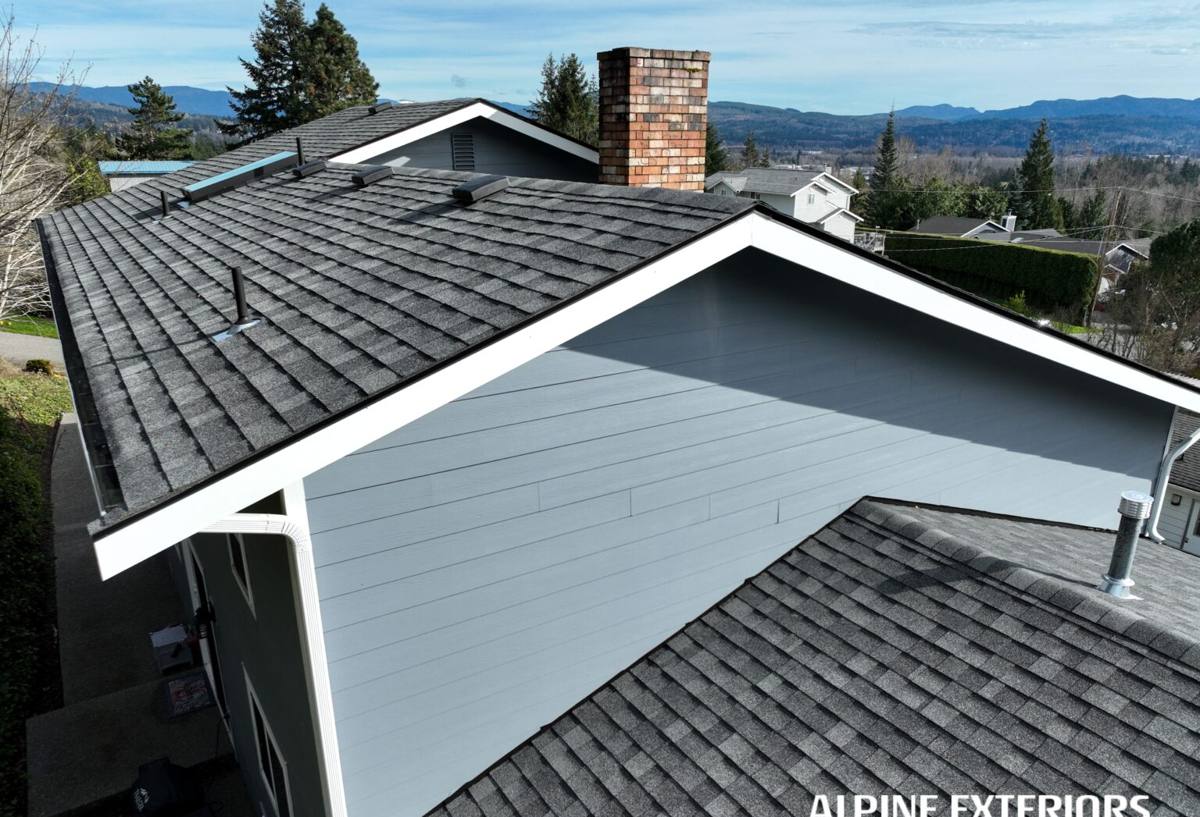
- Flashing pulled loose or bent around chimneys, skylights, and roof-to-wall transitions
- Gutter and downspout damage or overflow that backs water up under the roof edge
- Granule loss from wind-driven rain and debris, which shows up as bald patches on older shingles
- Small punctures or bruising from wind-thrown branches and debris
- Moisture intrusion at moss-covered areas where storm rain got trapped rather than shed
That last point matters a lot in this area. A storm can be the event that finally pushes water through a spot where moss has been holding moisture against the deck for a season or two. When that happens, the storm gets blamed, but the moss did most of the groundwork. Understanding the difference matters for how the repair is scoped and, in some cases, for insurance documentation.
What a Correct Storm Damage Repair Actually Involves
A repair that just covers the visible damage and leaves the underlying cause alone tends to fail again in the next storm season. A repair done right addresses both.
The core steps
- Full roof inspection, not just the damaged spot. Storm damage rarely stays in one place — wind pulls at an entire slope, not one shingle. We check the whole roof plane, not just where the leak showed up inside the house.
- Deck check where water intruded. If moisture reached the roof deck, we check for soft spots, rot, or delamination before anything new goes down. Covering a compromised deck with new shingles just hides the problem.
- Flashing evaluated on its own merits. Flashing failure is one of the most common causes of storm-related leaks in this area, and it's frequently the actual point of entry even when shingles get the blame.
- Matched materials where possible. We use materials that match the existing roof's type, weight, and color as closely as available product lines allow, so the repair blends rather than patches a visible new section into an older roof.
- Moss and debris cleared from the work area. Repairing over moss just traps it under new material. It gets cleared, and if it's widespread, we'll flag it as a separate maintenance item.
Our Process, Start to Finish
We keep the process straightforward because most homeowners calling about storm damage are already dealing with enough stress from the storm itself.
How it typically goes
- Initial call and scheduling. We ask what you're seeing — active leaking, visible damage from the ground, missing pieces after a windstorm — and get a look scheduled, prioritizing active leaks.
- On-site inspection and honest assessment. We walk the roof (or use appropriate access for steep or fragile roofs), document what we find, and explain what's storm-related versus pre-existing wear.
- Written estimate before any work starts. You'll know the scope and the cost range before we touch anything.
- Temporary protection if needed. If there's active water intrusion and full repair can't happen immediately, we can install temporary protection to stop further damage while materials or scheduling come together.
- Repair work. Scoped to what the roof actually needs — not upsold into a full replacement when a targeted repair will hold up.
- Cleanup and walkthrough. Debris removed, work area cleared, and a final look together so you know exactly what was done.
Repair Scope: Matching the Fix to the Damage
Not every storm-damaged roof needs the same level of work. The right scope depends on how much damage there is, the age and condition of the roof underneath, and whether the damage is isolated or spread across multiple areas. Costs below are broad ranges — every roof is different, and your estimate will reflect what we actually find, not a generic number.
| Repair Scope | When It Applies | Typical Cost Range |
|---|---|---|
| Spot repair (patch) | Isolated damage — a handful of shingles, one flashing point, a small puncture | A few hundred dollars up to around $1,500 |
| Partial section replacement | Damage concentrated on one slope or roof section, deck still sound | Roughly $1,500–$5,000, depending on area and materials |
| Full roof replacement | Widespread damage, deck compromised, or roof was already near end of life | Typically several thousand and up, based on size and material |
Part of our job is being honest about which category your roof actually falls into. A roof with isolated storm damage doesn't need a full tear-off, and we'll tell you that even if a bigger job would be more profitable for us. On the flip side, if the deck is compromised or the existing roofing is already past its useful life, patching over it isn't a real fix — it's a delay.
The Moss and Salt Air Problem: Prevention Between Storms
Storm repair is reactive by nature, but California Creek's climate means the work between storms matters just as much. Moss growth tends to be worst on shaded, north-facing slopes and anywhere debris collects and holds moisture. Left alone through a wet Whatcom County winter, it works its way under shingle edges and keeps that area damp even on dry days, which is exactly the condition that turns minor storm stress into a leak.
Salt air adds a second, slower problem: it accelerates corrosion on exposed fasteners, flashing, and gutter systems faster than you'd see further inland. That doesn't mean every metal component needs replacing constantly — it means the inspection interval and the materials chosen should account for the environment, not just follow a generic roofing checklist.
What helps between storms
- Keeping gutters and downspouts clear so water has somewhere to go during heavy rain
- Removing moss buildup before it establishes root structure under shingle edges
- Trimming back branches that overhang the roof, which reduces both debris and shade-driven moss growth
- A periodic check of flashing and exposed fasteners in salt-exposed areas
Insurance and Documentation
Many storm damage repairs in this area involve a homeowner's insurance claim. We can document damage with photos and a written scope of work that you can submit to your carrier, and we're glad to talk through what we're seeing so you understand what's storm-related versus pre-existing wear before you file. We don't handle the claim itself — that's between you and your insurer — but a clear, honest assessment up front tends to make that process smoother and avoids disputes over what's actually storm damage.
Why It Matters That We Already Work in California Creek
A roofing or siding crew that already works in this specific area knows what to expect before they get on the roof. That means recognizing moss patterns typical to shaded lots near the creek, knowing which flashing details tend to fail first in wind-driven coastal rain, and having a realistic sense of how quickly a small leak can turn into deck damage in a climate this wet. It also means faster response — when a windstorm rolls through Whatcom County and multiple homes need eyes on their roof, being local and already familiar with the area's housing stock means less time spent figuring out the basics and more time actually fixing the problem.
We'd rather tell you a repair is small and skip the upsell than talk you into work you don't need. That approach is what keeps a local trade business working in the same neighborhoods year after year.
Signs It's Worth Getting an Inspection After a Storm
- Any new water stains on ceilings or walls, even faint ones
- Shingles visible in the yard or gutters after high wind
- Visible curling, cracking, or lifted edges on roof slopes you can see from the ground
- Granules collecting in gutters or at downspout outlets
- Sagging or a soft feel anywhere on the roofline
- Moss that's noticeably thicker or has spread since last season
- Daylight visible through the attic roof deck, if you can safely check
If you're seeing any of these after a storm — or you're just not sure and would rather have someone look than wait and find out the hard way — we're happy to come take a look. There's no pressure and no obligation; you'll get a straight answer about what we find and what it would take to fix it. Use the form below to request a free estimate.