 Blaine Siding
 Siding Replacement Built for California Creek's Climate
California Creek sits close enough to the water and the open fields around Blaine that homes here take a different kind of weather beating than houses ten miles inland. Salt-laden air off the Strait and Semiahmoo Bay, wind-driven rain that comes in sideways more often than straight down, and a long, damp moss season that starts early and doesn't let go until summer — all of it works on exterior siding year-round, not just during a few storm weeks. If you're planning a siding replacement in this area, the product and the installation both need to answer to that environment specifically, not to a generic Pacific Northwest spec.
This page covers what a correct siding replacement looks like for a California Creek home: what the climate actually does to siding here, what we install and why, how our process works, and what to expect when you bring in a crew that already knows this neighborhood.
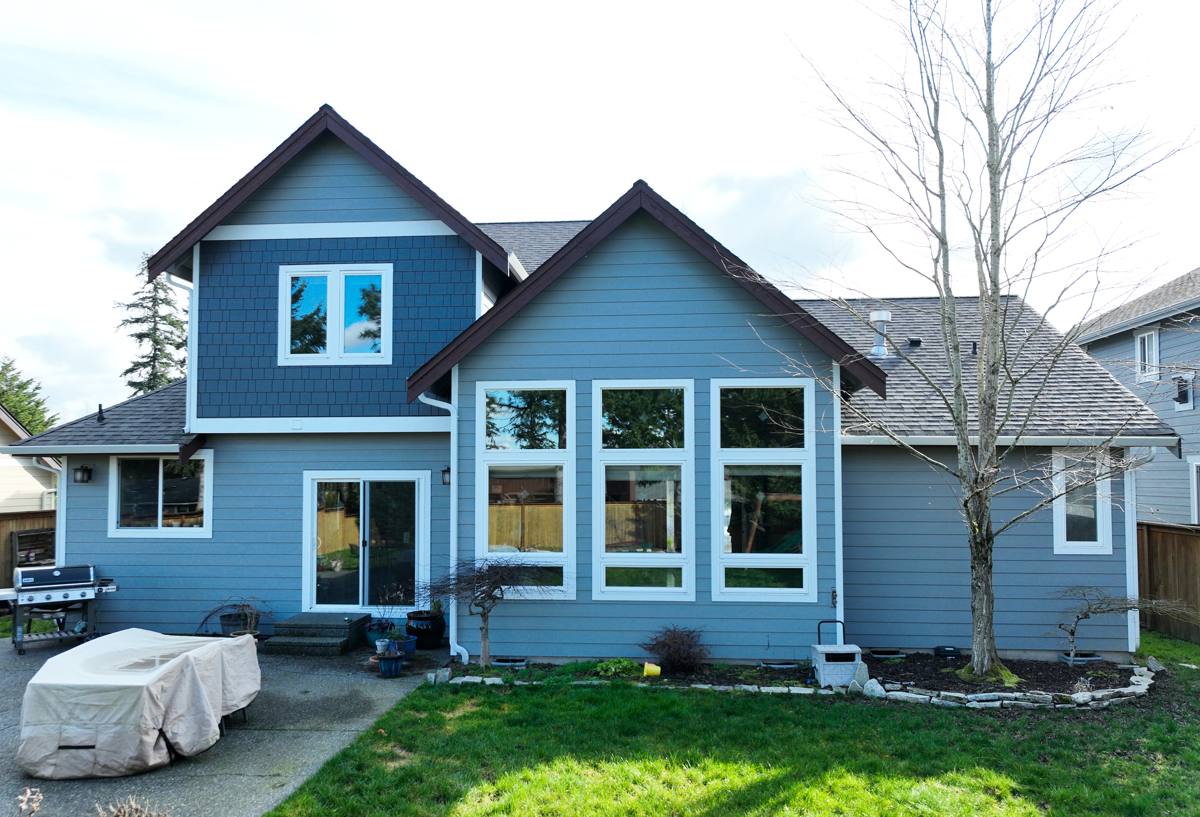
What Salt Air, Rain, and Moss Do to Siding Near California Creek
Salt Air
Homes closer to the water pick up airborne salt that settles on siding, trim, and fasteners. Over years, salt exposure accelerates corrosion on unprotected metal fasteners and hardware, and it can degrade coatings that weren't engineered to handle it. Siding and fastener choices that work fine forty miles inland don't always hold up the same way this close to the coast.
Driving Rain
Wind off the water pushes rain horizontally into wall assemblies, not just down onto the roof. That means water is getting tested at every seam, joint, and penetration on the siding — not just the top edges. A siding system with weak joints or poor water-shedding detailing will show it here faster than in a more sheltered inland location.
Moss and Sustained Moisture
Whatcom County's moss season is long, and California Creek's tree cover and damp ground conditions extend it further. Moss and algae hold moisture against the siding surface for extended periods, which is hard on any material that absorbs water or swells when wet. Siding that stays damp longer is siding that's more likely to develop problems at the surface and at the seams.
None of this is exotic — it's the same basic set of coastal Pacific Northwest stresses that show up all along the Whatcom County shoreline. But it does mean the margin for error on material choice and installation detail is smaller here than it is in a lot of other places.
Why We Install James Hardie Fiber Cement — and Nothing Else
We install James Hardie fiber cement siding exclusively. We don't install vinyl, LP SmartSide, Cemplank, Allura, primed spruce, or cedar. That's not a marketing position — it's a standard we've held to because of what we've seen these products do (or not do) in real coastal Washington conditions over time.
- Non-combustible: Fiber cement doesn't burn, unlike wood-based and many engineered wood products.
- Moisture-stable: Fiber cement doesn't swell, rot, or delaminate the way wood-based composites can when they take on water repeatedly.
- Factory-applied ColorPlus finish: The finish is baked on at the factory under controlled conditions, which holds up better against salt air and UV than field-applied paint and reduces how often repainting is needed.
- Climate-engineered HZ product lines: Hardie's HZ5 formulation is built specifically for wetter, harsher climates like ours, rather than a one-size-fits-all national spec.
- Strong transferable warranty: A meaningful, transferable warranty matters to resale — it tells the next buyer the siding was installed and maintained correctly.
We're not going to tell you vinyl or engineered wood siding is junk — plenty of it is installed and performs adequately in the right conditions. But in a location that gets consistent salt air, driving rain, and long moss seasons, we'd rather put our name on a product we've seen hold up under exactly those conditions than sell something that needs ideal circumstances to perform well.
What a Correct Siding Replacement Involves
Replacing siding isn't just pulling off old panels and nailing up new ones. Done right, it's a sequence of steps where each one protects the wall assembly for the next 30-plus years, not just the next few.
- Tear-off and wall inspection: Remove the old siding and inspect the sheathing underneath for rot, soft spots, or prior water damage — common on older homes near California Creek where trapped moisture behind old siding has had years to work.
- Sheathing repair: Replace any compromised sheathing before anything else goes up. Skipping this step is the single most common cause of siding failures we're called out to fix later.
- Weather-resistive barrier: Install a proper house wrap or building paper, lapped correctly, to manage bulk water before it ever reaches the siding.
- Flashing at every penetration: Windows, doors, vents, hose bibs, light fixtures — every penetration through the wall needs proper flashing. This is where driving rain finds its way in if it's skipped or done poorly.
- Rainscreen or proper drainage gap: A drainage gap behind the siding lets any moisture that does get through drain and dry out instead of sitting against the wall — especially important given how long things stay damp here in moss season.
- Correct fastening: Corrosion-resistant fasteners, set to Hardie's specifications for panel type and exposure — critical this close to salt air.
- Panel installation to spec: Proper gaps, caulking only where specified (not everywhere), and correct nailing patterns per Hardie's installation manual.
- Trim, caulking, and final detailing: The finish details are where water either sheds cleanly or finds a way in over time.
Any one of these steps done wrong can undercut everything else, no matter how good the siding material is. This is why installation quality matters as much as product choice.
Our Process for California Creek Homeowners
1. Free On-Site Estimate
We walk your home, look at the current siding and wall condition, and talk through what we're seeing — including any signs of moisture or rot that would need to be addressed before new siding goes up.
2. Written Scope and Product Selection
You get a clear written scope covering tear-off, repairs, Hardie product line and profile, color, and timeline — no vague allowances or surprise change orders for things we could have identified up front.
3. Scheduling Around Local Weather
We plan tear-off and installation around forecasted dry windows where possible. An open wall during a driving rain event is a real risk, and we manage the schedule to minimize how long any wall section sits exposed.
4. Installation to Manufacturer Spec
Every step above — flashing, drainage gap, fastening, panel installation — done to Hardie's published installation requirements, which is also what keeps the manufacturer warranty valid.
5. Final Walkthrough
We walk the finished job with you before calling it done, so you know exactly what was done and why.
Why a Crew That Already Works California Creek Matters
Siding installation isn't uniform across Whatcom County. A crew that's worked this specific area already knows what tends to show up when they pull siding off a California Creek home — where moisture tends to collect, how the local wind and rain patterns typically hit a wall, and what fastening and flashing choices hold up given the salt exposure this close to the water. That's the kind of judgment that only comes from having done the work in this specific area repeatedly, not from following a generic checklist written for a drier or more sheltered location.
It also matters for accountability. A local crew is easy to reach if a question comes up two years down the road, and has a reputation in the immediate area worth protecting.
Cost Factors for a California Creek Siding Replacement
Every home is different, but the factors that move the price on a siding replacement here are fairly consistent. We give exact numbers only after an on-site look, but this is what typically drives the range:
| Factor | Why It Matters |
|---|---|
| Extent of sheathing damage found at tear-off | Rot or water damage behind old siding has to be repaired before new siding goes on |
| Home size and wall complexity | More corners, penetrations, and roof lines mean more flashing and detail work |
| Hardie product line and profile chosen | Lap siding, shingle-style panels, and board-and-batten carry different material and labor costs |
| Trim and accessory scope | Fascia, soffit, and trim replacement alongside siding add to the total but keep the whole exterior consistent |
| Access and site conditions | Tree cover, tight lot lines, or difficult staging areas can affect labor time |
Signs Your California Creek Home May Need Siding Replacement Soon
- Visible moss or algae buildup that returns quickly after cleaning
- Soft spots, bubbling, or warping in the siding surface
- Paint that's failing or peeling faster than a normal repaint cycle would suggest
- Gaps, cracking, or separation at seams and corners
- Musty smell or visible staining on interior walls near exterior corners
- Siding that's original to a home over 20-25 years old, especially wood-based products
If you're seeing more than one of these, it's worth having someone look at the wall assembly, not just the siding surface — the damage is often deeper than what's visible from outside.
Get a Free, No-Pressure Estimate
If you're weighing a siding replacement for a home near California Creek, we're glad to come take a look and give you an honest read on what your home actually needs — no pressure, no pushy sales pitch. Fill out the form below to schedule a free estimate.