 Blaine Siding
 Roof Repair in California Creek: Salt Air, Rain, and a Long Moss Season
California Creek sits just outside Blaine, in the part of Whatcom County where wooded lots run close to the water and homes take on the same coastal weather that shapes the whole northern edge of the county. It isn't downtown Blaine, but it isn't sheltered inland territory either — salt air off Semiahmoo Bay and Drayton Harbor reaches this area, and the tree cover that gives many California Creek properties their privacy also means more shade, more standing moisture, and a longer moss season on the roof than a lot of homeowners expect.
We're based up the road in Lynden, and California Creek is regular territory for our crew, not a stretch assignment we take on occasionally. On roof repair specifically, that matters. In this area, a roof problem is rarely as simple as "replace the missing shingle." It's usually a flashing detail, a ventilation issue, or a moss problem that's been building for a season or two, and diagnosing it correctly the first time is what separates a repair that lasts from one that needs redoing within a year.
What This Climate Does to a California Creek Roof
Salt Air Off the Water
Even set back from the shoreline, homes in this area get enough salt-laden air moving through to accelerate corrosion on exposed fasteners, flashing, and any metal roof components. Corrosion on a roof rarely announces itself early — a fastener or flashing seam can lose integrity well before it looks obviously bad from the ground, and that's often the real point of failure behind a leak that seems to appear out of nowhere.
Wind-Driven Rain
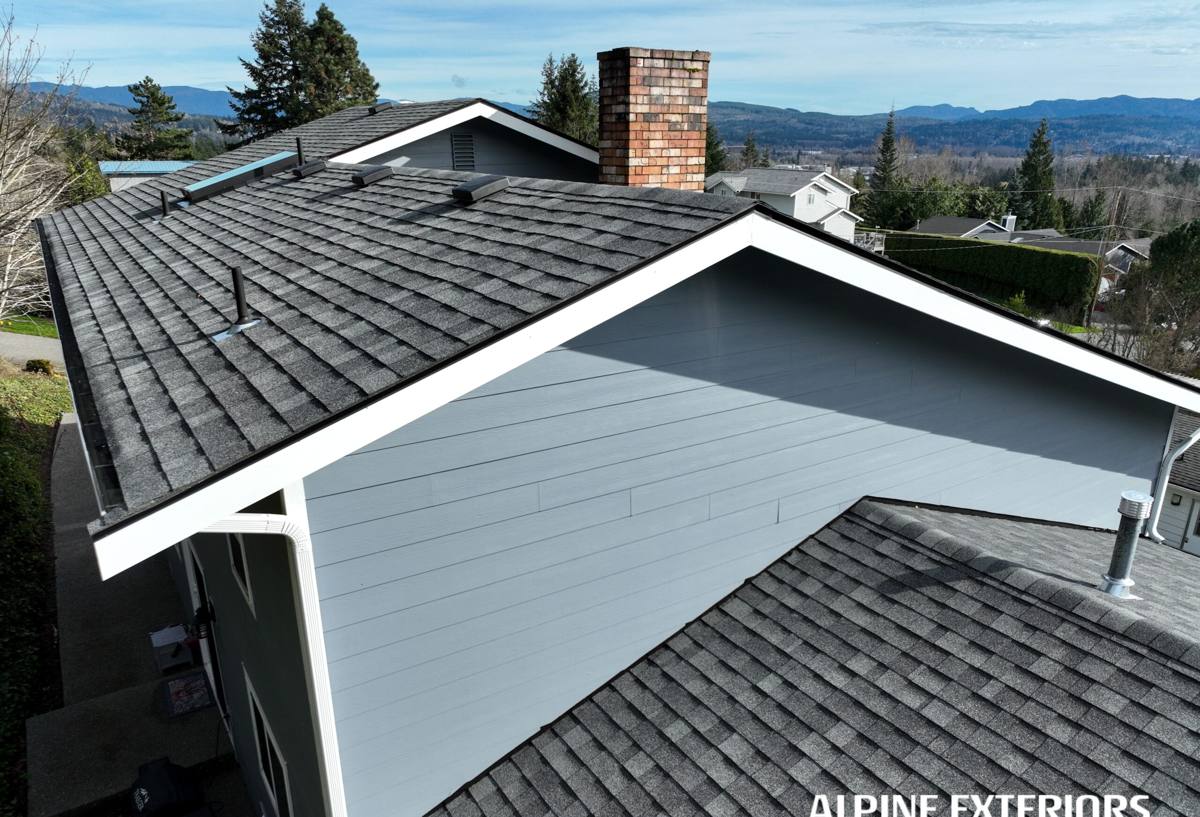
Storms moving in off the water don't fall straight down by the time they reach California Creek. Wind pushes rain sideways into valleys, around chimneys and vent pipes, and up under shingle edges and flashing laps that ordinary rainfall would never reach. Roofs with weak flashing details or aging underlayment tend to leak first in exactly these spots, and it's usually where we start looking on a repair call.
A Moss Season That Runs Most of the Year
The tree cover that's part of what makes California Creek appealing also keeps a lot of roof surfaces shaded and damp longer than they'd be on a more open lot. Mild temperatures and near-constant moisture give moss a long growing season here, and moss does real damage over time — it holds water against the roofing material, works into shingle edges, and can lift or loosen roofing if it's left to spread unchecked across a shaded slope.
The Roof Repair Issues We See Most Often in This Area
Every repair call is different, but a handful of causes show up again and again on California Creek roofs, almost always tied back to shade, moisture, or both.
Flashing Failures
Flashing around chimneys, vent pipes, skylights, and roof-to-wall transitions is one of the most common failure points we find. It's a small amount of material doing a disproportionate share of the work keeping water out, and once a seam opens or a lap starts to lift, water finds its way in long before it shows up as a visible stain inside.
Moss-Related Shingle Damage
Moss left to spread on a shaded slope doesn't just sit on the surface — it lifts shingle edges, holds moisture against the roofing material, and accelerates granule loss. By the time it's visibly thick, there's often underlying shingle damage that a simple moss treatment won't fix on its own.
Wind and Storm Damage
Curled, cracked, or missing shingles after a windstorm are a common and usually straightforward repair, provided they're addressed before the exposed area lets in a season or two of additional water.
Aging Underlayment and Ventilation Problems
On older roofs, the underlayment beneath the shingles can degrade to the point where it's no longer doing its job even if the shingles above still look serviceable. Poor attic or roof deck ventilation compounds this by trapping moisture that should be escaping, which shortens the life of everything above it.
Repair or Replace? What Actually Drives That Decision
Not every roof problem in California Creek calls for a full replacement, and we don't default to recommending one. The honest answer depends on the roof's age, how much surface area is affected, and what an inspection finds underneath the visible symptom.
| What We Find | Usually a Repair | Often Points to Replacement |
|---|---|---|
| Isolated flashing failure at one chimney or vent | Yes | Only if surrounding decking is also damaged |
| Moss on one or two shaded slopes, shingles intact underneath | Yes — clean and treat | If shingles are already lifted or granules heavily worn |
| A handful of wind-damaged shingles after a storm | Yes | Rarely, unless the roof is already near end of life |
| Soft or spongy roof deck when walked | Sometimes, if localized | Usually — deck damage often extends further than it appears |
| Multiple prior repairs across different roof planes | Case by case | Often — a pattern of repeat repairs usually points to a roof past its useful life |
| Roof already at or past its rated lifespan | Rarely worth it long-term | Yes |
We'll walk you through what we actually find and explain the reasoning, including when a repair is the more sensible option even though a replacement would be the bigger job for us.
What a Correct Roof Repair Actually Involves
Diagnosing the Real Cause, Not Just the Symptom
A stain on a ceiling or a patch of missing shingles is a symptom. The cause is usually somewhere else on the roof — a flashing lap upstream, a clogged valley, a gap in ventilation — and water can travel a surprising distance from where it enters to where it finally shows up inside. A repair that only addresses the visible symptom without tracing it back to the actual entry point tends to resurface in the same spot, often within a season.
Matching Materials and Getting Flashing Right
Repairs need to tie into the existing roofing correctly, with a matching or compatible shingle profile and proper laps at every seam. Flashing gets particular attention on our repairs, since it's the detail most likely to have caused the original problem and the one most likely to fail again if it's rushed the second time around.
Treating Structural Repairs as Structural Work
When a repair involves the roof deck itself — soft spots, rot, or damage found once shingles are pulled back — that work gets done to the same standard as new construction, not a lesser scope just because it's technically a repair. Cutting corners on deck repair is exactly what turns a manageable job into a bigger one down the line.
How Our Roof Repair Process Works
Inspection and Diagnosis
We start by looking at the whole roof, not just the spot you called about. A leak or damaged area is often connected to a cause somewhere else on the roof, and a repair that only addresses the visible symptom is a repair we'll likely be back out for later.
A Clear, Honest Estimate
Once we know what's actually going on, we explain what we found, what it'll take to fix it correctly, and what it's likely to cost — in plain terms, before any work starts. If a repair isn't the right call and replacement makes more sense, we'll say so directly rather than defaulting to whichever job is bigger.
The Repair Itself
We do the work to the same standard we'd use on new construction — correct flashing, proper laps, matched materials where possible, and attention to the ventilation and drainage details that determine whether a repair actually lasts.
Signs a California Creek Roof Needs Repair
- Moss buildup on shaded slopes that keeps coming back after cleaning
- Granules collecting in gutters or at the base of downspouts
- Curled, cracked, lifted, or missing shingles, especially after a windstorm
- Water staining on interior ceilings or walls, particularly near chimneys or exterior walls
- Flashing that looks lifted, rusted, or missing sealant around chimneys, vents, or skylights
- Daylight visible through the roof deck when viewed from inside the attic
- A soft or spongy feel underfoot in any section of the roof
- Sagging along the roofline or in a valley
Any one of these is worth a professional look before it goes into another wet season. Caught early, most of these are a straightforward repair. Left alone, several of them compound into a much bigger job.
Why Hiring a Crew That Already Works California Creek Matters
A roofing crew that mostly works drier, more sheltered inland areas can still do competent repair work here, but California Creek's mix of shaded, tree-covered lots and coastal-influenced weather has patterns that show up more often on roofs in this specific area than elsewhere in Whatcom County. Working here regularly means we already know which roof orientations tend to hold moss longest because of tree shade, which flashing details are worth the extra time to get right the first time, and how to tell a cosmetic moss problem from one that's already done shingle damage underneath. That familiarity shows up in a more accurate first estimate and fewer surprises once a repair is underway.
It also means we're not treating your roof as a one-off job. Roofing is one part of what we do — we handle siding, windows, and decks as well, and we install James Hardie fiber cement siding as our standard for the same reason we take flashing and ventilation seriously on a roof repair: a shortcut that doesn't show up on day one almost always shows up eventually in a climate like this.
Get a Free, No-Pressure Estimate
If your California Creek roof has a leak, storm damage, or moss that keeps coming back no matter how many times it's cleaned, we're glad to take a look and give you a straightforward read on what it actually needs — repair or otherwise. Reach out using the form below to schedule a free estimate, no pressure and no upsell script.