 Blaine Siding
 California Creek Sits Right Where Marine Weather Gets Serious
Homes along California Creek sit close enough to the water that siding here deals with a different set of stresses than siding twenty miles inland. Salt-laden air moves in off the Salish Sea, driving rain comes in sideways during winter storms, and the shaded, damp stretches of the neighborhood hang onto moisture long after a storm has passed. That combination is hard on exterior materials in ways that aren't always obvious until years in: fasteners corrode faster, paint film breaks down sooner, and anything with exposed end grain or a weak moisture barrier starts to show it.
Whatcom County's wet season runs long, and California Creek's mix of tree cover and proximity to the water means siding here spends more of the year damp than siding does in drier parts of the region. That's the backdrop for every siding decision on this page — not a generic "coastal Pacific Northwest" pitch, but the specific conditions a James Hardie installation has to be built to handle if it's going on a home in this area.
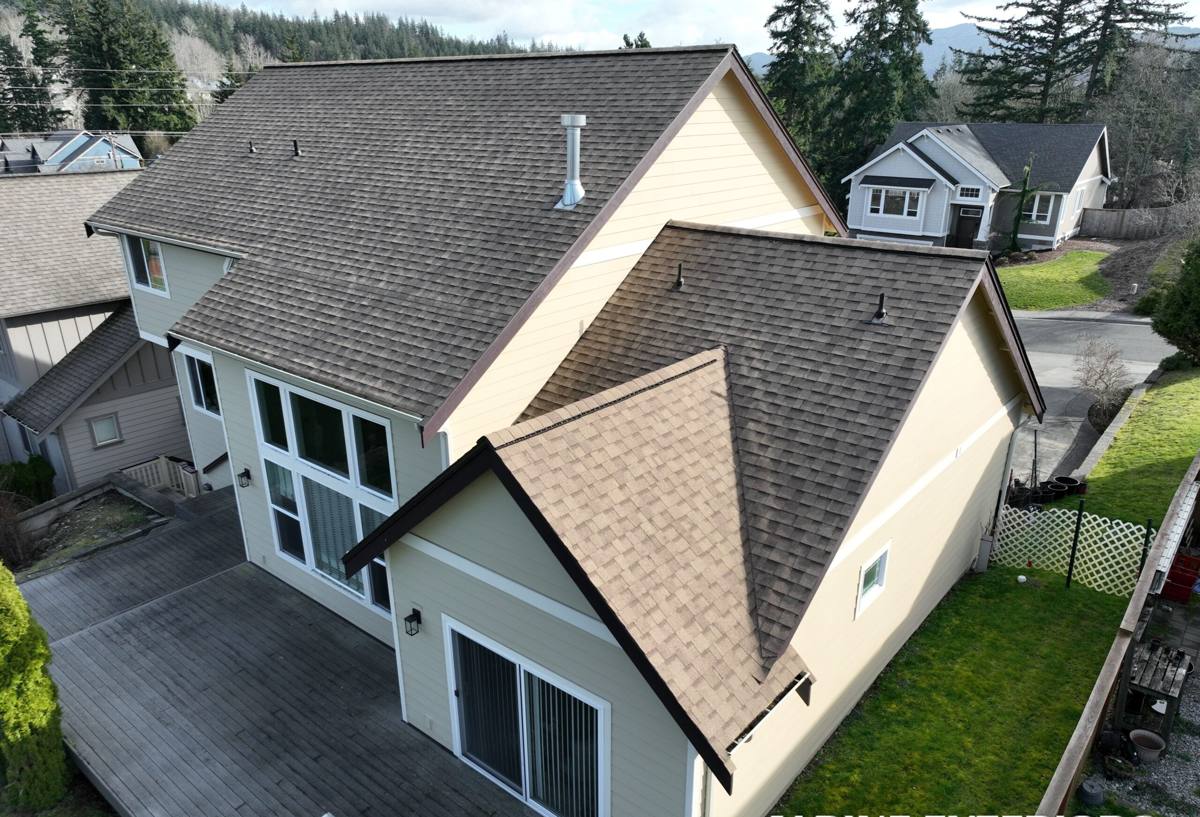
Why We Only Install James Hardie in This Kind of Environment
We install James Hardie fiber cement exclusively — not vinyl, not LP SmartSide, not primed wood, not cedar. That's a deliberate standard, not a sales preference, and it matters more in a place like California Creek than it does somewhere dry and sheltered.
Fiber cement doesn't absorb water the way wood-based products do, so it doesn't swell, cup, or rot from prolonged dampness the way engineered wood siding can when a seam or caulk joint eventually fails. It's also non-combustible, which matters given the wildfire smoke and dry-season risk that shows up even in wetter parts of Washington. James Hardie makes a version of its product line — the HZ5 formulation — specifically engineered for the wetter, freeze-thaw-prone climate zones of the Pacific Northwest, which is what we use on jobs in and around Blaine. And the factory-applied ColorPlus finish is baked on under controlled conditions, so it resists the fading and moss staining that field-applied paint struggles with in a shaded, damp environment like this one.
None of that makes fiber cement maintenance-free. It makes it a material that's actually engineered for the problem this neighborhood presents, instead of one that's merely tolerable in it.
What a Correct Installation Actually Involves Here
The material is only half the equation. Most siding failures we see in this area — on any brand of siding — trace back to installation shortcuts, not the product itself. In a high-moisture zone like California Creek, a few details matter more than they would somewhere drier:
- A continuous, properly lapped weather-resistive barrier behind the siding, with every penetration flashed and sealed before the first panel goes up
- Correct fastener placement and spacing, using fasteners rated to resist corrosion in a salt-air environment
- Proper gapping at every butt joint, window, and door — James Hardie specifies clearances that let the material move without trapping water
- Starter strips and kickout flashing at rooflines set correctly so water is directed away from the wall assembly, not into it
- Caulking used only where it belongs, not as a substitute for proper flashing and drainage
Skip any one of those steps and you can end up with moisture trapped behind a product that's otherwise doing its job. That's why installation sequencing matters as much as the siding itself, especially on a lot with tree cover or a north-facing wall that stays damp for days after a storm.
Signs Existing Siding Is Losing the Fight
If you're in California Creek and wondering whether it's time to replace what's on your house now, a few patterns show up consistently in this climate:
| What You're Seeing | What It Usually Means |
|---|---|
| Moss or dark streaking that returns within months of cleaning | Surface is holding moisture longer than it should — common on shaded walls and older paint films |
| Paint peeling, chalking, or fading unevenly | Field-applied finish breaking down under UV and salt exposure faster than a factory finish would |
| Cupping, warping, or soft spots when pressed | Wood-based or engineered wood siding absorbing moisture at seams or damaged spots |
| Visible gaps, cracked caulk, or separated trim joints | Original installation aging out or never sealed to spec — an entry point for water |
| Rust streaks below nail heads or fasteners | Fasteners not rated for salt-air exposure corroding through the finish |
Any one of these on its own isn't necessarily an emergency. Several at once, or any sign of softness in the wall sheathing behind the siding, usually means it's time for a real assessment rather than another round of touch-up.
Choosing the Right Hardie Product for a California Creek Home
James Hardie's lineup gives us a few legitimate options depending on the home's style and exposure, and part of our job is matching the product to the specific wall it's going on — not just the house as a whole.
HardiePlank Lap Siding
The most common choice for this area. Available in a range of exposures and textures, it sheds water efficiently when installed with the right overlap and gives a clean, traditional look that fits most homes in and around Blaine.
HardieShingle
A good fit for accent areas, gables, or homes going for a Craftsman or coastal cottage look. It costs more to install due to labor time, but it holds up well in the same conditions as lap siding.
HardiePanel
Vertical panel siding, often used on modern-style homes or as an accent alongside lap siding. Joint treatment matters more here since there are more seams per square foot of wall.
Color and Finish
ColorPlus finishes are worth the upfront cost difference over field-painted siding in this climate specifically — the factory cure resists the moss staining and fade that a damp, shaded lot accelerates. For homes with more direct salt exposure, we'll talk through which colors in the palette hold up visibly better over time versus which show streaking sooner.
How the Job Runs, Start to Finish
We keep the process straightforward and try not to leave a home exposed to weather any longer than necessary — a real consideration given how often this area sees rain.
- Walkthrough and assessment — we look at the existing siding, sheathing condition, trim, and any problem areas specific to your lot's sun and moisture exposure
- Written estimate — product line, color, and scope laid out clearly, no vague allowances
- Tear-off and sheathing check — old siding comes off and we inspect what's underneath before covering it back up; any rot or damage gets addressed, not sealed in
- Weather barrier and flashing installation — the part that determines whether the job holds up in ten years, done to spec before any Hardie product goes on
- Siding installation — panels, trim, and joints installed to James Hardie's fastening and gapping specifications
- Final detailing and walkthrough — caulking, touch-up, and a walk of the finished job with you
What Drives the Cost
Every home is different, but the same handful of factors move the price up or down on most California Creek jobs:
| Factor | How It Affects Cost |
|---|---|
| Tear-off scope | Removing multiple old layers or dealing with rot found underneath adds labor |
| Product line chosen | Lap siding is generally the most economical; shingle and mixed-panel designs add labor time |
| Home shape and trim detail | More corners, gables, and window trim mean more cuts and flashing work |
| Access and site conditions | Tree cover, tight lot lines, or difficult staging can slow the job down |
| Color and finish | ColorPlus factory finishes cost more upfront than field paint but avoid a repaint cycle |
We'll walk through these specific to your home during the estimate rather than quoting a number without seeing the property — there's too much variation from one California Creek lot to the next to do it any other way.
Why It Matters to Hire a Crew That Already Works This Area
A crew that's installed siding elsewhere in Whatcom County but hasn't worked this specific stretch near the water can still do competent work — but they're guessing at things a local crew already knows: which walls in this area take the worst weather exposure, how the moss season here behaves compared to a drier inland lot, and which fastener and flashing details actually hold up under a Blaine winter versus what a spec sheet assumes for a generic Pacific Northwest install. That local pattern recognition is what keeps a job from becoming a callback in three years.
It also matters for something more basic: being reachable. A local crew is going to be the one that answers the phone if something needs a look five years from now, not a company that moved on to a different region.
Keeping Hardie Siding Looking Right in This Climate
James Hardie siding is low-maintenance, not zero-maintenance. In a salt-air, high-moss environment like California Creek, a little regular attention keeps it looking like a new installation for a lot longer:
- Rinse siding down once or twice a year with a garden hose to clear salt residue and organic buildup, especially on shaded walls
- Trim back vegetation and tree limbs that keep a wall shaded and damp longer than the rest of the house
- Inspect caulk joints around windows, doors, and trim annually and re-caulk any that have cracked or pulled away
- Check gutters and downspouts each fall so water isn't overflowing onto siding during heavy rain
- Watch for moss starting at the base of walls or under eaves and address it before it spreads across a panel
None of this is heavy work, but skipping it is how a well-installed job starts looking tired years before it should.
If you're weighing a siding replacement on a California Creek home, we're happy to take a look and give you a straightforward, no-pressure estimate — just fill out the form below.