 Blaine Siding
 Board & Batten Siding for California Creek Homes
California Creek sits low and close to the water on Blaine's edge, where salt-laden wind off Semiahmoo Bay meets thick tree cover and long, wet winters. It's a beautiful place to live, and it's also one of the harder microclimates in Whatcom County to keep a house dry in. Board and batten siding — vertical boards with narrow strips covering the seams — has become a popular choice out here because it fits the rural, farmhouse, and modern craftsman look so many California Creek homes are going for. But board and batten lives or dies on its detailing. Get the flashing, fastening, and drainage gap wrong, and the same style that looks sharp in year one can be trapping moisture behind the boards by year five.
This page is about doing board and batten correctly for this specific stretch of coastline — not a generic rundown of the style. We only install James Hardie fiber cement, and we'll explain why that matters here more than it does twenty miles inland.
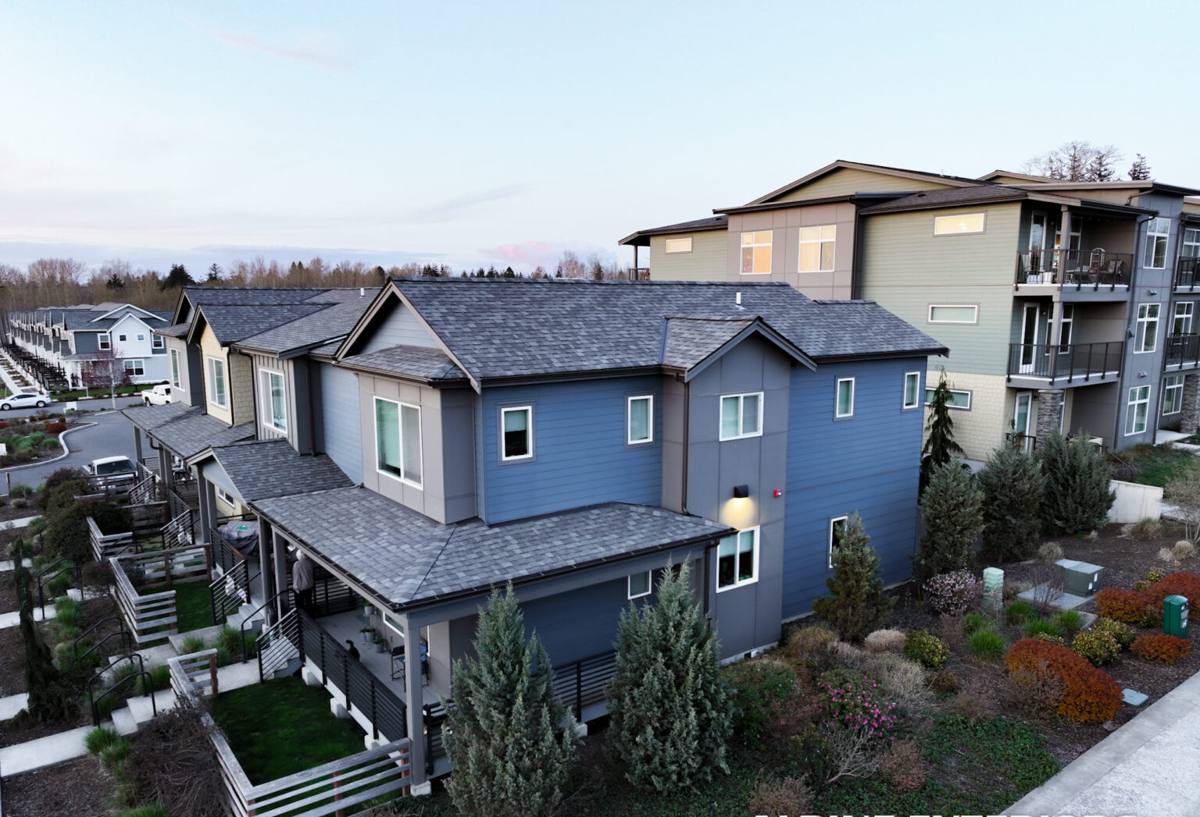
What This Climate Actually Does to Vertical Siding
Three things define the California Creek environment, and each one attacks siding in a different way:
Salt Air
Proximity to Semiahmoo Bay means a steady dose of salt-carrying wind and moisture, even on days without rain. Salt accelerates corrosion in exposed metal fasteners and flashing, and it works its way into any gap or crack in a wood-based product. Board and batten has more vertical seams per square foot than lap siding, which means more places for salt-laden moisture to find a way in if those seams aren't sealed and flashed correctly.
Driving Rain
Blaine's weather off the Strait of Georgia doesn't fall straight down — it comes in sideways, driven by wind. Vertical siding channels water downward along the boards and battens, which is good when the laps and gaps are built to shed it, and bad when a batten strip isn't sitting over a properly lapped or caulked seam. Driving rain finds the one spot that wasn't detailed right, and it finds it fast.
Long Moss Season
Tree cover and near-constant dampness through fall, winter, and spring mean moss and algae get a long runway to establish themselves on north-facing and shaded wall sections. On wood-based board and batten, moss holds moisture against the surface for months at a stretch, which is exactly the condition that leads to rot at board edges and battens. The siding material and the finish on it both matter for how well a wall resists that buildup.
Why Board & Batten Needs Different Detailing Than Lap Siding
Standard horizontal lap siding sheds water by overlap alone — each course covers the one below it. Board and batten works differently: the battens cover the vertical seams between boards, but the wall still needs a drainage plane behind it to let any water that gets past the surface escape instead of sitting against the wall sheathing. On a site exposed to driving rain the way California Creek is, that drainage detail isn't optional.
A correct board and batten installation here includes:
- A rainscreen or furring-strip gap behind the panels so bulk water and incidental moisture can drain and air can circulate to dry the wall assembly
- A weather-resistive barrier installed and lapped correctly beneath the siding, with all penetrations sealed
- Batten placement and fastening that follows the manufacturer's engineered spacing — not just an even visual reveal
- Corrosion-resistant fasteners rated for coastal exposure, since standard fasteners are the first thing salt air degrades
- Proper head flashing above every window and door, and kickout flashing where a roofline meets a wall
- Sealed, factory-finished board and batten panels rather than field-painted wood, so the finish isn't relying on a caulk line to stay watertight
Skip any one of these and the wall can look fine for a season or two while water quietly works its way behind the boards.
The James Hardie Board & Batten System We Install
We install James Hardie panel and batten fiber cement, engineered in the HZ5 formulation for the Pacific Northwest's wet, temperate climate. It's a non-combustible fiber cement panel system with vertical battens over the seams, and it's built to handle exactly the conditions California Creek deals with — driving rain, sustained dampness, and long stretches without full drying between storms.
Why the Material Itself Matters Here
Fiber cement doesn't absorb and swell the way wood-based board and batten products can. It doesn't provide the organic material that moss and algae feed on the way untreated or lightly primed wood surfaces do. And because it comes with a factory-applied ColorPlus finish baked on under controlled conditions, the color and the moisture barrier are the same layer — there's no separate field-applied paint film that can fail at the seams first, which is usually where problems start on this kind of siding.
Warranty Structure
James Hardie backs its fiber cement products with a strong, transferable limited warranty, and the ColorPlus finish carries its own finish warranty separate from the substrate. That matters on a coastal property — it means the finish is engineered as part of the product, not an afterthought that a homeowner has to maintain and recoat to keep the warranty intact.
Comparing Board & Batten Materials for This Environment
| Material | Moisture Behavior | Salt Air / Coastal Fit | Maintenance Burden |
|---|---|---|---|
| James Hardie fiber cement (HZ5) | Does not swell, rot, or absorb water like wood; engineered for wet climates | Strong — non-combustible, factory finish resists coastal wear | Low — periodic cleaning, no repainting on the ColorPlus finish |
| Primed spruce / cedar board & batten | Absorbs moisture at cut edges and seams; prone to swelling and rot over time | Weaker — natural wood is more vulnerable to sustained dampness and salt exposure | High — regular repainting, caulk maintenance, edge sealing |
| Vinyl board & batten | Doesn't rot, but panels expand/contract and can warp; seams can allow water behind the panel | Fair — doesn't corrode, but seals and fasteners still need coastal-rated hardware | Moderate — panels can crack or fade, hard to patch invisibly |
| LP SmartSide (engineered wood) | Treated to resist moisture better than raw wood, but still an engineered wood product that depends on field-sealed edges staying intact | Fair — performs reasonably when detailing is perfect, more sensitive to installation error | Moderate — edge sealing and touch-up paint required over time |
We only install the first row of that table. It's why we don't quote vinyl, LP SmartSide, Cemplank, Allura, or raw wood board and batten for homes out here — not because those products can't be installed well anywhere, but because we've standardized on the one material system that holds up on this coastline with the least long-term maintenance risk to the homeowner.
Our Process for a California Creek Board & Batten Job
The work happens in the same order on every project, because skipping a step is how coastal siding jobs fail early:
- Walk and assess. We look at wall orientation, tree cover, drainage patterns, and existing moisture or moss damage before we talk products or price.
- Remove and inspect sheathing. Old siding comes off and we check the wall assembly underneath for rot or existing water intrusion before anything new goes up.
- Install the weather-resistive barrier and rainscreen gap. This is the step that determines whether the wall can dry itself out after the next driving rain.
- Flash every penetration. Windows, doors, hose bibs, vents, and roof-to-wall transitions all get flashed before the siding goes on, not caulked after.
- Install Hardie panel and batten to spec. Correct fastener type, spacing, and batten placement, following the manufacturer's engineered installation instructions rather than a generic approach.
- Final inspection and cleanup. We check seams, corners, and flashing lines before we call the job done.
Signs Your Current Siding Needs Attention
If you're not sure whether your California Creek home's siding is still doing its job, look for these before they turn into a bigger repair:
- Moss or algae buildup that returns quickly after cleaning, especially on shaded walls
- Soft or spongy spots at board edges or near the base of the wall
- Peeling, bubbling, or cracked paint along batten seams
- Visible gaps or warping where boards meet battens
- Rust staining running down from fasteners or flashing
- A musty smell near exterior walls inside the home
Why a Crew That Already Works California Creek Matters
Siding detailing isn't one-size-fits-all across Whatcom County. A wall facing open water and prevailing wind needs different fastener and flashing attention than a shaded wall tucked under fir trees fifty feet away — and both of those conditions can exist on the same property in California Creek. A crew that already works this specific area knows which walls are going to take the worst of the driving rain, which sides are going to grow moss first, and how to sequence a job around the wet stretches that define a Blaine winter. That local pattern recognition is what keeps a board and batten installation performing the way it's supposed to, instead of just looking right on installation day.
What Affects Your Estimate
Every board and batten project is priced around the same factors: total square footage, the condition of the existing wall assembly once old siding comes off, how much trim and flashing detail the home's design requires, and accessibility around the site. Homes with more window and door penetrations take longer to flash correctly, and homes with existing moisture damage need that addressed before new siding goes up — both affect the final number more than the siding material choice itself.
If you're weighing board and batten for a California Creek home, we're glad to take a look and give you a straight, no-pressure estimate — no obligation, just an honest read on what your walls actually need. The form below gets you started.