 Blaine Siding
 Why Roofs Wear Out Faster Along Blaine Harbor
A roof in Blaine Harbor works harder than a roof ten miles inland. The combination of salt-laden marine air, wind-driven rain off the water, and a moss season that can run eight months or more puts a specific kind of stress on shingles, flashing, and fasteners. Salt air accelerates corrosion on exposed metal — nail heads, flashing edges, vent stacks, and gutter hardware all take the hit first. Driving rain doesn't just fall straight down here; it gets pushed sideways under wind, which means laps, seams, and flashing details that would be fine in a calmer climate can fail early if they weren't installed with that wind-driven exposure in mind.
Then there's moss. Whatcom County's damp, mild winters and long shoulder seasons create ideal growing conditions on north-facing slopes and shaded roof planes. Moss isn't just cosmetic — its root structure lifts shingle edges, holds moisture against the roof deck, and shortens the usable life of the roofing material underneath it. A roof that would last 25-30 years in a drier climate can start showing real problems well before that timeline in a spot like Blaine Harbor if it wasn't built or maintained with these conditions in mind.
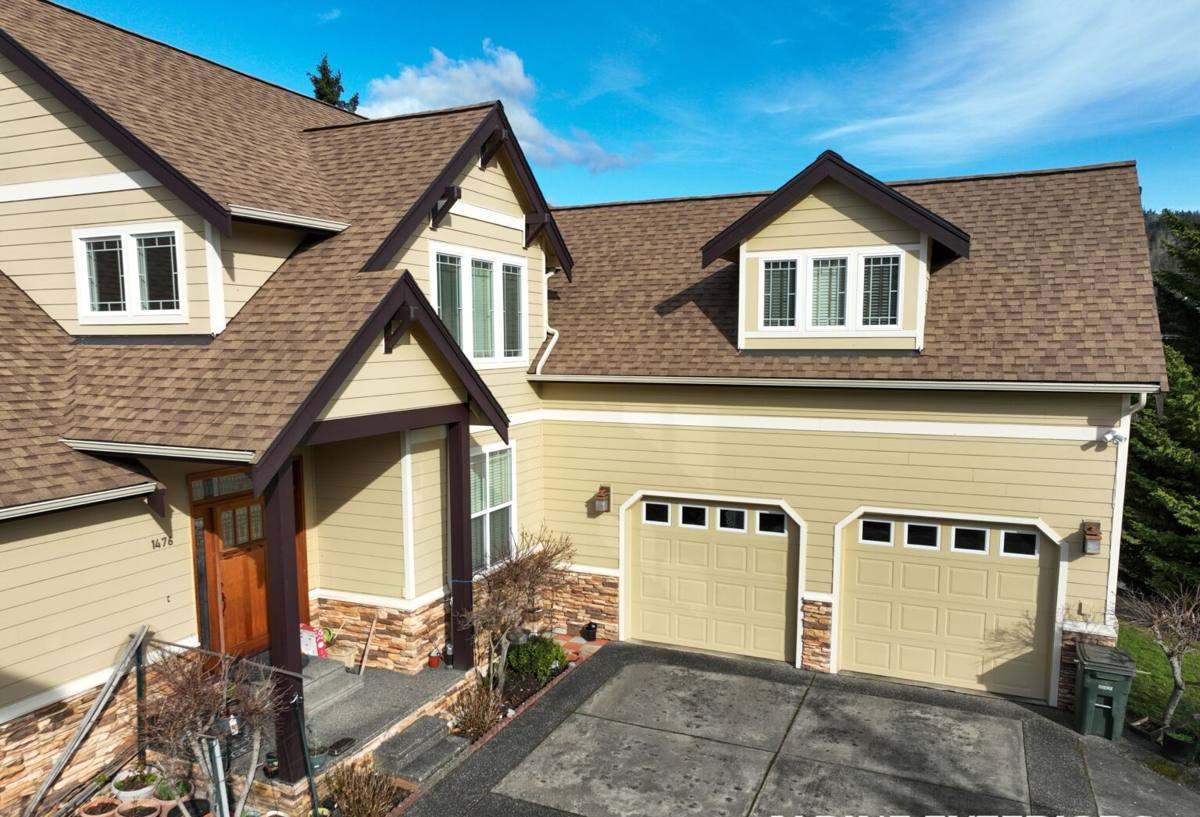
Signs a Blaine Harbor Roof Needs Replacement, Not Another Repair
Not every roof problem means a full replacement, and we won't tell you it does. But there's a point where patching stops making financial sense and a full tear-off is the honest recommendation. Here's what tends to separate a repair situation from a replacement situation on homes in this area:
- Granule loss heavy enough that you're finding shingle grit in gutters and downspouts every season
- Shingles that are cupping, curling, or cracking across multiple roof planes, not just one isolated area
- Soft or spongy decking felt through the attic, especially near valleys or where moss has been sitting
- Recurring leaks at the same penetration points even after prior repairs
- Widespread moss and organic growth that's lifted shingle tabs rather than just staining the surface
- A roof already past 20-25 years old with visible wear, where another repair is a short-term patch on a system near the end of its service life
If you're only seeing one or two of these, a repair may still be the right call, and a straightforward inspection will tell you which situation you're in.
What a Correct Roof Replacement Involves in This Climate
Tear-Off and Deck Inspection
We don't install a new roof over an old one, and we wouldn't recommend it to anyone in Blaine Harbor. A full tear-off is the only way to actually inspect the decking underneath — and given how much moisture this area sees, checking for soft spots, rot, or delamination before covering it back up matters more here than in drier climates. Any compromised sheathing gets replaced before anything else goes down.
Underlayment Built for Wind-Driven Rain
Standard felt underlayment can work in mild conditions, but for a home exposed to harbor winds and sideways rain, a synthetic underlayment with proper lap and fastening detail gives a more reliable secondary barrier. In vulnerable zones — eaves, valleys, and roof-to-wall transitions — self-adhered ice-and-water membrane adds a layer of protection against wind-driven moisture that a single layer of felt won't match.
Flashing That Actually Sheds Water Sideways
Most roof leaks don't start in the field of the shingles — they start at flashing: chimneys, skylights, dormers, sidewalls, and vent penetrations. In a wind-driven rain environment, flashing needs to be lapped and sealed with that horizontal water pressure in mind, not just gravity. This is where a lot of roofs, even newer ones, get shortchanged.
Ventilation That Manages Moisture, Not Just Heat
Attic ventilation in the Pacific Northwest is as much about moisture control as temperature control. A balanced system of intake at the eaves and exhaust at the ridge keeps humid air moving instead of condensing against the underside of the deck — a slow but real cause of hidden rot in roofs that otherwise look fine from the outside.
Material Options for a Salt Air, High-Moisture Climate
There's no single "right" material for every home, but some options handle this specific climate better than others. Here's an honest comparison of what we typically discuss with Blaine Harbor homeowners:
| Material | Performance in This Climate | Maintenance Considerations |
|---|---|---|
| Architectural asphalt shingle | Good wind rating, solid moisture resistance when installed with proper underlayment and flashing | Needs periodic moss treatment and gutter clearing; algae-resistant granules help but don't eliminate upkeep |
| Standing seam metal | Excellent shedding of wind-driven rain, very low moss retention due to smooth slick surface | Fastener and coating quality matter near salt air; higher upfront cost, longer service life |
| Three-tab asphalt shingle | Lower wind rating than architectural shingles, less margin in harbor-exposed conditions | Shorter expected service life here; we generally steer homeowners toward architectural-grade instead |
| Cedar shake | Traditional look but holds moisture longer, which accelerates rot in a moss-prone, high-humidity area | Requires diligent, ongoing maintenance to perform acceptably here; we're upfront about that trade-off before anyone commits to it |
We're not going to tell you cedar "fails" — plenty of homes have it and maintain it well. Our professional standard is just that in a location like Blaine Harbor, it demands a maintenance commitment that architectural shingle or metal doesn't, and we want homeowners making that choice with full information, not after the fact.
Moss Prevention Built Into the Job, Not an Afterthought
Moss control shouldn't be something you bolt on after the roof is installed — it should be part of the plan from the start. On shaded or north-facing sections common around Blaine Harbor's tree-lined lots, we talk through options like zinc or copper strips near the ridge, which release trace metals that discourage moss growth as rain washes over the roof. It's not a permanent fix on its own, but combined with a reasonable annual cleaning schedule, it meaningfully extends the interval between moss treatments and reduces the risk of moss lifting shingle edges before the roof's expected lifespan is up.
Our Process, Start to Finish
- On-site inspection — we walk the roof and the attic, not just look from the ground, and document what we actually find
- Written estimate — material options, scope of work, and a clear price, no vague allowances
- Scheduling around weather windows — in this climate, timing a tear-off around a dry stretch is part of doing the job right
- Tear-off and deck repair — old material removed, decking inspected and repaired as needed before anything new goes down
- Underlayment, flashing, and moss-prevention details installed — the parts that determine whether the roof performs in ten years, not just on day one
- Final walkthrough — we go over the finished roof with you before considering the job done
What Roof Replacement Costs Depend On
We're not going to publish a number that doesn't mean anything without seeing your roof, but these are the factors that actually move the price on a Blaine Harbor home:
| Factor | Why It Matters |
|---|---|
| Roof size and number of planes | More squares and more complex geometry mean more material and labor time |
| Roof pitch and access | Steeper or harder-to-access roofs require more safety setup and slow the work down |
| Decking condition | Rot or soft sheathing found during tear-off adds material and labor not visible during a ground-level estimate |
| Material selected | Architectural shingle, metal, and specialty materials carry different material and installation costs |
| Flashing and penetration count | Chimneys, skylights, and multiple vents each add flashing detail work |
| Ventilation upgrades | Adding proper intake/exhaust ventilation where a home currently lacks it is additional scope, but usually pays for itself in roof longevity |
Broadly, most full replacements land somewhere in the range of a mid-size home reroof to a larger, more complex roof with several planes and penetrations — the actual number depends entirely on the factors above, which is why we estimate on-site rather than over the phone.
Why a Crew That Already Works Blaine Harbor Matters
There's a real difference between a contractor who occasionally drives up for a Whatcom County job and one who already knows this stretch of coastline. Knowing how the wind typically comes off the water, which roof orientations tend to hold moss longest, and how salt exposure affects fastener and flashing choices isn't something you learn from a single job — it comes from working this specific area repeatedly. That familiarity shows up in fewer callbacks, fewer surprises during tear-off, and a roof spec that's matched to actual local conditions instead of a generic template.
It also matters for scheduling. Roofing in a marine climate means working around real weather windows, and a crew that's local to the Blaine area can respond to a scheduling shift or a weather delay without losing days in transit.
After Installation: Protecting the Investment
A correctly installed roof still benefits from basic upkeep, especially in this climate. A simple annual routine goes a long way:
- Clear gutters and downspouts before the fall rains start, so water isn't backing up under the roof edge
- Check shaded, north-facing sections each spring for early moss growth and treat it before it spreads
- Trim back overhanging branches that keep roof sections shaded and slow to dry out
- Have flashing around chimneys, skylights, and vents visually checked every couple of years
- Address any small leak signs — a stain on a ceiling, a damp spot in the attic — right away rather than waiting
None of this is complicated, but skipping it is how a well-installed roof loses years off its expected lifespan in a climate like this one.
If your Blaine Harbor roof is showing wear, or you just want an honest read on where it stands, we're happy to take a look. Use the form below to request a free, no-pressure estimate — we'll walk the roof, tell you what we actually find, and give you a straight answer on repair versus replacement.