 Blaine Siding
 Why Birch Point Roofs Age Differently Than Roofs Inland
Birch Point sits close enough to the water that homes here take a different kind of weather beating than a roof twenty minutes inland in Whatcom County. The combination of salt-laden air off the Strait, near-constant winter rain, and a moss season that can run from October well into spring means a roof out here rarely fails the same way a roof in a dry, sheltered subdivision does. It's usually not one dramatic leak — it's slow, cumulative wear: corroding fasteners, moss lifting shingle tabs, and moisture finding its way into a roof deck that never quite gets to dry out between storms.
When we replace a roof at Birch Point, we're not just swapping old shingles for new ones. We're building a system that's meant to hold up against salt exposure, wind-driven rain, and moss pressure specifically — not a generic roof pulled from a catalog spec sheet.
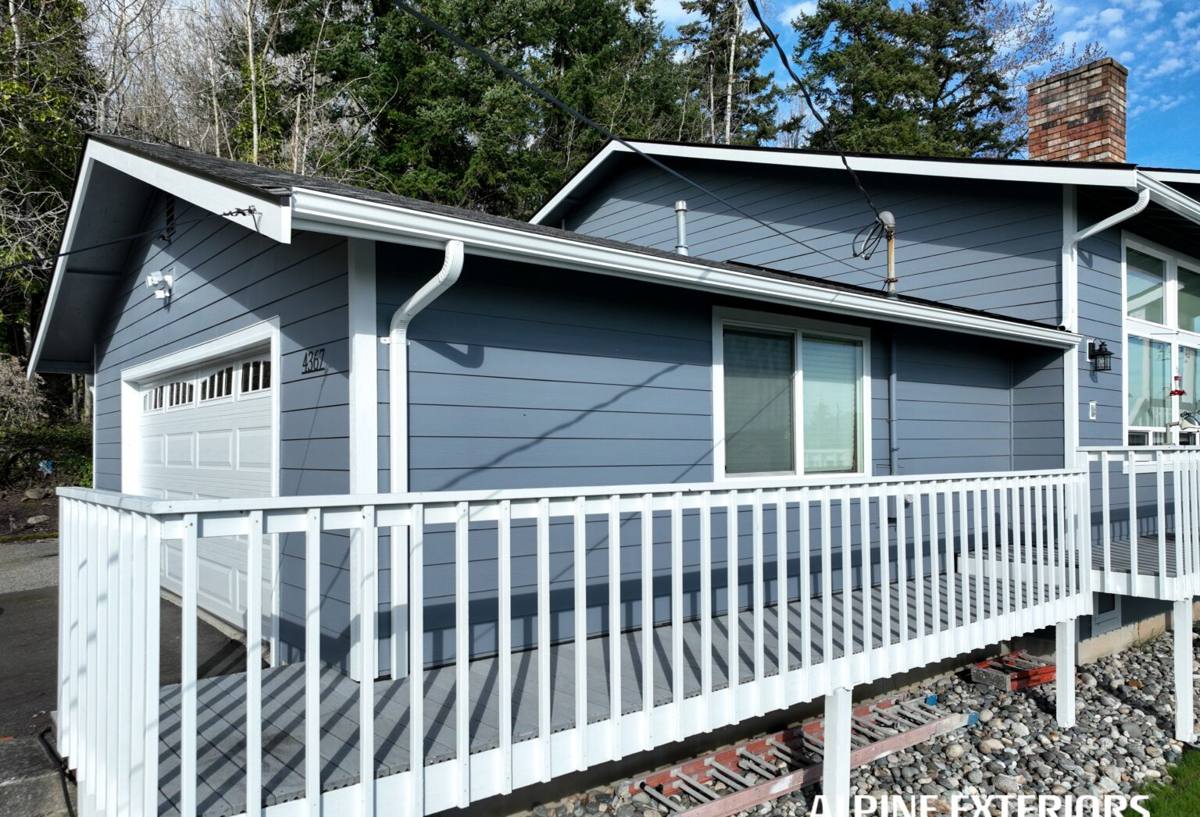
What Salt Air Actually Does to a Roof
Salt air doesn't just affect boats and railings. Over years, airborne salt accelerates corrosion on anything metal a roof depends on — nail heads, flashing, valley metal, gutter fasteners, and any exposed screws on vents or pipe boots. Once corrosion starts on a fastener, it loses holding strength long before it looks obviously bad from the ground. That's how a roof that "looks fine" ends up with lifted shingles or a leaking valley during the next windstorm.
Where Salt Exposure Shows Up First
- Exposed roofing nails and staples, especially near ridges and edges
- Galvanized flashing around chimneys, skylights, and valleys
- Gutter hangers and downspout fasteners
- Any bare or thinly coated metal on vents, boots, and caps
Our standard for coastal work is to use corrosion-resistant fasteners and flashing rated for the exposure, not the cheapest option that meets code on paper. It costs a little more up front and saves a homeowner a premature repair call five or six years down the road.
Moss, Algae, and a Long Wet Season
Whatcom County's wet season gives moss and algae exactly what they need: shade, moisture, and time. Left alone, moss doesn't just look bad — it holds water against the shingle surface, works its way under tabs as it grows, and can lift the shingle edges enough to let wind-driven rain underneath. Roof sections facing north or shaded by trees are usually hit hardest, which is common on wooded Birch Point lots.
How We Address Moss During a Replacement
- Install zinc or copper control strips near the ridge, which release trace metal ions with every rain and inhibit new moss growth down-slope
- Use algae-resistant shingle products where the roof's exposure and homeowner's budget call for it
- Improve attic and roof deck ventilation so the underside of the deck dries out between storms instead of staying damp
- Trim back overhanging limbs where practical to cut down on shade and debris buildup
None of these steps make a roof moss-proof forever — nothing does in this climate — but together they buy years of extra life and make routine moss maintenance far easier.
Driving Rain and Wind-Driven Water
Rain that falls straight down is easy for any roof to shed. Rain that's being pushed sideways by wind off the water is a different problem — it finds every weak seam, every under-lapped shingle course, and every place where flashing was installed to minimum code instead of best practice. This is where a lot of roof leaks at Birch Point actually originate, not from a single storm but from years of wind-driven rain working at the same vulnerable spots.
The Details That Matter Most
A roof that's going to hold up to storms coming off the water needs more attention paid to a few specific areas:
- Extended ice-and-water shield membrane at eaves, valleys, and around penetrations, not just the code-minimum coverage
- Step flashing at every wall intersection, properly woven course by course rather than a single continuous strip
- Closed or properly lapped valleys, depending on the roofing material
- Sealed, baffled ridge and soffit vents that let air out without letting wind-driven rain in
These are the parts of a roof replacement that a homeowner never sees once the job is finished, which is exactly why they're worth asking about before hiring anyone.
Choosing the Right Roofing System for a Birch Point Home
There's no single "correct" material for every home — pitch, budget, tree cover, and how long you plan to stay in the house all factor in. Here's how the common options stack up under this specific climate:
| Material | Salt Air Durability | Moss Resistance | Maintenance |
|---|---|---|---|
| Architectural asphalt shingle | Good, with corrosion-resistant fasteners | Fair; better with algae-resistant granules and zinc strips | Periodic moss/debris cleaning |
| Standing seam metal | Very good, with marine-grade coatings and fasteners | Very good; sheds moisture quickly, little surface for moss to grip | Low; occasional fastener and sealant check |
| Cedar shake | Fair; needs diligent maintenance near salt air | Poor without regular treatment; absorbs and holds moisture | High; regular treatment and moss removal needed |
| Composite/synthetic shingle | Good; resistant to corrosion since most components are non-metallic | Good, varies by product | Low to moderate |
We don't push one material on every homeowner. Cedar shake, for example, can look great and plenty of homeowners love it, but it demands a maintenance commitment in a climate like this that not everyone wants to take on — that's a trade-off we'll walk through honestly rather than talk anyone out of a look they want. What we won't do is install a system without the flashing, ventilation, and fastening details that this coastline actually requires, regardless of which material you choose.
What a Correct Roof Replacement Actually Involves
A roof replacement done right isn't just laying new shingles over what's there. It's a sequence of steps, and skipping or rushing any one of them is usually where future leaks come from.
- Full tear-off to bare decking — never installing new roofing over old
- Deck inspection and replacement of any soft, delaminated, or water-damaged sheathing
- Ice-and-water membrane at eaves, valleys, and penetrations
- Synthetic underlayment across the full field
- New flashing at every chimney, skylight, wall, and valley — not a re-use of old flashing
- Balanced intake and exhaust ventilation sized to the attic space
- Roofing material installed to manufacturer spec, with corrosion-resistant fasteners throughout
- Ridge cap, moss control strip installation, and final flashing seal checks
Every one of those steps matters more here than it would on a roof thirty miles inland, simply because the margin for a shortcut to turn into a leak is so much smaller near the water.
Our Process for Birch Point Roof Replacements
We start with an on-site inspection, not a drive-by estimate — walking the roof, checking the attic for existing moisture or ventilation issues, and looking at how the home's specific exposure to wind and water should shape the plan. From there we put together a written scope that spells out material, underlayment, flashing details, and ventilation changes, so there's no ambiguity about what's included.
During the job itself, decking is inspected in daylight before anything gets covered back up, and we'll show you any sections that need replacement before proceeding rather than surprising you on the invoice. We keep the work area protected and cleaned up daily, since a torn-off roof left exposed overnight in this climate is a risk we're not willing to take. Once the roof is complete, we walk the job with you and cover basic maintenance — what to watch for with moss, when to schedule a gutter and roof check, and what's covered under workmanship and manufacturer warranties.
Why a Crew That Already Works Birch Point Matters
A roofing crew that mostly works dry, inland neighborhoods can still do competent work — but they may not default to marine-grade fasteners, extended ice-and-water coverage, or moss-specific detailing unless a homeowner thinks to ask for it. A crew that regularly works Birch Point and similar Blaine waterfront areas builds those choices into the plan automatically, because they've seen what standard-spec roofing does out here after a few winters.
Local, regular presence also means faster response if something does come up after the job — a storm-loosened ridge cap or a question about moss treatment isn't a multi-week wait for a crew that's already working in the area. That matters in a place where the weather doesn't give a roof much of a break between one storm season and the next.
Signs Your Birch Point Roof May Be Ready for Replacement
- Shingle granules collecting in gutters or at downspout outlets
- Curling, cupping, or cracked shingles, especially on sun- or wind-exposed slopes
- Moss buildup that returns quickly after cleaning
- Rusty streaking around flashing, vents, or fasteners
- Daylight visible through the attic roof deck, or damp insulation after storms
- A roof approaching or past its expected material lifespan, regardless of visible damage
Not every one of these means a full replacement is due immediately — some are repair-level issues. But a roof showing several of these signs at once, particularly on an older home, is usually past the point where patching makes financial sense.
If your roof is showing wear, or you'd simply like an honest read on how many years it has left, we're happy to take a look. Fill out the form below for a free, no-pressure estimate on your Birch Point roof replacement.