 Blaine Siding
 Why Birch Point Siding Takes More Than a Standard Install
Birch Point sits close enough to the water that homes here deal with a combination of stressors most inland Whatcom County houses never see at the same intensity: salt-laden air, wind-driven rain that hits siding sideways instead of just running down it, and a long, damp moss season that can stretch from fall through spring. Any one of these is manageable. Together, they wear out the wrong siding material fast and expose sloppy installation work within a few years instead of a few decades.
We install James Hardie fiber cement siding exclusively, and on Birch Point homes specifically, that choice is less about brand preference and more about matching a product to what the site actually demands. This page covers what that means in practice: what the climate does to siding here, what a correct James Hardie install looks like on a home like yours, and how our process addresses the details that generic siding jobs tend to skip.
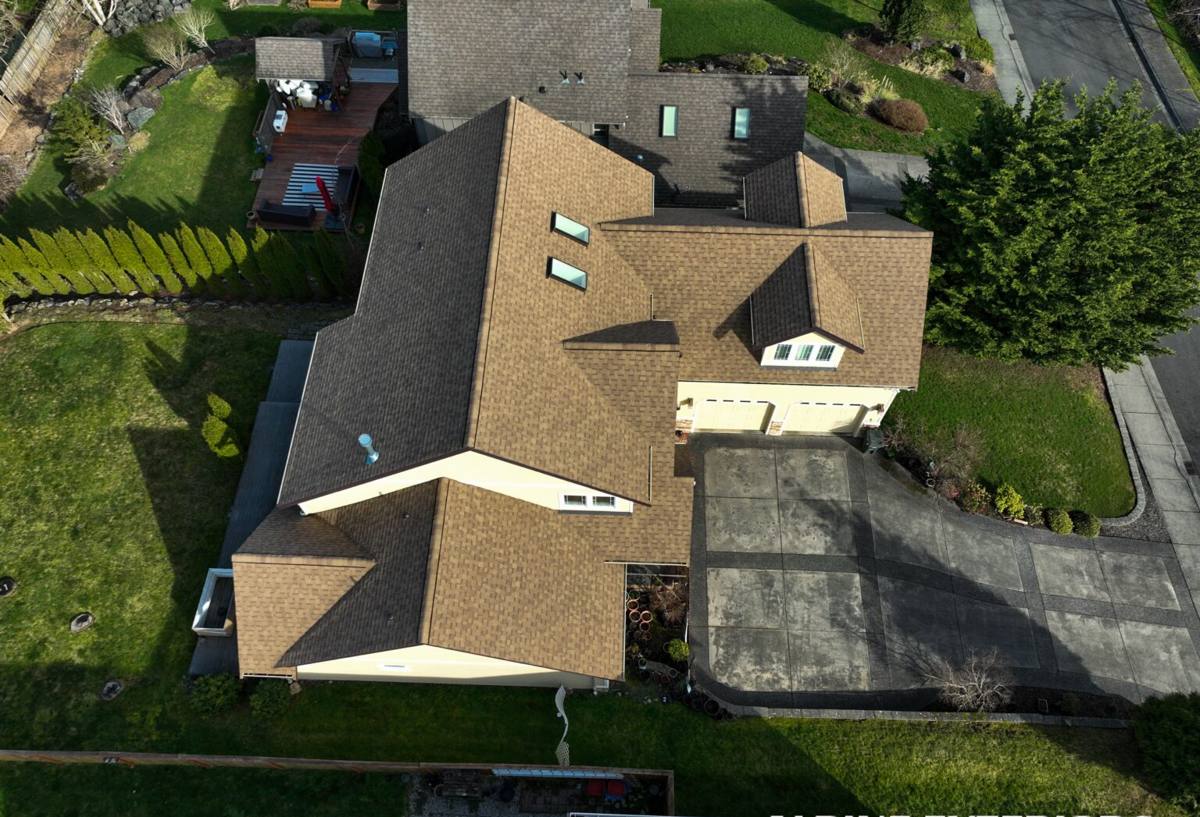
What Salt Air, Driving Rain, and Moss Season Actually Do to Siding
Salt Air
Airborne salt from the Strait of Georgia and the Salish Sea doesn't just sit on the surface — it works into fasteners, trim joints, and any exposed wood fiber. Over time it accelerates corrosion on the wrong hardware and breaks down finishes that weren't engineered to handle it. This is why fastener choice and factory-applied finish quality matter more here than they would on a home twenty miles inland.
Driving Rain
Blaine's exposure means rain frequently arrives at an angle, not straight down. That changes how water moves across a wall. Lap siding, trim transitions, window and door flashing, and butt joints all have to be built to shed water that's moving sideways and being pushed by wind pressure — not just water running off a roofline. Gaps, caulking choices, and flashing details that would be fine in a calmer climate can let water behind the siding here.
Moss and Sustained Moisture
A long moss season means extended periods where siding surfaces stay damp, north-facing walls and shaded areas rarely fully dry out, and organic growth gets a foothold on anything porous or poorly finished. Moss and algae aren't just a cosmetic issue — sustained dampness against a wall assembly is what eventually causes rot, whether the siding itself is vulnerable or not.
Why We Standardized on James Hardie for This Kind of Exposure
James Hardie fiber cement is engineered specifically for the kind of coastal, wet-climate conditions Birch Point deals with. A few specifics matter directly here:
- Non-combustible composition — fiber cement doesn't rot, warp, or feed insects the way wood-based products can when they stay damp for months at a time.
- HZ5 climate engineering — Hardie's HZ product line is formulated for wetter, harsher regions, which fits the Pacific Northwest coastal profile better than a generic all-climate product.
- ColorPlus factory finish — a baked-on, multi-coat finish applied under controlled conditions, which holds up to salt exposure and UV far more consistently than field-applied paint, and reduces how often the home needs repainting.
- Dimensional stability — fiber cement doesn't expand and contract with moisture the way wood does, which keeps joints, caulk lines, and paint from cracking prematurely under repeated wet-dry cycles.
- Strong transferable warranty — backed by a manufacturer warranty structure that holds up when the product is installed to spec, which matters on a house that's going to see decades of this weather.
We don't install LP SmartSide, vinyl, Cemplank, Allura, primed spruce, or cedar. Each of those products has legitimate strengths in the right setting, but for a Birch Point exposure — salt, driving rain, and extended dampness — we've made James Hardie our standard because it's the product we're confident will still be doing its job correctly fifteen and twenty years from now.
What Correct Installation Involves on a Home Like Yours
Fiber cement siding is only as good as its installation. Hardie's own performance depends on details that are easy to shortcut and hard to spot once the job is finished. On a Birch Point home, we pay particular attention to:
Water Management Behind the Siding
A properly lapped weather-resistive barrier, correctly integrated window and door flashing, and rainscreen or drainage gap where the wall assembly calls for it. Given how much wind-driven rain this area sees, the barrier behind the siding matters as much as the siding itself.
Fastener Selection and Placement
Corrosion-resistant fasteners, driven at the correct depth and spacing per Hardie's installation specs — not just "close enough." Overdriven or underdriven nails are one of the most common causes of premature siding failure, and salt air punishes the wrong fastener choice faster than it would inland.
Clearances and Gaps
Proper clearance from grade, roof lines, decks, and other siding terminations so water has somewhere to go instead of wicking into the bottom edge of a board. Butt joints and trim gaps sized correctly so caulking isn't doing more work than it should.
Finish and Cut-Edge Sealing
Any field-cut edge gets properly sealed, since a factory finish only protects what the factory finished. This is a small step that's easy to skip and shows up as failure points years later.
| Factor | Why It Matters at Birch Point |
|---|---|
| Home size and elevation count | More wall area and more corners/transitions mean more flashing and joint work, which drives labor time |
| Existing siding removal and sheathing condition | Salt-air and moisture-exposed homes sometimes have hidden sheathing damage that needs addressing before new siding goes on |
| Trim complexity | Homes with more windows, dormers, or architectural detail require more precise flashing and cutting |
| HZ5 product selection and profile | Lap width, texture, and color affect material cost and finish longevity in this climate |
| Site access | Waterfront and bluff-adjacent lots can add setup and logistics time |
Our Process on Birch Point Jobs
1. On-Site Assessment
We look at more than just the visible siding. We check for signs of moisture intrusion, evaluate sheathing condition where accessible, and assess how the home's orientation lines up with prevailing wind and rain direction — a detail that shapes where we pay extra attention during install.
2. Product and Color Selection
We walk through Hardie's HZ5 lines and ColorPlus options, factoring in how different colors and textures perform under sustained salt and UV exposure, not just how they look on a sample board.
3. Tear-Off and Substrate Check
Old siding comes off carefully so we can inspect the wall beneath it. Any water damage or compromised sheathing gets addressed before new material goes up — installing over a bad substrate defeats the purpose of a durable siding upgrade.
4. Weather Barrier and Flashing Installation
This is the step that determines how the house handles driving rain for the next several decades. We install and lap the weather-resistive barrier and flashing to shed water down and out, with extra attention at every window, door, and penetration.
5. Siding Installation to Manufacturer Spec
Hardie boards go up following manufacturer fastening, clearance, and joint specifications — not shortcuts. This is also where correct fastener selection for salt-air corrosion resistance comes into play.
6. Final Detailing and Walkthrough
Cut edges sealed, caulk lines checked, trim finished, and a walkthrough so you understand what was done and why, not just that it's finished.
Signs a Birch Point Home May Need Siding Attention
- Persistent moss or algae growth that returns shortly after cleaning
- Soft spots, bubbling, or visible warping, especially on north-facing or shaded walls
- Paint that's peeling or chalking faster than expected
- Visible gaps, cracked caulk lines, or separated trim joints
- Rust streaking near fasteners or trim hardware
- A musty smell or discoloration on interior walls that back up to exterior siding
Why a Crew That Already Works Birch Point Matters
Siding installation guidance from James Hardie is written for a wide range of climates. Applying it well on a Birch Point home means knowing which parts of that guidance to lean on hardest — where extra flashing attention pays off, which wall orientations need the most careful joint work, and how to sequence a job around this area's rain patterns so the wall assembly isn't left exposed at the wrong time. A crew that's done this work elsewhere on the Blaine coastline already knows those answers instead of learning them on your house. It also means we're familiar with local permitting and typical site conditions in the area, which keeps the job moving without avoidable delays.
What This Means for Your Home
Whatcom County's coastal edge is a demanding place to own a house, and Birch Point sits right in the middle of that exposure. Siding here isn't just an aesthetic upgrade — it's the primary barrier between your home and salt air, sideways rain, and months of sustained dampness. James Hardie fiber cement, installed correctly, is built to hold up to exactly that combination. Cutting corners on the product or the install is where homeowners end up paying twice.
If you're weighing a siding replacement or want a straight answer on what your current siding is telling you, we're happy to take a look. Reach out using the form below for a free, no-pressure estimate.