 Blaine Siding
 Why Birch Bay Roofs Wear Differently Than Roofs Inland
Birch Bay sits right on the water, and that changes what a roof has to survive year after year. Salt-laden air corrodes exposed metal faster than it does even a few miles inland. Wind-driven rain off the Strait of Georgia doesn't just fall on a roof, it gets pushed sideways into laps, valleys, and fastener lines that a calmer climate would never test. And the shade from mature evergreens combined with our long, damp Whatcom County winters gives moss months at a time to get established on north-facing slopes. None of this means Birch Bay homes need exotic materials. It means the installation details have to be right, because a roof that's "close enough" inland is often not close enough a block from the beach.
When we're asked to quote a new roof in Birch Bay, we're not just measuring square footage. We're looking at how the home sits relative to prevailing weather, how much moss pressure the existing roof shows, what the flashing and fastener corrosion look like, and whether the attic is venting moisture the way it should. That assessment shapes real decisions about materials and installation, not just a generic bid.
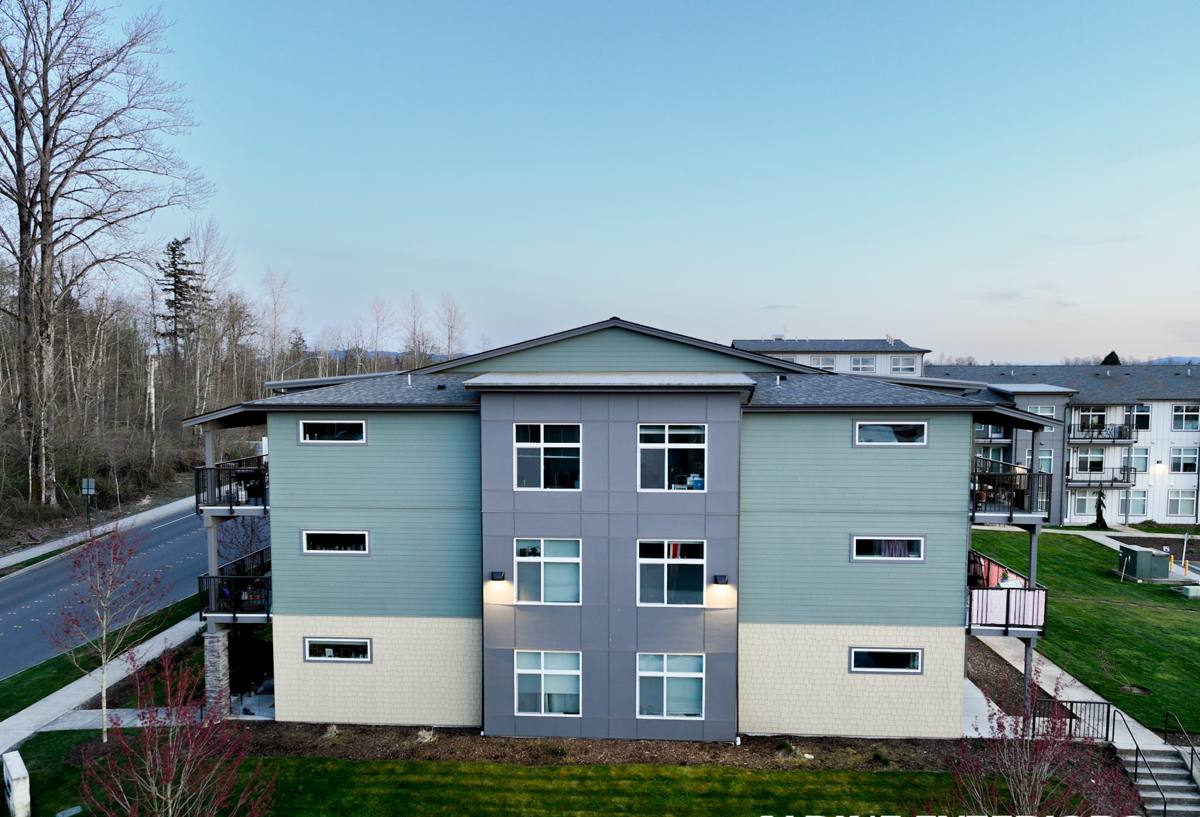
What Salt Air Actually Does to a Roof
Salt air is a slow, steady corrosive. It doesn't announce itself the way a leak does. Instead it works on anything exposed and metal: nail heads, drip edge, flashing, vent boots, and any exposed fastener on a metal roofing product.
- Standard electro-galvanized fasteners corrode faster near the water than in Bellingham or further inland
- Bare or thin-gauge flashing can pit and thin over a decade of salt exposure
- Exposed fastener metal panels rely entirely on the fastener and washer holding a seal, so fastener quality matters more here than almost anywhere else in the county
- Rust streaking on siding below a roof edge is usually a sign the roof's metal components are already failing, not a siding problem
Our standard for Birch Bay installations is to use corrosion-resistant fasteners and flashing rated for coastal exposure, not the minimum spec that would pass inspection anywhere else. It costs a little more up front. It's a lot cheaper than reflashing a roof in eight years.
Wind-Driven Rain and Where Roofs Actually Leak
Most roof leaks don't happen because shingles failed in the field. They happen at transitions: valleys, chimney flashing, skylight curbs, sidewall step flashing, and low-slope-to-steep-slope changes. Wind-driven rain off the water can push water uphill along these transitions in a way that vertical rain never does. A correct installation accounts for that with proper underlayment laps, ice-and-water shield in valleys and eaves, and step flashing that's actually woven into the siding rather than just caulked against it.
Moss: The Slow Roof Killer Around Birch Bay
Moss doesn't just look bad. It holds moisture against the roofing surface long after rain stops, which accelerates granule loss on asphalt shingles and can work its way under shakes and shingle tabs, lifting them over time. Birch Bay's tree cover and marine humidity give moss a long growing season, and north- and east-facing slopes that stay shaded most of the day are the first to show it.
A new roof installation is the right time to address moss proactively rather than reactively:
- Zinc or copper strips at the ridge, which release trace metal ions that discourage moss growth as rain washes over them
- Algae-resistant shingle products where the granules themselves are treated
- Attention to ventilation, since a roof deck that's warmer and drier from proper airflow resists moss better than one sitting cold and damp
- Keeping overhanging branches trimmed back, which we'll flag during the estimate if it's a factor
None of these replace periodic roof cleaning, but they buy years between cleanings and reduce how aggressively moss can take hold in the first place.
What a Correct New Roof Installation Actually Involves
A new roof is more than shingles nailed to a deck. Every layer underneath the visible surface is doing work, and skipping or shortcutting any of them is where premature failures come from.
Tear-Off and Deck Inspection
We remove the old roofing down to the deck rather than layering over it. That's the only way to actually see the sheathing and confirm it's sound, not soft or delaminated from years of trapped moisture. Any damaged sheathing gets replaced before anything new goes down, no exceptions.
Underlayment and Water Protection
Synthetic underlayment across the full deck, with ice-and-water shield membrane at eaves, valleys, and any roof-to-wall transition. Given how much wind-driven rain Birch Bay sees off the water, this layer is not optional, it's the actual backup plan if wind ever pushes water under the surface layer.
Flashing
New flashing at every chimney, skylight, sidewall, and valley, corrosion-resistant grade given the salt air exposure discussed above. Reusing old flashing to save a line item on a bid is one of the most common shortcuts in the industry, and it's one of the most common causes of leaks two or three years later.
Ventilation
Balanced intake and exhaust venting keeps the attic temperature closer to outdoor temperature, which reduces condensation, ice buildup risk, and moss-friendly conditions on the deck itself. We check existing venting on every re-roof and correct it when it's inadequate, which is common on older Whatcom County homes.
Fastening and Field Installation
Correct nail placement, count, and pattern per manufacturer specification, not a faster pattern that still passes a casual look. This is also where fastener material choice matters most for coastal corrosion resistance.
Comparing Common Roofing Options for a Birch Bay Home
There's no single "best" roofing material for every home. The right choice depends on the home's exposure, roof pitch, budget, and how the homeowner weighs upfront cost against long-term maintenance. Here's how the common options generally compare for a coastal Whatcom County setting.
| Material | Coastal/Salt Air Behavior | Moss Resistance | Typical Lifespan | Maintenance Consideration |
|---|---|---|---|---|
| Architectural asphalt shingle | Good with corrosion-resistant flashing and fasteners | Moderate; improved with algae-resistant granules | 25-30 years | Periodic moss/debris removal recommended |
| Standing seam metal | Very good with proper coating and fastener spec | Excellent; sheds moisture quickly | 40-50+ years | Low; occasional fastener/seam inspection |
| Exposed-fastener metal panel | Fastener quality is critical near salt air | Excellent | 30-40 years | Fastener washers should be checked periodically |
| Cedar shake | Traditional look; needs diligent maintenance near moisture | Lower without regular treatment/cleaning | 20-30 years with upkeep | Highest maintenance of the group |
We'll walk through these trade-offs against your specific roof during the estimate rather than pushing one product line. The right answer for a shaded, north-facing roof near the water is often different than the right answer for an open, south-facing roof a half mile inland.
Our Process for a Birch Bay Re-Roof
We keep the process straightforward and communicate at each stage, since a new roof is a significant investment and homeowners deserve to know what's happening and why.
- On-site assessment — we inspect the existing roof, deck condition where visible, ventilation, flashing, and any moss or moisture patterns specific to the home's exposure
- Written estimate — material options, scope of work, and a clear price, explained in plain terms
- Scheduling — timed around weather windows, since a tear-off needs a reasonably dry stretch to protect the home
- Tear-off and deck repair — full removal, sheathing inspected and replaced where needed
- Underlayment, flashing, and ventilation correction — the layers that determine whether the roof performs in actual Birch Bay weather, not just on a sunny install day
- Final installation and cleanup — field installation to manufacturer spec, full site cleanup, and a walk-through so you know what was done
Why Local Experience in Birch Bay Matters
A crew that only occasionally works this close to the water can miss things that are obvious to someone who roofs here regularly: which slopes on a given street orientation take the worst wind-driven rain, how aggressively moss establishes on shaded lots near the tree line, and which flashing details actually hold up against salt exposure versus which ones look fine on install day and fail in a few winters. That's not a knock on any other crew's skill, it's simply what repeated exposure to this specific coastal environment teaches you.
We work throughout Blaine and Whatcom County, and Birch Bay's coastal conditions get factored into material choices and installation details from the start of the estimate, not as an afterthought once a problem shows up.
Signs Your Birch Bay Roof May Need Replacement Rather Than Repair
- Granule loss heavy enough that you're finding shingle grit in gutters regularly
- Curling, cupping, or cracked shingles across multiple slopes, not just one isolated area
- Persistent moss regrowth shortly after cleaning, suggesting the roofing surface underneath is already degraded
- Visible rust staining running down siding below flashing or metal roof edges
- Soft spots or sagging when walked on, which points to deck or structural issues beneath the surface
- A roof already past or nearing the upper end of its expected lifespan for its material type
If you're only seeing one or two of these and the roof is otherwise mid-life, a targeted repair may be the more sensible option, and we'll tell you that honestly rather than push a replacement that isn't needed yet.
If you're weighing a new roof for a Birch Bay home, we're happy to take a look and give you a straight assessment, no pressure and no hard sell. Fill out the form below for a free estimate.