 Blaine Siding
 Birch Bay's Roofs Work Harder Than Most
Birch Bay sits right on the water, and that changes what a roof has to deal with day to day. Homes here take on salt-laden air blowing off the bay, wind-driven rain that gets pushed sideways under normal flashing details, and a moss season that runs long because the shade, humidity, and mild temperatures rarely let a roof surface fully dry out. None of that is unique to Birch Bay on its own — but the combination, sitting this close to open water in Whatcom County, is harder on a roof than what you'd see a few miles inland.
Metal roofing holds up well against most of that when it's installed correctly. It doesn't give moss the same foothold asphalt shingles do, it sheds wind-driven rain instead of absorbing it, and a properly finished panel system can go decades without needing much attention. The catch is that word "correctly" — metal roofing is far less forgiving of shortcuts than shingles are, and in a marine environment those shortcuts show up faster.
What Salt Air Actually Does to a Roof
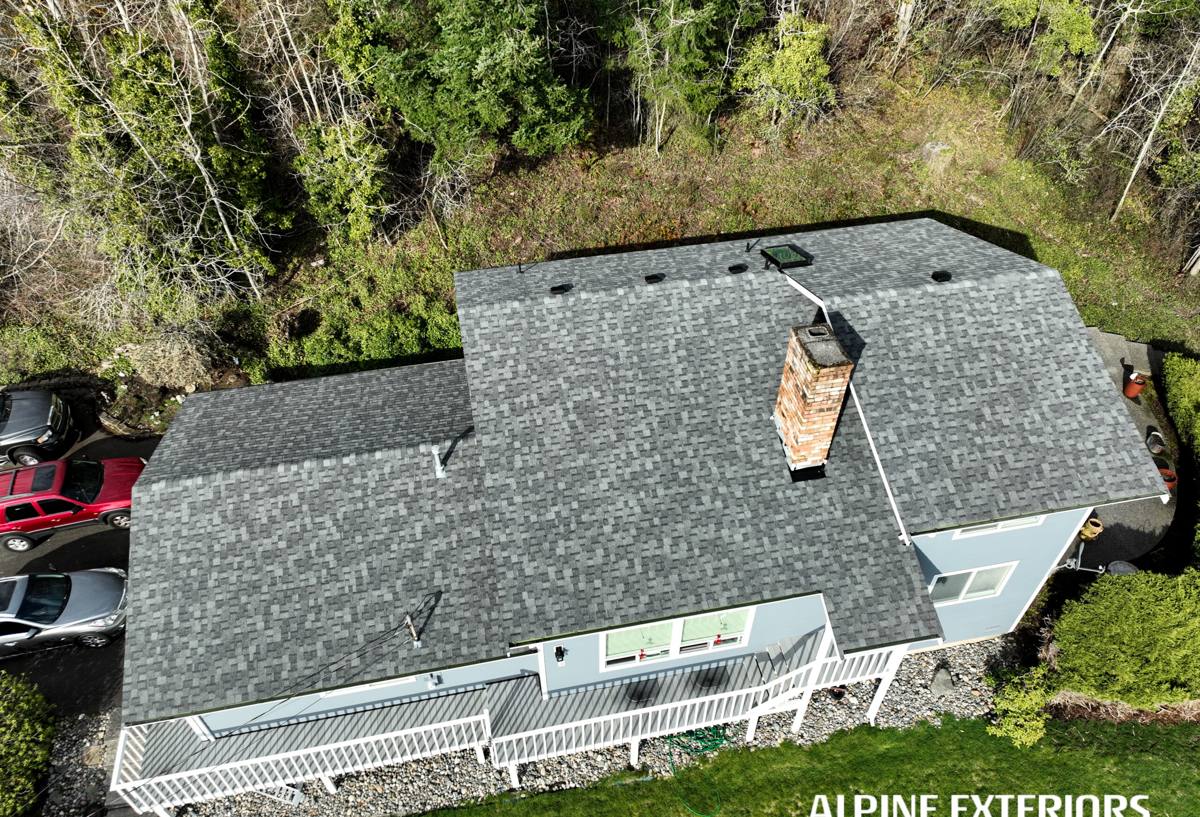
Salt air is corrosive, and it doesn't just affect the roof panels themselves — it affects every metal component on the roof: fasteners, flashing, vent boots, ridge caps, and any exposed edge metal. When mismatched metals are used together (steel fasteners in an aluminum panel, for example, or the wrong flashing alloy), you get galvanic corrosion, where one metal accelerates the breakdown of the other. This can happen even if both metals look fine individually. It's a slow process, so a poorly matched roof can look okay for a few years before staining, pitting, or fastener failure starts showing up.
The fix isn't complicated, but it does require attention to detail: use fastener and flashing metals that are compatible with the panel system, use coatings and sealants rated for coastal exposure, and don't cut corners on the small connection points because they're "just" flashing. Those connection points are usually where a coastal roof fails first.
What a Correct Metal Roof Installation Involves
A metal roof is only as good as what's underneath and around it. The visible panels get the attention, but the details that actually determine how long a roof lasts in this climate are mostly hidden once the job is done.
- A high-quality synthetic or self-adhered underlayment rated for the panel system, not a generic felt product
- Proper deck inspection and repair before anything goes down — panels installed over a soft or damaged deck will fail early no matter how good the metal is
- Fastener spacing and type matched to the panel manufacturer's specifications and to local wind exposure
- Flashing details at every penetration, valley, and edge — these are the highest-risk points for leaks on any roof
- Proper ventilation so moisture doesn't get trapped under the panels, which can cause condensation issues from the inside out
- Panel expansion allowance, since metal expands and contracts with temperature swings and needs room to move without buckling or pulling fasteners loose
Skipping or rushing any one of these doesn't usually cause an immediate problem. It shows up two, five, or ten years later as a leak, a rust streak, or a panel that's started to lift at the edge — by which point it's a repair job instead of a five-minute fix during install.
Standing Seam vs. Exposed Fastener: Choosing the Right System
Not every metal roof is built the same way, and the two most common residential systems perform differently in a coastal environment like Birch Bay. Neither is "wrong" — the right choice depends on budget, roof pitch, and how much long-term maintenance you want to take on.
| Factor | Standing Seam | Exposed Fastener |
|---|---|---|
| How panels attach | Concealed clips, no exposed screws on the panel face | Screws driven through the panel face into the deck |
| Coastal durability | Fewer penetration points for moisture and salt air to work into | More penetration points; screw gaskets wear over time and need eventual replacement |
| Maintenance | Low — mainly periodic inspection | Moderate — fastener gaskets typically need checking or replacing over the roof's life |
| Upfront cost | Higher material and labor cost | Lower upfront cost |
| Typical lifespan | Longer service life when installed correctly | Solid lifespan, but generally shorter than standing seam due to fastener wear |
For homes with direct bay exposure or a lot of driving rain off the water, standing seam is usually the better long-term investment because there are fewer places for moisture to find a way in. Exposed fastener systems are a legitimate, budget-conscious option for detached structures, sheds, or homes set back from direct wind exposure — we'll tell you honestly which makes sense for your specific roof rather than defaulting to the higher-cost option.
Moss and Debris in a Marine Climate
Metal sheds moss far better than asphalt shingles because there's no rough, granulated surface for spores to latch onto, and the smooth panel surface dries out faster after rain. That doesn't mean moss and organic debris are a non-issue — moss can still take hold in valleys, at panel seams, and anywhere debris collects and holds moisture against the surface, especially under tree cover, which is common around Birch Bay's more wooded lots.
The practical takeaway: keep gutters and valleys clear, keep overhanging branches trimmed back, and don't ignore small moss patches in shaded corners. On a metal roof, moss is usually a maintenance issue rather than a structural one — but only if it's addressed before it starts trapping moisture against fasteners and seams for months at a time.
Our Process, Start to Finish
We start with an on-site inspection, not a phone estimate — roof condition, deck integrity, pitch, and exposure all affect the right system and the real cost, and we're not going to guess at those from a photo.
From there:
- We walk you through system options honestly, including trade-offs on cost, maintenance, and appearance, so you're choosing based on your roof and your budget, not a sales pitch
- We inspect and repair the deck as part of the job, not as a surprise change order after tear-off
- We install underlayment, flashing, and panels to manufacturer spec, with fastener and flashing metals matched for coastal exposure
- We check ventilation and make sure penetrations — vents, chimneys, skylights — are properly flashed, since these are the most common leak points on any roof
- We do a final walk-through with you before we consider the job done, not just a cleanup and invoice
We clean up thoroughly — magnetic sweeps for stray fasteners, debris hauled off — because a roofing job that leaves nails in your yard isn't a finished job in our book.
Signs Your Current Roof Needs Attention
Whether you have an aging metal roof or you're deciding if it's time to move off asphalt, a few warning signs are worth catching early, before Whatcom County's rainy season turns a small issue into water damage inside the home.
- Rust streaking below fasteners, seams, or flashing edges
- Panels that have started to lift, buckle, or show gaps at seams
- Moss or standing debris collecting in valleys or against penetrations
- Visible daylight or water staining in the attic around vents, chimneys, or skylights
- Fastener heads that are backing out, loose, or showing worn gaskets
- Granule loss or bald patches if you're currently on an aging shingle roof
None of these mean you need a full replacement automatically — sometimes it's a repair, sometimes it's a sign the roof is nearing the end of its useful life. We'll give you a straight answer either way.
Why a Crew That Already Works Birch Bay Matters
A roofing crew that only occasionally works this close to the water can install a technically correct roof by a generic checklist and still miss the details that matter specifically here — the fastener and flashing compatibility for salt exposure, the extra attention to sealed penetrations against driving rain, the awareness that a shaded, moss-prone valley on one side of a Birch Bay lot needs a different maintenance conversation than the sun-exposed side. That's not about loyalty to a local business — it's about a crew that has actually seen how roofs age in this specific environment and builds accordingly.
We're based in Blaine and work Whatcom County's coastal communities regularly, including Birch Bay. That means we're not learning the local climate on your roof — we already know what tends to fail here and why, and we build the job to avoid it from the start.
Get a Straight Answer on Your Roof
If you're weighing metal roofing for a Birch Bay home, or you've got an existing metal or shingle roof showing early wear from the salt air and rain, we're glad to take a look and give you an honest assessment — no pressure, no inflated scope. Fill out the form below and we'll set up a time to come out and walk the roof with you.