 Blaine Siding
 Roofing in Birch Bay's Coastal Climate
Birch Bay sits right on the water, and that changes what a roof has to deal with compared to a house even a few miles inland. Salt-laden air moves off the bay and settles on every exposed surface, including your shingles, flashing, and fasteners. Add in Whatcom County's long stretch of wet, low-angle-sun winters and the shaded, moisture-holding conditions that let moss take hold, and you've got a roofing environment that's genuinely harder on materials than most manufacturers' warranty testing accounts for. A shingle roof that would coast through 25 years in a dry inland climate can start showing granule loss, algae streaking, and moss intrusion in half that time here if it wasn't installed with this specific exposure in mind.
That's the case for treating a Birch Bay roof as its own project, not a generic re-roof. The pitch, the tree cover, the distance from the water, and the direction a roof faces all shift what we recommend for underlayment, ventilation, and shingle grade.
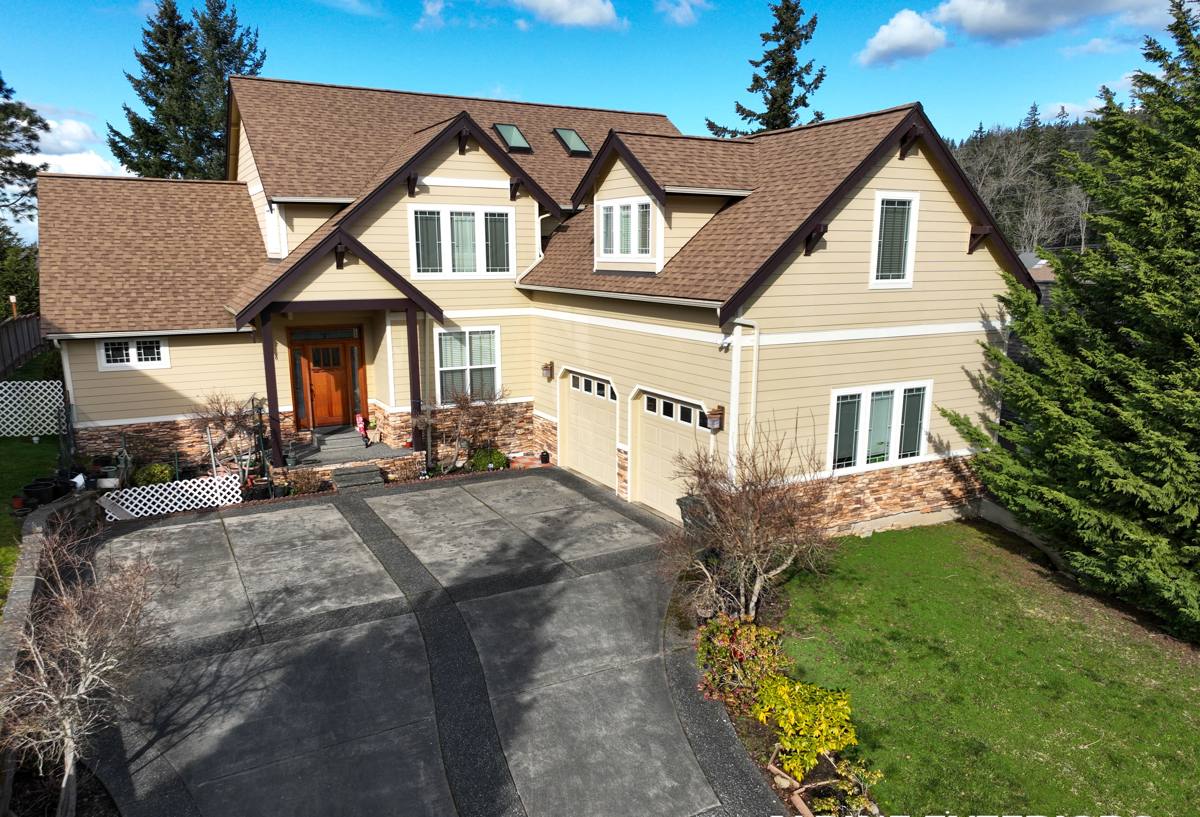
What Salt Air, Rain, and Moss Actually Do to a Shingle Roof
Salt Air
Airborne salt is corrosive to exposed metal — nail heads, flashing edges, vent caps, and gutter hardware all take the hit over time. On an asphalt shingle roof, the granules themselves hold up reasonably well against salt, but the metal components that make a roof watertight (step flashing, valley metal, drip edge) are the weak point. We spec corrosion-resistant fasteners and flashing for anything within reach of bay air, which is most of Birch Bay.
Driving Rain
Wind-driven rain off the bay doesn't just fall straight down — it gets pushed sideways and up under shingle edges, into valleys, and around penetrations like pipe boots and chimneys. A roof that's fine in a calm rain can still leak in a Birch Bay storm if the underlayment and flashing details weren't built for wind-driven water. This is where a lot of underperforming re-roofs fail: the shingles look right, but the water management underneath wasn't upgraded to match the exposure.
Moss Season
Whatcom County's wet season runs long, and shaded, north-facing, or tree-covered roof sections in Birch Bay rarely get enough sun or airflow to dry out between rain events. Moss doesn't just sit on top of shingles — its root structure works into the granule surface and lifts shingle edges, which opens a path for water underneath. Left alone, a moss problem accelerates every other issue on this list.
What a Correct Installation Involves Here
A shingle roof built for Birch Bay conditions isn't a different product line so much as a different set of decisions made at every layer of the assembly:
- Underlayment: synthetic or self-adhered underlayment rated for high-moisture exposure, with extra coverage at eaves, valleys, and penetrations rather than the manufacturer's bare minimum.
- Flashing: corrosion-resistant metal at all valleys, walls, chimneys, and roof-to-wall transitions — this is the single biggest factor in whether a coastal roof stays dry.
- Fasteners: hot-dip galvanized or stainless nails, not standard electro-galvanized, in anything exposed to salt air.
- Ventilation: balanced intake and exhaust ventilation so the underside of the roof deck can dry out between wet spells — poor ventilation traps moisture and shortens shingle life from below, not just above.
- Shingle selection: algae-resistant (AR-rated) shingles with copper or zinc granule content, which measurably slow the black streaking and biological growth that coastal moisture accelerates.
- Edge and valley detail work: closed or open valleys done with the metal and underlayment lapped correctly for wind-driven rain, not just standard straight-down runoff.
None of this is exotic. It's standard trade knowledge applied consistently, instead of skipped because it takes more time and material than a bare-minimum install.
New Roof vs. Repair vs. Moss & Maintenance Service
Not every Birch Bay roof needs full replacement. Here's how we sort out which service actually fits what we find during an inspection:
| Situation | Typical Service | What It Addresses |
|---|---|---|
| Roof under 12-15 years old, isolated leak or damaged section | Targeted repair | Fixes flashing, fastener, or localized shingle failure without disturbing sound roofing |
| Moss buildup on shaded or tree-covered slopes, roof otherwise sound | Moss removal & treatment | Clears growth, treats to slow regrowth, checks for lifted shingles underneath |
| Granule loss, curling, or multiple leak points, roof 18+ years old | Full re-roof | Replaces shingles, underlayment, and flashing as a complete, coastal-rated system |
| Chronic algae streaking or recurring moss despite cleaning | Re-roof with AR shingles + ventilation correction | Addresses root cause (moisture, poor drying, standard-grade shingles) instead of repeat treatment |
An honest inspection tells you which column you're in. We won't sell a full re-roof when a repair and a moss treatment plan will genuinely get you several more good years — and we won't recommend patchwork repairs on a roof that's past the point where that makes financial sense.
Our Process for Birch Bay Roofing Projects
1. On-Site Inspection
We walk the roof (not just look at it from the ground), check the attic or roof deck from below when accessible, and look specifically at flashing condition, fastener corrosion, moss and algae presence, and ventilation. You get a straight answer on condition, not a sales pitch.
2. Written Scope and Estimate
You get a clear scope of work — what's being replaced or repaired, what underlayment and flashing spec is going in, and what shingle product is recommended and why. No vague line items.
3. Material Staging and Weather Planning
Given how much of the year Birch Bay spends in active rain, we plan installs around weather windows and keep the roof deck protected at every stage so an open roof never sits exposed overnight.
4. Installation
Tear-off (when applicable), deck inspection and repair as needed, underlayment, flashing, and shingle installation done to the coastal-rated spec outlined above — not the manufacturer's bare minimum nailing and lap pattern.
5. Final Walkthrough
We walk the finished roof with you, cover what maintenance (if any) it needs going forward, and make sure gutters and downspouts are clear and functioning before we consider the job done.
Why Local Experience in Birch Bay Matters
A roofing crew that only occasionally works this close to the water can miss things that are second nature to a crew that works Birch Bay regularly — which slopes hold moss longest because of tree cover and orientation, which flashing details actually hold up against salt air over years instead of just passing a first inspection, and how far inland the driving-rain exposure really extends before it eases up. That local pattern recognition is the difference between a roof that's technically up to code and one that's actually built for where it sits.
It also means faster response when something does go wrong. A wind event or a heavy rain system that causes a leak doesn't wait for a convenient time, and a crew already working in the area can get to you faster than one dispatching from well outside Whatcom County.
Maintaining a Shingle Roof in This Climate
Even a well-installed roof benefits from basic upkeep in a moss-and-salt environment. A simple seasonal checklist for Birch Bay homeowners:
- Clear debris and moss from valleys and shaded slopes before it accumulates into mats
- Keep gutters and downspouts clear so water isn't backing up under eave shingles
- Trim back overhanging branches to cut down on shade and debris on north-facing slopes
- Watch for granule buildup in gutters, which signals accelerated shingle wear
- Have flashing and fastener condition checked every few years, not just when a leak shows up
- Address moss early with proper removal methods rather than pressure washing, which can strip granules and shorten shingle life
None of this requires a contractor visit every year, but a periodic check catches small issues — a lifted shingle tab, a spot of early corrosion on a flashing edge — before they turn into a leak that damages the deck underneath.
Signs a Birch Bay Roof Needs Attention
A few warning signs are worth acting on rather than waiting out:
- Dark streaking or green-black growth across shingle faces, not just in shaded corners
- Moss visibly lifting shingle tabs or growing thick enough to hold standing moisture
- Granules collecting in gutters or at downspout outlets in noticeable amounts
- Curling, cracking, or missing shingles, especially after a windstorm off the bay
- Water staining on interior ceilings, particularly near chimneys, valleys, or wall transitions
- Visible corrosion or rust streaking at flashing and vent penetrations
Any one of these on its own isn't necessarily an emergency, but they're worth a professional look rather than a wait-and-see approach given how quickly moisture problems compound in this climate.
Get a Straight Answer on Your Roof
If you're not sure whether your Birch Bay roof needs a repair, a moss treatment, or a full replacement, the fastest way to find out is a real inspection rather than a guess from the driveway. We offer free, no-pressure estimates for Birch Bay and the surrounding Blaine area — fill out the form below and we'll take a look and give you an honest read on where your roof actually stands.