 Blaine Siding
 Window Installation Built for Lynden's Weather, Not Just the Blueprint
Lynden homeowners deal with a version of Whatcom County weather that's different from what a window catalog assumes. Long stretches of driving rain, humidity that never fully clears, and a moss season that can run from fall through spring all put steady pressure on window frames, seals, and the flashing behind them. A window that's simply "installed" — set in the rough opening and caulked around the edges — will usually look fine for a year or two. Whether it still performs in year eight depends almost entirely on details most homeowners never see: how the opening was flashed, how the unit was shimmed and leveled, and how the water-resistive barrier was integrated with the new window's nailing fin.
This page covers window installation specifically for Lynden-area homes served by our Blaine-based crew — what the local climate does to windows over time, what a correct installation actually involves, and how our process works from first call to final walkthrough.
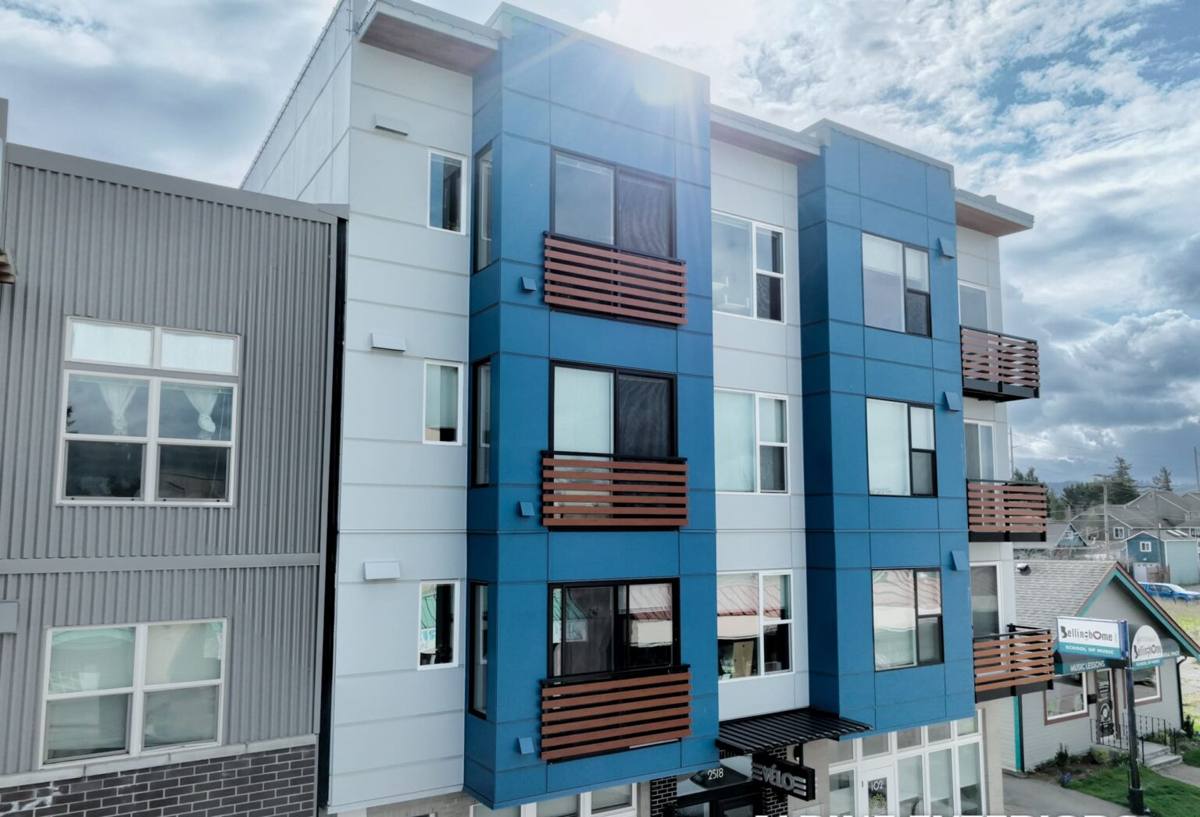
What Whatcom County's Climate Does to Windows Over Time
Blaine and the surrounding Whatcom County communities sit in a stretch of the Pacific Northwest where moisture is the constant variable. Homes closer to the water deal with salt air that accelerates corrosion on hardware and fasteners; homes further inland around Lynden get less of that salt exposure but see just as much — sometimes more — sustained rainfall and humidity working into wood trim, siding, and window frames. Add in a moss season that can stretch for months, and you've got an environment that's hard on any building material that isn't installed with drainage and sealing as the top priority.
A few specific ways this shows up around windows:
- Driving rain during wind events pushes water sideways into gaps that would stay dry in calmer climates, which is why flashing details matter more here than in drier regions.
- Constant humidity keeps wood-framed windows and trim damp longer after each rain, giving rot and mildew more time to take hold if the assembly can't dry out.
- Moss and algae growth on nearby roofing and siding sheds organic debris that collects in window tracks and sill areas, holding moisture against the frame.
- Salt-laden air, more pronounced near the coast but present throughout the region, speeds up corrosion on hinges, cranks, and screws that aren't rated for it.
- Seasonal temperature swings, while modest compared to inland climates, still cause enough expansion and contraction to fatigue poorly sealed joints over the years.
None of this means windows fail quickly here. It means the margin for a sloppy installation is smaller — a gap or a missed flashing detail that might take a decade to cause problems in a dry climate can show up as staining, soft trim, or a drafty room in a fraction of that time in Whatcom County.
Signs a Lynden Home Needs New Windows or a Correction
Some window problems are obvious. Others build slowly and get written off as "just an old house." Here's what we look for, and what homeowners should watch for between visits:
- Fogging or a permanent haze between the panes of a double-pane window, which means the seal has failed and the gas fill or air gap is gone.
- Soft or discolored wood trim around the window, especially at the bottom corners where water tends to collect and sit longest.
- Visible daylight or a noticeable draft at the frame when the window is closed and locked.
- Windows that are difficult to open, close, or lock — often a sign the frame has shifted or swollen from moisture.
- Peeling paint or bubbling on interior trim near the window, which usually points to moisture getting in from outside rather than a paint quality issue.
- A noticeable jump in heating costs without any other explanation, which can point to failed seals or gaps around older single-pane or early dual-pane units.
- Musty smell or visible mildew on the sill or lower sash, especially in rooms that don't get much airflow.
Any one of these on its own isn't necessarily an emergency. Several of them together, especially on a home that hasn't had its windows touched in fifteen-plus years, usually means it's worth getting an honest look before small problems become framing repairs.
What a Correct Window Installation Actually Involves
Removal and opening inspection
The old window comes out carefully so we can actually see the rough opening — the framing, the sheathing, and whatever water-resistive barrier is already in place. This is the point where hidden rot or old water damage shows up. It's also the only point in the whole job where that framing is visible, so it's the wrong place to rush.
Flashing and drainage
This is the step that matters most in a climate like ours. Flashing tape and pan flashing at the sill need to be integrated with the existing weather-resistive barrier in the right shingle-lap order, so any water that does get past the window sheds down and out rather than pooling at the sill or working behind the siding. Skipping or rushing this step is the single most common cause of hidden rot behind a "new" window a few years later.
Setting, shimming, and leveling
The new window has to be plumb, level, and square in the opening — not just close enough to look right from inside. An out-of-square window puts stress on the sash and hardware, which shows up later as a window that's hard to operate or a seal that fails early.
Insulating the gap
The space between the window frame and the rough opening needs to be filled with an appropriate low-expansion foam or backer rod and sealant — not stuffed with fiberglass batting, which does little to stop air movement and nothing to stop bulk water.
Exterior and interior sealing
Exterior caulking has to be compatible with both the window and the siding material, and applied so it sheds water rather than trapping it against the frame. Interior sealing and trim work finish the job and close off the last path for air leakage.
Choosing the Right Window for This Climate
There isn't one "correct" window for every Lynden home — the right choice depends on the home's age, siding type, and budget. But some factors matter more here than they would in a drier part of the country.
| Factor | What to consider in Whatcom County's climate |
|---|---|
| Frame material | Vinyl and fiberglass shed moisture well and need little upkeep; wood and wood-clad frames look great but need consistent exterior maintenance to avoid rot in a wet climate. |
| Glazing | Double-pane with a low-E coating is the practical standard for the region; triple-pane adds cost and weight with modest extra benefit unless the home has unusual noise or exposure issues. |
| Hardware finish | Corrosion-resistant hardware is worth the small upcharge, especially for homes closer to the water where salt air is a bigger factor. |
| Drainage design | Sills with built-in weep paths let water that does get into the track drain back out instead of sitting against the frame. |
| Installation method | Full-frame replacement with proper flashing outperforms an "insert" or pocket replacement on homes with any existing moisture concerns, even though it costs more upfront. |
We don't push a single brand or product line as the only right answer, because the honest answer changes with the house. What we do insist on is materials and hardware rated for coastal-influenced weather, and an installation method matched to the condition of the existing opening rather than the cheapest one available.
Our Process, From Estimate to Final Walkthrough
1. On-site assessment
We look at the existing windows, the surrounding trim and siding, and any signs of past water intrusion before quoting anything. This is also when we talk through what's actually needed versus what's optional.
2. Straightforward estimate
The estimate spells out materials, scope, and what's included — no vague line items. If full-frame replacement is warranted over a simpler insert job, we explain why, in plain terms.
3. Scheduling around the weather
Window openings can't sit exposed during a storm. We schedule and stage the work so each opening is weathertight again the same day it's opened, which matters more here than in a drier climate.
4. Installation
Removal, flashing, setting, insulating, and sealing, done in that order, with the rough opening inspected and, if needed, repaired before the new window ever goes in.
5. Cleanup and walkthrough
We clean up the work area and walk through the finished windows with the homeowner — operation, locks, and any care notes specific to the materials installed.
Why a Crew That Already Works in Lynden Matters
Window installation isn't a one-size-fits-all trade. A crew that regularly works Blaine and the surrounding Whatcom County communities, including Lynden, already knows what this region's rain and humidity do to a rough opening, what flashing details actually hold up here, and roughly what to expect from different housing stock in the area — older farmhouses with original wood trim, newer builds with vinyl siding, everything in between. That local pattern recognition shows up in small decisions on the job: knowing to check a sill more carefully on a certain home style, or recognizing early signs of rot that an out-of-area crew might not flag until it's already a bigger repair. It also means faster response if a problem shows up after the install, rather than waiting on a company that has to schedule a special trip back into the area.
Cost Factors Worth Understanding
Window installation pricing varies by home, but a few factors consistently move the number for Lynden-area jobs:
- Full-frame replacement versus insert replacement — full-frame costs more but is often the right call when there's any sign of moisture damage around the opening.
- Number and size of openings, and whether they're standard sizes or custom.
- Frame material and glazing package selected.
- Condition of the existing rough opening — hidden rot or framing repair adds labor that can't be known until the old window comes out.
- Trim and siding work needed to tie the new window in cleanly, especially on older homes with wood trim.
Most residential window projects land in a broad mid-range per opening once materials and labor are both accounted for, with full-frame replacements and larger custom units running higher. We'd rather give a homeowner a real number after seeing the actual windows than a rough figure that doesn't hold up once we're on site.
Ready When You Are
If your windows in the Lynden area are fogging, drafty, hard to operate, or just overdue for a look, we're glad to come take a real look and give you a straightforward estimate — no pressure, no obligation. Use the form below to get started.