 Blaine Siding
 Sandy Point's Exposure Is Different From an Inland Roof
Sandy Point sits out on the water, and that changes how a roof ages and how it fails. A roof a few miles inland in Whatcom County can go years between real problems. A roof at Sandy Point takes a steady beating from salt-laden wind, gets soaked from more directions than a typical roof plane was ever designed for, and spends a good chunk of the year damp enough to grow moss. When a windstorm rolls through the Strait, it doesn't just test the roof once — it tests every seam, nail, and flashing detail that's already been worked loose by months of that background exposure. That's why storm damage out here often looks worse, and runs deeper, than the visible damage suggests.
We work this neighborhood regularly, which matters more than it sounds like. A roof at Sandy Point isn't the same job as a roof three miles inland, and treating it that way is how repairs fail early.
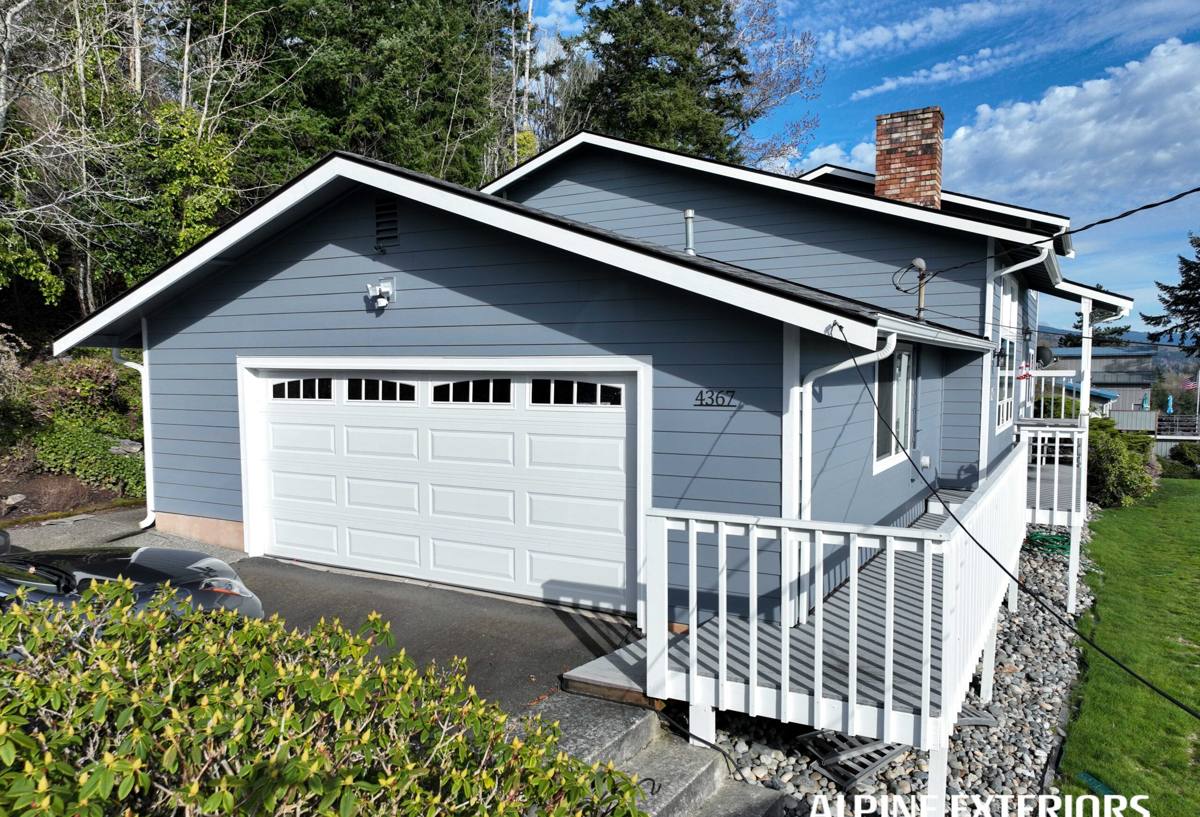
What Salt Air, Driving Rain, and Moss Season Actually Do
Salt Air
Airborne salt accelerates corrosion on anything metal — nail heads, flashing, gutter fasteners, ridge vents. A fastener that would last decades inland can start bleeding rust and losing its grip years sooner this close to the water. Once a fastener corrodes and loosens, the shingle or panel it's holding becomes the first thing to lift in the next windstorm.
Driving Rain
Storms off the water don't just drop rain straight down — wind pushes it sideways and up under laps, ridge caps, and flashing edges that are perfectly adequate against vertical rain. This is why a roof can look intact from the ground after a storm and still be leaking into the attic. The damage is at the details, not the field of the roof.
Moss Season
Whatcom County's wet, mild winters give moss a long runway to establish itself, especially on north-facing slopes and anywhere shade slows drying. Moss holds moisture against the roofing material far longer than open air would, and its root structure works into shingle granules and seams over time. A roof with moss going into a storm is already weaker at the exact points where wind and rain concentrate their force.
What a Correct Storm Damage Repair Involves
A repair that actually holds up out here needs to address more than the obvious hole or missing shingle. Our process on a storm call covers:
- A full roof inspection, not just a look at the reported damage area — wind damage is rarely confined to one spot
- Checking flashing at every penetration and transition (chimneys, vents, wall intersections) since these are the first failure points in wind-driven rain
- Assessing fastener condition nearby, not just at the damaged section, since corrosion doesn't stop at the repair boundary
- Checking the attic or roof deck from underneath where accessible, since leaks often travel before they show up on a ceiling
- Removing and treating moss buildup that contributed to the failure, not just patching over it
- Matching materials and installation method to the original roof so the repair doesn't become the next weak point
Common Storm Damage We See in This Area
| Damage Type | Typical Cause Here | What the Repair Requires |
|---|---|---|
| Lifted or missing shingles/panels | Wind uplift on fasteners weakened by salt corrosion | Replace fasteners with corrosion-resistant hardware, not just re-nail in place |
| Flashing leaks at chimneys/vents | Wind-driven rain forced under flashing laps | Re-seat or replace flashing with proper laps and sealant, not surface caulking |
| Soft or rotted decking | Long-term moss moisture retention plus a storm breach | Cut back and replace decking, not just cover it with new roofing |
| Granule loss / bare patches | Wind-blown debris combined with moss root damage | Section replacement matched to existing material, not a cosmetic patch |
| Gutter and edge detachment | Corroded fasteners plus wind load at roof edges | Re-fasten with marine-grade or coated hardware suited to salt exposure |
Our Process, Start to Finish
1. Inspection and Documentation
We walk the roof (or inspect from a ladder and vantage points where walking isn't safe) and document damage clearly enough to support an insurance claim if you're filing one. We tell you plainly what's storm damage versus what's pre-existing wear — insurers ask that question, and so should you.
2. A Written Scope and Estimate
You get a straightforward explanation of what needs to happen and why, broken into what's urgent (active leaks, exposed decking) versus what can be scheduled. No pressure to bundle in unrelated work.
3. Temporary Protection If Needed
If a storm has opened up the roof and more weather is coming, we'll tarp or dry it in before the full repair, so the interior of your home isn't taking on water while parts or scheduling line up.
4. The Repair
Matched materials, proper flashing detail, corrosion-appropriate fasteners, and moss treatment where it contributed to the failure. We don't consider a storm repair finished until the underlying cause — not just the visible hole — is addressed.
5. Follow-Up
We'll tell you honestly if the repair bought you a few years or if the roof's overall condition means a repair is a stopgap. That's information you need for planning, not a sales pitch.
Material Choices That Make Sense for This Microclimate
Some products that work fine elsewhere in Whatcom County are a poor fit this close to the water, and we'll tell you when that's the case rather than install something we know will underperform. As a general standard:
- We use corrosion-resistant fasteners (stainless or heavily coated) on any repair within the salt-exposed zone, even if the original roof used standard hardware — matching a failure point isn't a fix
- We favor flashing details with generous, properly lapped coverage over reliance on sealant alone, since sealant is a maintenance item and wind-driven rain will eventually find its limits
- We're cautious about roofing materials that trap moisture against the deck in a moss-prone, high-moisture climate — trade-offs around ventilation and drying time matter more here than in a drier inland location
- Where the existing roof material is discontinued or hard to match, we'll say so upfront rather than let a mismatched patch surprise you later
What Repairs Typically Cost — and What Drives the Range
Every roof and every storm is different, so treat this as general orientation, not a quote. A licensed inspection is the only way to get real numbers for your situation.
| Factor | Why It Moves the Price |
|---|---|
| Extent of decking damage | Rotted decking discovered under damaged shingles adds material and labor beyond the surface repair |
| Roof pitch and access | Steeper roofs and limited access (common on waterfront lots) increase labor time and safety setup |
| Flashing complexity | Roofs with multiple penetrations, valleys, or wall transitions need more detail work per repair |
| Material availability | Matching an older or discontinued roofing product can add cost or require a broader section replacement |
| Moss and moisture remediation | Treating the underlying cause, not just the storm damage, adds scope but prevents a repeat call |
Insurance Claims: What's Worth Knowing
Storm damage is often covered, but insurers distinguish between sudden storm damage and gradual deterioration (like long-term moss damage) — and they'll push back on claims where that line is blurry. Clear documentation of the storm event and the specific damage it caused is what supports a clean claim. We provide that documentation as a normal part of the inspection, and we're direct about which parts of any damage are storm-related versus pre-existing wear, because that honesty is what holds up if the claim gets questioned.
Why a Crew That Already Works Sandy Point Matters
A contractor who mainly works drier, more sheltered parts of Whatcom County can still do competent roofing — but they may not think to check corrosion on fasteners that look fine, or recognize moss patterns that signal a moisture problem building for months. Working this area regularly means we're not learning the microclimate on your roof. We know which details fail first out here, which materials hold up, and which shortcuts that pass elsewhere won't pass here.
After the Storm: A Practical Checklist
- Check the attic or ceilings for staining or moisture before assuming the roof is fine
- Photograph visible damage from the ground — don't climb up to inspect yourself
- Note the date and general conditions of the storm for insurance purposes
- Get a professional inspection promptly; moisture intrusion gets worse and more expensive the longer it sits
- Avoid patch jobs with mismatched materials or sealant-only fixes — they tend to fail again in the next storm
- Ask any contractor directly how they handle flashing and fastener corrosion in salt-exposed areas, not just shingle replacement
If a recent storm has left you with damage — or you're not sure whether what you're seeing is storm-related or just wear from another wet season — we're happy to take a look. Estimates are free, there's no pressure, and you'll get a straight answer about what your roof actually needs.