 Blaine Siding
 Birch Bay's Siding Problem Isn't Like Everyone Else's
Birch Bay sits right where Whatcom County's siding problems get concentrated. Homes here take on salt-laden air off the water, driving rain that comes in sideways during winter storms, and a moss season that runs longer than almost anywhere else in the state. A siding product and installation method that holds up fine forty minutes inland in Bellingham or Ferndale can fail years early two blocks from the beach in Birch Bay. That's not a knock on those products — it's just a different environment, and it needs to be treated like one.
This page is about one thing: installing siding correctly on a Birch Bay home, with a crew that already understands what this specific stretch of coastline does to a building envelope. We're not going to give you a generic siding overview. We're going to walk through what actually matters here.
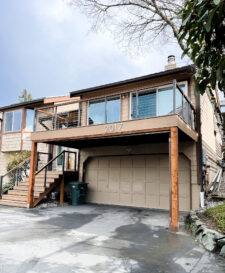
What Birch Bay's Coastal Climate Does to Siding Over Time
Three forces are working against your siding year-round in Birch Bay, and they compound each other.
Salt Air and Airborne Moisture
Proximity to Semiahmoo Bay and the Strait of Georgia means a steady drift of salt-carrying air onto exterior surfaces. Salt is corrosive to exposed metal fasteners and flashing, and it accelerates the breakdown of paint and cheaper coatings. Siding that isn't factory-finished to resist this kind of exposure tends to chalk, fade, or lose adhesion faster along the waterfront than it would even a few miles inland.
Wind-Driven Rain
Birch Bay catches weather straight off the water, and winter storms routinely push rain sideways into wall assemblies rather than letting it run straight down. That means the parts of an installation most homeowners never think about — flashing details, house wrap laps, weep paths, and caulk joints — matter more here than in a sheltered inland lot. A siding job that's "close enough" on flashing might never show a problem in a low-wind area. In Birch Bay, water finds the gap.
A Long Moss and Algae Season
Cool, damp, and often shaded lots around Birch Bay give moss and algae a long growing window — often nine or ten months of the year rather than a short summer break. Moss holds moisture against a wall surface, which is bad news for any siding material that isn't dimensionally stable or that swells when wet. Left unaddressed, moss growth can also work its way into seams and butt joints, prying them open over time.
Why James Hardie Fiber Cement Fits This Environment
We install James Hardie fiber cement exclusively, and Birch Bay is a good example of why. Fiber cement is a cement-based composite, not a wood product, so it doesn't absorb and swell with moisture the way wood-based or wood-fiber siding products can. That matters directly in a climate defined by driving rain and prolonged dampness.
James Hardie's ColorPlus factory finish is baked on and warranted against peeling and cracking, which holds up better against salt air exposure than field-applied paint. And Hardie's HardieZone system — engineering siding differently for wetter, colder regions versus hot, dry ones — means the product going on a Birch Bay home is specified for a Pacific Northwest moisture climate, not a one-size-fits-all national spec.
Fiber cement is also non-combustible, which matters less for the marine-air argument specifically but is part of why we standardized on it as our only product across every job we do, in Birch Bay and everywhere else we work.
What a Correct Installation Actually Involves
Fiber cement siding is only as good as the assembly it's installed into. The material itself resists moisture well, but a sloppy install can still let water behind it — and once water gets behind any siding, the sheathing and framing underneath are what actually rot. Here's what separates a correct install from a shortcut one:
| Detail | Done Right | Common Shortcut |
|---|---|---|
| Water-resistive barrier | Continuous house wrap, properly lapped shingle-style, taped at seams | Reused or damaged wrap, gaps left at penetrations |
| Flashing at windows/doors | Full flashing kit with head, jamb, and sill flashing integrated with the wrap | Caulk used in place of proper flashing |
| Rainscreen / drainage gap | Furring strips or drainage wrap creating an air gap behind siding | Siding installed tight to the wall with no drainage path |
| Fasteners | Corrosion-resistant fasteners at manufacturer-specified spacing and depth | Standard fasteners, overdriven or underdriven |
| Butt joints and seams | Sealed per Hardie spec or flashed, not just caulked and hoped for | Caulk-only joints that open up as caulk ages |
| Bottom clearance | Proper clearance from grade, decks, and roof lines to avoid wicking | Siding installed too close to grade or hardscape |
In a low-wind, dry climate, some of these shortcuts might not show consequences for years. In Birch Bay, wind-driven rain finds the gap faster, and salt air accelerates whatever corrosion starts.
How We Approach a Birch Bay Installation
1. On-Site Assessment
We look at more than square footage. Exposure to prevailing wind and rain, proximity to the water, existing moss or algae staining, and the condition of the current siding and any visible trim damage all factor into the plan before we quote anything.
2. Checking What's Underneath
Before new siding goes on, the old siding comes off and we look at the sheathing. This is the step that gets skipped by crews trying to move fast, and it's the step that matters most on a coastal property — if moisture has already gotten behind the old siding, covering it up with new material doesn't fix anything. Any soft or damaged sheathing gets identified and addressed before the wrap and flashing go on.
3. Weather-Resistive Barrier and Flashing
Given the wind-driven rain this area sees, we treat the house wrap and flashing stage as the most important part of the job, not a formality on the way to hanging boards.
4. Installing to James Hardie's Published Specifications
Fastener type, spacing, clearances, and joint treatment follow Hardie's installation instructions for this climate zone — not a generalized approach borrowed from drier-climate work.
5. Final Inspection and Walkthrough
We walk the finished job with you, covering what maintenance to expect and what normal weathering looks like versus something that needs a call back to us.
What Affects Cost on a Birch Bay Siding Job
Every home is different, so we won't quote a number here — but these are the real factors that move a Birch Bay siding installation up or down in price:
| Factor | Why It Matters |
|---|---|
| Home size and wall complexity | More square footage and more corners, dormers, and roof lines mean more labor and material |
| Condition of existing sheathing | Water-damaged sheathing found during tear-off adds repair scope |
| Siding profile and trim detail | Lap width, shake-style accents, and trim board complexity affect labor time |
| Access and site conditions | Waterfront lots, steep grades, or tight access can slow staging and installation |
| Existing siding removal | Full tear-off versus a simpler re-side affects disposal and labor costs |
What to Ask Before Hiring Anyone for This Job
Birch Bay's climate punishes a bad installation faster than most places, so vetting the crew matters more here, not less. Before you sign anything, ask:
- Are you installing to the manufacturer's published specifications for this climate zone, and can you explain what that means?
- Will you inspect and, if needed, repair sheathing before new siding goes on — not just cover the old wall?
- What's your approach to flashing at windows, doors, and roof lines?
- Are you licensed and insured to work in Whatcom County, and can you provide proof?
- Have you done siding work specifically in Birch Bay or other waterfront areas of Blaine before?
- What does the manufacturer's warranty actually cover, and is it transferable if you sell the home?
Why a Crew That Already Works Birch Bay Matters
Every siding crew will tell you they can handle a coastal job. Few have actually done the repeated work of installing on homes that take on salt air and wind-driven rain as a matter of course. That experience shows up in small decisions — how tight to run a drainage gap, which fastener corrosion resistance to insist on, how to sequence a tear-off around an unpredictable Whatcom County forecast — that don't show up on a spec sheet but do show up in how the siding performs five and ten years out.
Being based in Blaine also means we're not driving a crew in from out of the area for a one-off job. We know the permitting expectations for Whatcom County, we've seen how homes in this specific pocket of the coastline age, and we're around after the job is done if a question comes up.
Living With Hardie Siding in Birch Bay After Installation
Correctly installed James Hardie siding is low-maintenance, not zero-maintenance. In this climate, that means an occasional rinse-down to clear salt residue and any moss or algae buildup before it takes hold, especially on shaded, north-facing walls. Keeping gutters clear and vegetation trimmed back from siding also helps limit the damp, shaded conditions moss prefers. None of this is heavy work, but it's worth doing on a schedule rather than waiting until staining is visible.
If you're planning a siding project in Birch Bay, we're happy to take a look at your home and put together a free, no-pressure estimate — no obligation, just a straight assessment of what your house needs. The form below will get us started.