 Blaine Siding
 Roof Repair for Nooksack-Area Homes Near Blaine
Homes in and around Nooksack sit in one of the wetter, mossier corners of Whatcom County. Between salt-laden air moving in off the water near Blaine, long stretches of driving rain through fall and winter, and a moss season that can run eight months or more under the tree cover common to this area, roofs here take a specific kind of beating. A repair that would hold up fine in a drier inland climate can fail here within a season or two if it doesn't account for how much moisture this region actually deals with.
This page covers what roof repair actually means for homes in this part of Whatcom County — the problems we see most often, what a repair should include to actually last, and how we approach the work when you call us out.
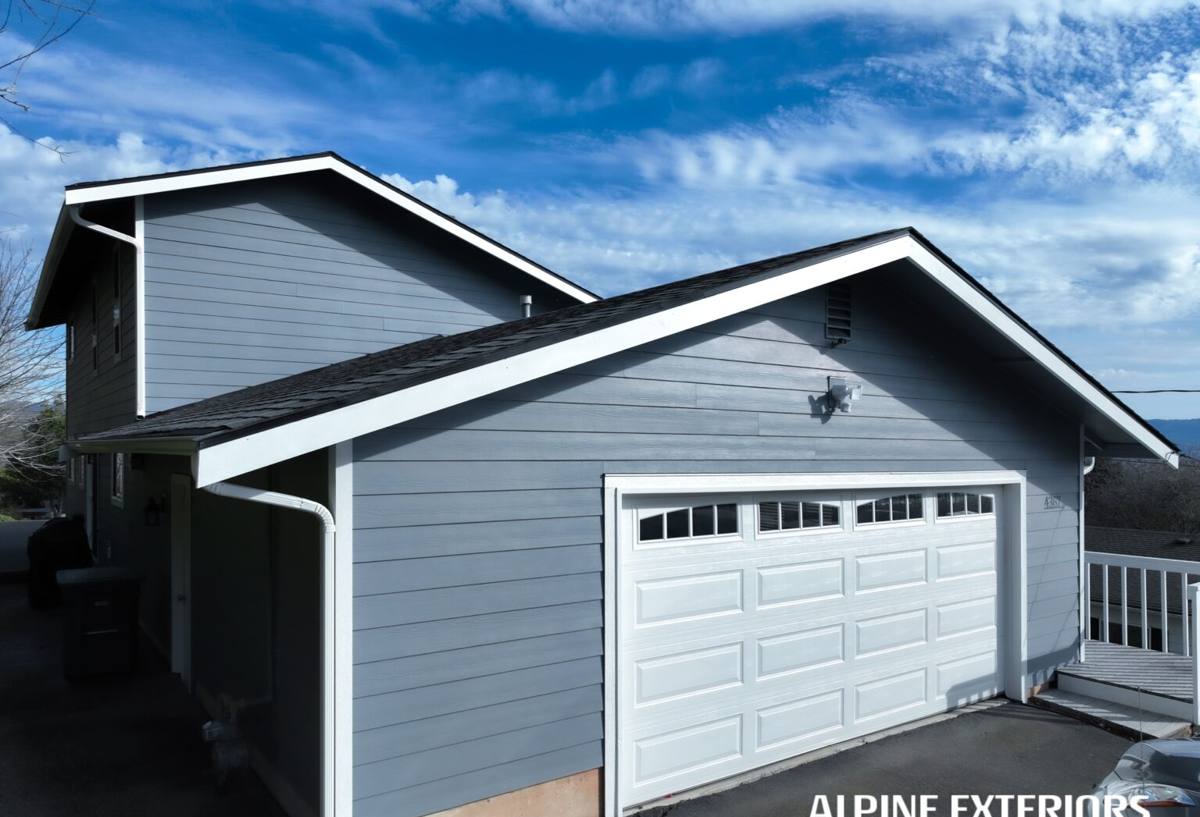
Why This Climate Is Hard on Roofs
Moss and Organic Growth
Moss doesn't just look bad — it holds moisture against the roofing material and works its way under shingle edges, lifting tabs and breaking the seal that keeps water out. On shaded north-facing slopes, moss can establish itself within a year of a roof being cleaned. Left alone, it accelerates granule loss on asphalt shingles and can rot the sheathing underneath long before the shingles themselves look obviously worn.
Driving Rain and Wind-Driven Water
Rain in this area rarely falls straight down. Wind off the water pushes it sideways, which means water gets tested at every horizontal seam, flashing edge, and exposed nail head on a roof — spots that would stay dry in a calmer climate. Flashing around chimneys, skylights, and roof-to-wall transitions is where we find the most repair calls, not because the materials are bad, but because wind-driven rain finds any gap that isn't sealed correctly.
Salt Air
Proximity to the water means metal components — flashing, fasteners, vents, gutter hardware — corrode faster here than they would further inland. Galvanized fasteners that would last decades elsewhere can start rusting and losing their grip in well under ten years near the coast. A repair that reuses corroded fasteners or unrated flashing metal is a repair that's already on a shorter clock.
Common Repair Issues We Find on Nooksack-Area Roofs
- Lifted or cracked shingle tabs along moss-affected slopes, especially north- and east-facing roof planes
- Failed or corroded flashing at chimneys, skylights, and roof-to-wall intersections
- Soft or rotted decking discovered once shingles are pulled back, usually at eaves and valleys
- Clogged or undersized gutters causing water to back up under the first course of shingles
- Granule loss and premature aging on roofs that have carried moss for multiple seasons without cleaning
- Nail pops and popped fasteners from seasonal expansion and moisture cycling
- Algae or black streaking, which is cosmetic but often signals a roof that stays damp longer than it should
What a Correct Repair Actually Involves
A lot of roof repair calls in this region are patch jobs — a bead of sealant over a leak, a few replaced shingles, done. That approach almost always comes back as a second service call within a year or two, because it treats the symptom and not the moisture path. A repair that's built to hold up here needs to:
- Identify the actual entry point, not just the spot where the stain shows up inside — water travels along rafters and decking before it drips, so the leak is often several feet from the ceiling stain
- Remove and replace any wet or rotted decking rather than shingling over it
- Re-flash properly with corrosion-resistant metal, not just re-caulk the old flashing
- Match shingle type, weight, and where possible color, so the repair doesn't stand out or create a mismatched wear pattern down the road
- Address the moss or debris that caused or contributed to the problem, not just the hole it left behind
Sealant has its place as part of a proper flashing detail, but it is not a substitute for correct flashing work. Caulk breaks down under UV and temperature cycling faster than the roof around it, so a repair that leans on sealant alone is one you'll be paying for again.
Repair vs. Replace: How We Make That Call
Not every roof that's leaking needs to be replaced, and not every roof that looks rough needs anything more than a targeted repair. We look at the whole picture before recommending either direction.
| Factor | Leans Toward Repair | Leans Toward Replacement |
|---|---|---|
| Age of roofing | Under 15 years, isolated issue | Nearing or past manufacturer's expected service life |
| Extent of moss/moisture damage | Limited to one or two slopes or a small area | Widespread across multiple slopes, recurring damage |
| Decking condition | Solid, no soft spots found on inspection | Soft, rotted, or delaminating in multiple areas |
| Number of prior repairs | First real repair needed | Third or fourth patch on the same roof |
| Shingle granule loss | Localized, rest of roof intact | Widespread and roof-wide, base color showing through |
We'll tell you honestly which side of that line your roof falls on. If a repair will genuinely hold, that's what we'll recommend — a roof that doesn't need replacing yet doesn't need one sold to it.
Materials We Use and Why
For repairs in this climate, we prioritize corrosion-resistant flashing metal, fasteners rated for coastal exposure, and underlayment that performs well under sustained damp conditions rather than just intermittent rain. Matching shingle products to the existing roof matters for both appearance and performance — mismatched granule types or weights can create uneven wear and, in some cases, void remaining manufacturer warranty coverage on the original roof. Where a full slope or section needs replacing rather than a spot patch, we'll talk through shingle options that hold up to moss and moisture exposure rather than just the least expensive product available.
Our Process
1. Inspection
We get on the roof, not just in the attic. A ground-level look or a quick attic peek misses most of what actually matters — flashing condition, decking softness, and the real extent of moss and granule loss all require an actual roof-surface inspection.
2. Honest Assessment
You get a plain explanation of what's actually wrong, what caused it, and what your realistic options are — repair, partial replacement, or full replacement — along with why we're recommending what we're recommending.
3. The Repair Itself
Wet decking gets replaced, not covered up. Flashing gets rebuilt with proper materials, not just resealed. Shingles are matched as closely as possible. We clean up moss and debris that contributed to the problem so the repair isn't undermined again within a season.
4. Follow-Through
We stand behind the repair work we do. If something isn't right, we come back and make it right.
Signs You Should Have Your Roof Looked At
- Visible moss growth, especially thick moss on north- or shade-facing slopes
- Granules collecting in gutters or at downspout outlets
- Dark streaking or discoloration across shingle courses
- Ceiling stains, even faint ones, especially after a windy rainstorm
- Shingles that look curled, cracked, or lifted at the edges
- Visible rust or corrosion on flashing, vents, or gutter hardware
- A roof that's had more than one prior patch job in the same area
Catching these early is almost always cheaper than waiting. A shingle repair costs far less than the decking replacement and interior repair that follows a leak left unaddressed through a wet Whatcom County winter.
Why a Local Crew Matters for This Kind of Work
Roof repair in this area isn't identical to roof repair in a drier, inland climate, and it isn't identical to coastal repair work done somewhere without our specific moss and rain patterns either. A crew that regularly works Blaine and the surrounding Nooksack-area communities already knows which slopes hold moss longest, which flashing details tend to fail first in wind-driven rain, and how local seasonal moisture affects timing for repair work. That familiarity shows up in fewer callbacks and repairs that are built for the conditions they'll actually face, not generic conditions from a training manual.
We're licensed and insured to work in Washington, and we back our repair work because we're planning to still be doing roofs in this area next year and the year after — not just passing through for a one-off job.
Get a Free, No-Pressure Estimate
If you've noticed moss buildup, a stain on the ceiling, or shingles that don't look right, it's worth having someone look before it turns into a bigger repair. Reach out using the form below for a free estimate — no pressure, no obligation, just an honest look at what your roof actually needs.