 Blaine Siding
 Metal Roofing Built for Grandview's Weather, Not Just Its Rooflines
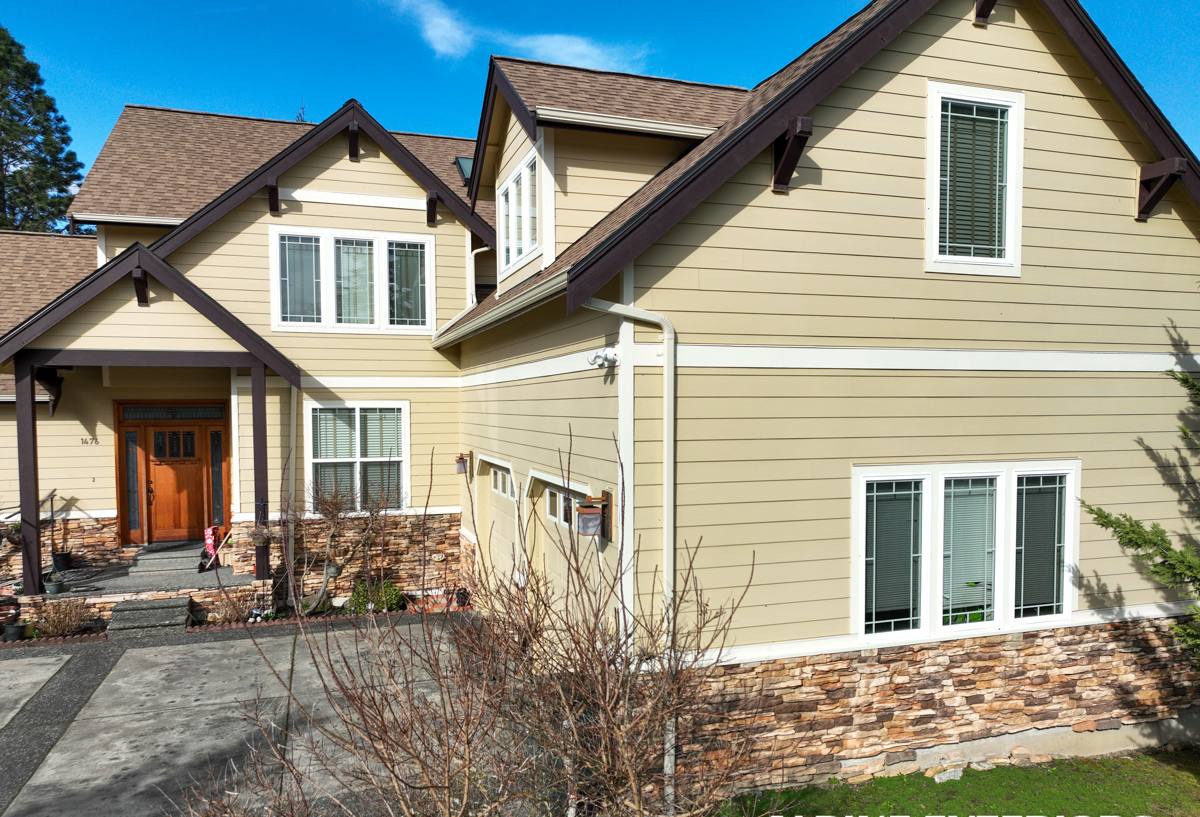
Grandview homes sit close enough to the water and the Canadian border that they take on a specific mix of punishment most inland Whatcom County homes never see: salt-laden air off the Strait, wind-driven rain that finds every weak seam, and a wet season long enough to grow a thick coat of moss before summer ever dries things out. A roof here isn't just shedding water in a storm and sitting idle the rest of the year. It's under some form of moisture stress for eight or nine months out of twelve. Metal roofing, installed correctly for this specific environment, handles that load better than almost anything else on the market — but "installed correctly" is doing a lot of work in that sentence, and it's where most of the value of hiring a local, experienced crew actually lives.
What Salt Air, Driving Rain, and Moss Season Actually Do to a Roof
Salt Air
Airborne salt from Semiahmoo Bay and the Strait of Georgia settles on every exterior surface in the area, roofs included. On bare or poorly coated metal, that salt accelerates corrosion at fastener heads, cut edges, and any spot where the protective coating has been scratched or worn thin. It's a slow process, but it's relentless, and it doesn't take a break in the summer the way rain-driven wear does.
Driving Rain
Blaine's storms rarely come straight down. Wind off the water pushes rain sideways and up under laps, around penetrations, and into any flashing detail that was cut corners on. A roof that would perform fine in a calm rain event can leak here simply because the water is being pushed uphill against gravity at a valley or a wall transition.
Moss Season
Whatcom County's long, mild, wet stretch from fall through spring is close to ideal moss-growing weather. On asphalt shingles, moss roots into the granules and lifts them, shortening the roof's life. On a properly installed metal roof, moss has nothing to grip — but debris buildup in valleys and around low-slope transitions can still hold moisture against the surface long enough to cause staining or, over years, coating breakdown if it's never cleared.
Why Metal Roofing Fits Grandview's Conditions So Well
Metal roofing addresses each of those three stressors more directly than most other roofing materials:
- Steep-profile, tightly seamed panels give wind-driven rain almost no ledge to catch and work its way under.
- A hard, smooth, coated surface gives moss spores nowhere to establish, which matters over a wet season that runs most of the year here.
- Modern coatings and finishes are formulated specifically to resist coastal salt exposure, when the coating and fastener system are matched correctly for a marine-influenced climate like Blaine's.
- Metal sheds heavy, sustained rain fast, which matters when a storm sits over the Strait and dumps for hours rather than minutes.
None of that is automatic, though. A metal roof only performs this way when the panel type, coating, fastening system, and flashing details are matched to the site. A generic installation — the kind that would be fine in a drier inland climate — can still fail here at the seams, the fasteners, or the flashing long before the panels themselves wear out.
Choosing the Right Metal Roofing System for a Grandview Home
Not every metal roofing system is built the same way, and the differences matter more in a coastal, high-moisture climate than they would somewhere drier. The table below outlines how the common options compare for a home in this kind of environment.
| System Type | Fastening | Best Fit For | Coastal Trade-Offs |
|---|---|---|---|
| Standing seam (concealed fastener) | Hidden clips, no exposed screws | Full roof replacements, homes with visible or steep rooflines | Highest wind and water resistance; no exposed fasteners for salt air to attack; higher upfront cost |
| Exposed-fastener panel | Screws through the panel face, with washers | Budget-conscious projects, secondary structures | Lower cost, but every screw is a future maintenance point as gaskets age and fasteners are exposed to salt air |
| Stone-coated steel | Concealed or semi-concealed depending on profile | Homeowners who want a shingle or shake look with metal's durability | Heavier system, good wind rating, coating must be matched to marine exposure |
| Aluminum panel systems | Varies by profile | Homes very close to the water or with heavy salt exposure | Naturally corrosion-resistant since it doesn't rust, though it costs more and dents more easily than steel |
For most Grandview homes, we lean toward standing seam or a well-matched aluminum system specifically because they minimize exposed fasteners, which are the single most common point of long-term coastal corrosion on any metal roof.
What a Correct Metal Roofing Job Actually Involves
Underlayment and Moisture Barrier
A high-temperature, self-adhered synthetic underlayment goes down first, with extra layers at valleys, eaves, and any low-slope transitions where wind-driven rain is most likely to be pushed uphill. This is the roof's backup layer if wind ever forces water past the panels themselves, and it matters more here than in drier parts of the state.
Fastening and Sealants
Fastener type, coating, and spacing all need to match the panel manufacturer's specification and the wind exposure of the specific home — a house with an open water view or an exposed elevation needs tighter fastening than one tucked behind trees and neighboring structures. Sealants at seams and penetrations need to be rated for long-term UV and moisture exposure, not general-purpose caulk that will fail in a few seasons.
Flashing at Every Transition
Valleys, wall-to-roof transitions, chimneys, and vent penetrations are where the vast majority of roof leaks actually start, on any roof type. Flashing has to be formed, layered, and sealed correctly for the specific geometry of the roof — not just dropped in as a stock piece.
Ventilation
Metal roofs still need a properly vented attic or roof assembly underneath. Without adequate airflow, condensation can form on the underside of the panels in our damp climate, leading to moisture problems in the attic even though the roof surface itself is doing its job on the outside.
Edge and Penetration Detailing
Drip edges, rake trim, and any pipe or vent boot need to be detailed to shed water outward and downward, never allowing wind-driven rain a path to travel backward under a trim piece. This is the kind of detail that separates a roof that looks right from one that actually performs right in a storm coming off the water.
Our Process, From Estimate to Cleanup
- On-site assessment. We walk the roof, check the existing structure, note wind exposure and any problem areas like valleys or low-slope sections, and talk through panel and finish options that fit the home and the budget.
- Written estimate. A clear scope covering tear-off (if needed), underlayment, panel and flashing specifications, and a realistic timeline, so there are no surprises once work starts.
- Prep and protection. Landscaping, siding, and gutters near the work area are protected before tear-off begins.
- Tear-off and deck inspection. If we're removing an existing roof, we check the deck underneath for any rot or damage before new underlayment goes down — this is often where hidden problems from the old roof surface.
- Underlayment, panels, and flashing. Installed in the sequence and detail described above, with valleys, transitions, and penetrations getting the closest attention.
- Final walk-through. We review the completed roof with the homeowner, point out anything specific to that home's maintenance going forward, and make sure the job site is cleaned up completely.
Maintenance a Grandview Metal Roof Actually Needs
One of the appeals of metal roofing is how little ongoing maintenance it requires compared to shingles, but "low maintenance" isn't "no maintenance," especially in a climate that stays wet for most of the year. A short seasonal checklist covers what actually matters:
- Clear debris — needles, leaves, and small branches — out of valleys and off low-slope sections once or twice a year, especially heading into and out of the wettest months.
- Check gutters and downspouts for buildup that can back water up under the roof edge.
- Look at exposed fasteners, if the system has them, for early signs of corrosion or a loosening head.
- Inspect sealant at penetrations and flashing every couple of years, since sealants age faster in constant damp and salt exposure than the metal panels themselves.
- After any significant windstorm off the water, a quick visual check for lifted trim or displaced flashing is worth the ten minutes it takes.
Why a Crew That Already Works Grandview Matters Here
A roofing crew that mainly works drier, inland regions can install a technically correct metal roof and still get the details wrong for a place like Grandview — under-fastening for wind exposure, using a coating or sealant not rated for salt air, or skipping the extra underlayment at valleys because it's rarely necessary where they usually work. A crew that's actually done roofs in and around Blaine already knows how hard the wind comes off the water on an exposed lot, how long moss season really runs here, and which flashing details tend to fail first on homes in this specific part of Whatcom County. That local knowledge doesn't show up as a line item on an estimate, but it shows up in whether the roof is still watertight after its first real winter storm season.
What This Costs, and What Actually Drives the Price
Metal roofing costs more upfront than asphalt shingles, but it also lasts considerably longer and needs far less mid-life maintenance — which is a real factor in a climate that's hard on any roof. Rather than quote a number that won't reflect your specific home, it's more useful to know what actually moves the price:
| Cost Factor | Why It Matters |
|---|---|
| Panel type (exposed-fastener vs. standing seam) | Standing seam costs more in material and labor but eliminates exposed fasteners, which matter most in salt air |
| Roof complexity | Valleys, dormers, and multiple roof planes all add flashing work and labor time |
| Tear-off vs. new construction | Removing and disposing of an existing roof adds cost versus installing over new decking |
| Deck condition | Any rot or damage found during tear-off needs repair before new underlayment goes down |
| Coating and finish | Marine-grade coatings built for salt exposure typically cost more than standard finishes, but they're worth it this close to the water |
The only way to get an accurate number is a look at the actual roof, which is exactly what an in-person estimate is for.
Ready to Talk About Your Roof?
If you're weighing a metal roof for a Grandview home, we're glad to come take a look, walk you through what your specific roof needs, and give you a straightforward, no-pressure estimate. Use the form below to get started.