 Blaine Siding
 Why Everson Roofs Wear Out Faster Than the Warranty Suggests
Every asphalt shingle sold in the Pacific Northwest carries a warranty written for a national average climate — not for Whatcom County. Everson sits inland from the Salish Sea, but moisture-laden marine air still pushes up the valley on a regular basis, mixing with river-bottom humidity and long stretches of low winter sun. The result is a roof environment that stays damp far more of the year than the shingle manufacturer's lab testing ever accounted for.
That combination — driving rain, salt-tinged air, and short winter days that never quite dry a roof deck out — is exactly what shortens the practical life of a roofing system here. A shingle rated for 30 years in Arizona might realistically give you 18-22 good years in this part of Whatcom County, and the difference almost always shows up first as moss, not as missing shingles.
The Moss Season Problem
Moss doesn't need much to get established: shade, moisture, and a north- or east-facing slope that doesn't see direct sun for much of the day. Everson's tree cover and the region's long wet season give moss spores exactly what they want for months at a stretch. Once moss takes hold, it does more than look bad — it lifts shingle edges, holds water against the roofing mat, and accelerates granule loss. A roof that looks "mossy but fine" from the ground is often losing years of service life underneath.
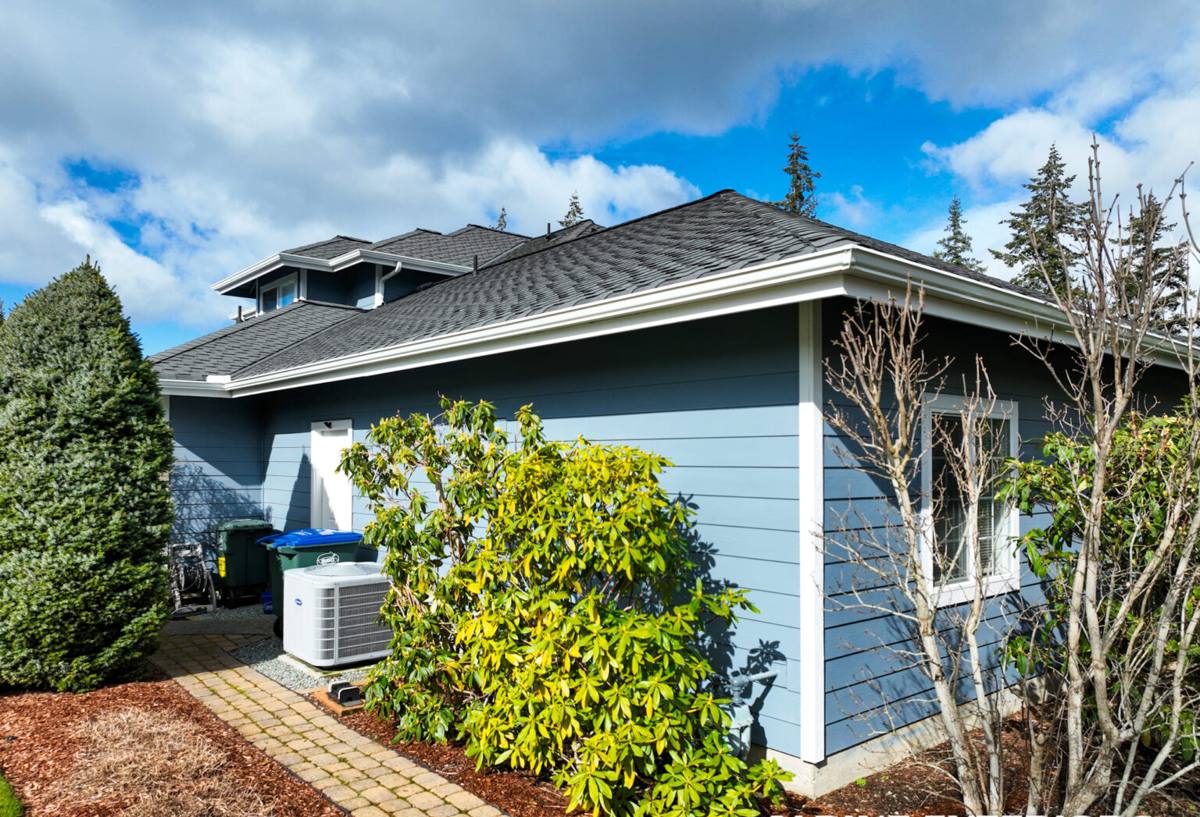
Signs an Everson Roof Needs Replacement, Not Just Repair
Not every roofing problem calls for a full tear-off. But there's a point where patching stops being cost-effective and starts being a way to delay an inevitable, larger bill. We look at the whole picture before recommending replacement over repair.
- Granule loss heavy enough that shingles look patchy or blotchy from the ground
- Moss or algae staining across more than a third of the roof, especially on shaded slopes
- Soft or spongy decking discovered during inspection, usually near valleys or eaves
- Curling, cupping, or cracked shingles concentrated on south- and west-facing slopes
- Repeated leaks in different locations rather than one isolated spot
- Flashing that's been re-caulked multiple times instead of properly replaced
- A roof already past 18-20 years old with two or more of the issues above
If a roof shows one or two of these in isolation, targeted repair often makes sense. When several show up together, that's usually the underlayment and decking telling you the whole system is failing, not just the surface layer.
Choosing the Right Roofing System for This Climate
Material choice matters more here than in drier parts of the state. We steer most Everson homeowners toward systems that handle sustained moisture and moss pressure well, and we're upfront about the maintenance trade-offs of each option rather than pushing whatever has the best margin.
| Roofing Material | Moss/Moisture Performance | Typical Lifespan Here | Maintenance Burden |
|---|---|---|---|
| Standard 3-tab asphalt | Fair — prone to moss without treated granules | 15-18 years | Moderate; needs periodic moss treatment |
| Algae-resistant architectural shingle | Good — copper-infused granules slow regrowth | 22-28 years | Low to moderate |
| Standing seam metal | Excellent — sheds moisture, little surface for moss to grip | 40-50+ years | Low |
| Cedar shake (untreated) | Poor in this climate without diligent upkeep | Highly variable | High; we recommend this only with eyes open |
We're not against cedar as a look — it's a legitimate architectural choice — but we tell homeowners plainly that untreated cedar shake in a moss-heavy, high-moisture climate demands a maintenance schedule most people underestimate. If a client wants that look, we talk through pressure-treated or factory-treated options and set honest expectations before signing anything.
What a Correct Tear-Off and Replacement Actually Involves
Full Tear-Off and Deck Inspection
We remove the existing roofing down to the deck on every replacement — no roofing over an old layer. That's the only way to actually see what's underneath: soft spots, delaminated plywood, or rot around old flashing that a re-roof-over-existing job would just bury for the next crew to find. Any damaged decking gets replaced before anything new goes down, not patched around.
Underlayment and Water Barrier
Given how much rain this area sees, we don't treat underlayment as an afterthought. Synthetic underlayment across the full deck, with self-adhering ice-and-water barrier at eaves, valleys, and any roof-to-wall transitions, gives the deck a real second line of defense if wind-driven rain ever gets past the shingles themselves — which, on an exposed slope in a storm, it eventually will.
Flashing Done Right, Not Recaulked
Chimneys, skylights, vent pipes, and wall intersections fail more roofs than the shingle field does. We install new step flashing, counter-flashing, and pipe boots rather than caulking over existing metal — caulk is a temporary fix, not a flashing method, and it's usually the first thing to fail again within a couple of seasons.
Ventilation
A roof that can't breathe traps moisture in the attic, which shows up as premature deck rot and interior condensation problems long before the shingles themselves fail. We check intake (soffit) and exhaust (ridge or box vents) balance on every replacement and correct it when the existing setup is undersized — a common issue on older Whatcom County homes that predate current ventilation standards.
Moss Prevention Built Into the Job, Not Sold as an Extra
Rather than treating moss control as an upsell, we build prevention into the installation itself wherever it makes sense for the home:
- Zinc or copper control strips near the ridge on shaded slopes, which release trace metal ions that inhibit moss regrowth with every rain
- Algae-resistant shingle products on north- and east-facing exposures where moss pressure is highest
- Trimming recommendations for overhanging branches that keep a slope shaded and damp longer than it needs to be
- Correct slope transitions and flashing so water doesn't pool in low spots that become moss's favorite starting point
None of this eliminates the need for occasional roof cleaning, but it meaningfully slows how fast moss comes back — which is the realistic goal in this climate, not a moss-free roof forever.
Our Process, Start to Finish
- On-site inspection: We walk the roof and attic, not just the ground, before quoting anything.
- Written estimate: Material options, scope, and a firm price — no vague allowances that turn into change orders mid-job.
- Scheduling around weather: We plan tear-offs for dry windows and tarp exposed sections immediately if conditions shift, since an open deck and Whatcom County rain don't mix.
- Tear-off and deck repair: Old roofing removed, decking inspected and repaired as needed.
- Underlayment, flashing, and roofing installation: Installed to manufacturer specification, not shortcuts that void the warranty.
- Cleanup and magnetic nail sweep: Yard, driveway, and gutters cleared before we consider the job done.
- Final walkthrough: We review the finished roof with the homeowner and go over any maintenance recommendations specific to the home's exposure.
Permits, Timing, and Local Scheduling
Roof replacements in Whatcom County typically require a building permit, and we handle that process as part of the job rather than leaving it to the homeowner. Timing matters too: the driest, most predictable stretches for a multi-day tear-off in this part of Washington are generally late spring through early fall, though we work outside that window when conditions allow and a home's situation calls for it — a failing roof doesn't always wait for ideal weather. We build weather contingency into every schedule so an unexpected system moving in doesn't leave a home exposed.
What to Ask Before Hiring a Roof Replacement Crew
Whatcom County has no shortage of roofing crews, and quality varies widely. Before hiring anyone for a replacement, we'd suggest asking:
- Is the crew licensed and insured in Washington, and will they provide proof directly?
- Do they perform a full tear-off, or do they offer to roof over the existing layer?
- What underlayment and ice-and-water barrier do they use, and where specifically is it installed?
- Will they replace flashing, or plan to caulk and reuse the existing metal?
- Do they check attic ventilation as part of the scope, or only the visible roofing?
- What's included in the written warranty, and does it cover labor as well as materials?
- Do they pull the required permit themselves?
A contractor who answers these clearly and specifically, without vague reassurances, is usually one who does the work the same way regardless of who's watching.
Why Local Experience in This Climate Matters
A roofing crew that mostly works drier parts of the state will spec materials and details that make sense somewhere else, not here. Working regularly in Whatcom County means seeing firsthand which shingle lines actually hold up against sustained moss pressure, which underlayment details prevent the leaks that show up two winters later, and which older Everson-area homes need ventilation upgrades as part of a proper replacement rather than an afterthought. That local pattern recognition is hard to substitute for, no matter how good a crew's out-of-town reputation is.
If your roof is showing moss, granule loss, or you're just past the point of trusting another patch job, we're happy to take a look and give you a straightforward, no-pressure estimate — use the form below to get started.