 Blaine Siding
 Storm Damage Roof Repair Built for Dakota Creek
Dakota Creek sits close enough to the water and the open farmland east of Blaine that roofs here take a different kind of beating than roofs a few miles inland. Wind off the Strait and the Salish Sea pushes rain sideways instead of straight down, salt-laden air works on fasteners and flashing year after year, and the shaded, damp stretches along the creek corridor keep moss growing for most of the calendar. When a storm rolls through, the damage it leaves behind on a Dakota Creek roof often isn't the obvious kind — no missing shingle sitting in the yard, no hole you can see from the driveway. It's a lifted tab, a bent flashing edge, or a seam that's been quietly letting water in for weeks before a stain shows up on a ceiling. This page covers what storm damage repair actually means for homes in this specific part of Whatcom County, what a correct repair looks like, and how our process works from first call to finished job.
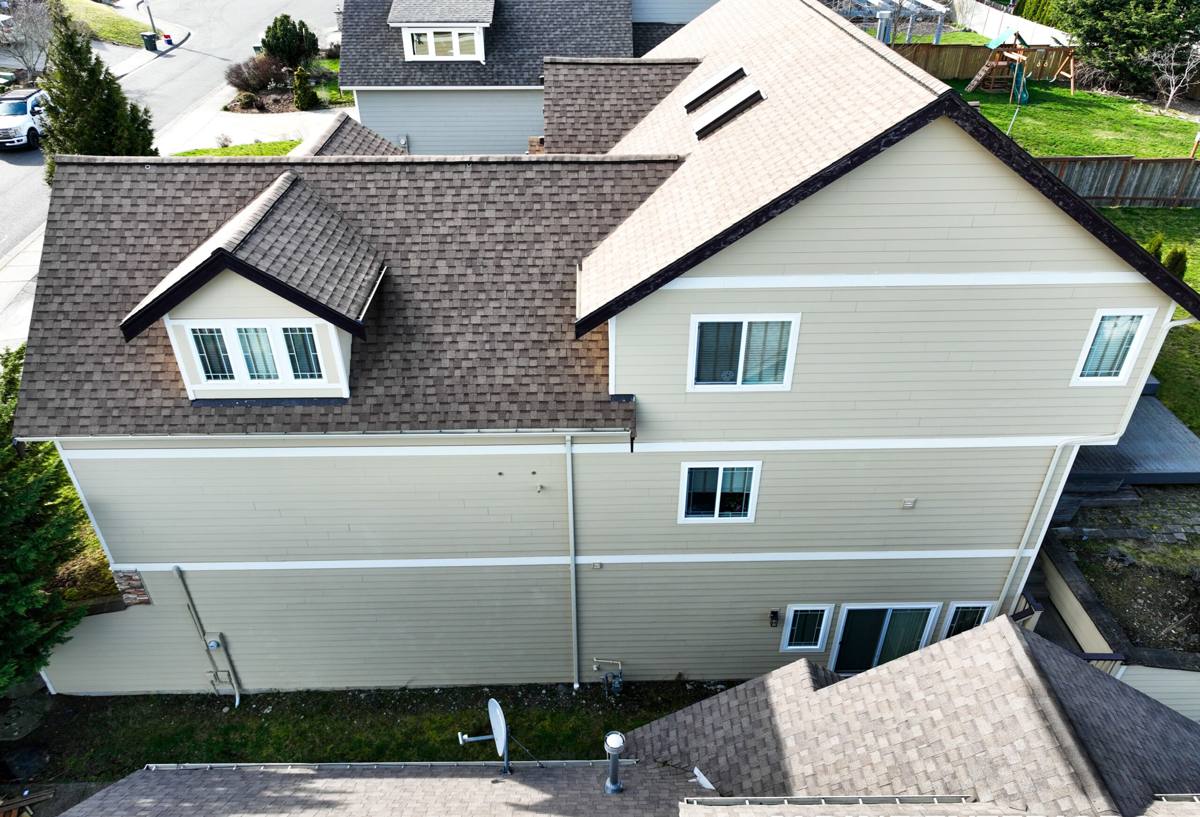
What Counts as Storm Damage Here
Not every storm event leaves the same kind of damage, and not every kind of damage needs the same response. Understanding the difference matters because it affects both the urgency of the repair and, if you're filing a claim, how the damage gets documented.
| Damage Type | What It Looks Like | Typical Cause Locally | Urgency |
|---|---|---|---|
| Wind-lifted or creased shingles | Tabs that no longer lie flat, cracked or folded shingle edges | Gusts off open water and farmland with no windbreak | High — exposed nail heads and open seams let rain in fast |
| Flashing separation | Gaps at chimneys, vent pipes, valleys, and roof-to-wall joints | Repeated wind flex plus corrosion from salt air | High — flashing failures cause more interior leaks than shingle loss |
| Debris impact | Punctures, cracked shingles, dented metal roofing or gutters | Branches and cones from nearby trees during high wind | Medium to high depending on depth of the puncture |
| Granule loss and surface wear | Bald patches, granules collecting in gutters | Driving rain combined with age and moss root activity | Medium — accelerates aging but rarely an immediate leak |
| Moss-related lifting | Shingle edges pushed up along moss colonies, soft or spongy spots | Long shaded, damp season along the creek corridor | Medium to high once lifting has started |
Why Salt Air, Driving Rain, and Moss Season Change the Job
Salt Air and Corrosion
Even set back from the immediate shoreline, Dakota Creek homes get enough salt-carrying air to accelerate corrosion on exposed metal — flashing, drip edge, fasteners, and gutter hardware all age faster here than they would on an identical roof twenty or thirty miles inland. A repair that reuses corroded fasteners or unsealed metal is a repair that's already on a shorter clock. We factor that into material choice and how joints get sealed, not just how they get patched.
Driving Rain and Wind Direction
Straight-down rain and sideways rain behave very differently on a roof. Wind-driven rain finds weaknesses that would never be a problem in calm conditions — it works up under shingle edges, through marginal flashing laps, and into any gap that faces the prevailing wind. A repair has to account for wind direction, not just patch the visible hole, or the same spot fails again in the next storm.
The Long Moss Season
Whatcom County's damp, mild climate keeps moss active for most of the year, and Dakota Creek's tree cover and creekside moisture make it worse than more open parts of Blaine. Moss isn't just cosmetic — its root structure lifts shingle edges, holds moisture against the roof deck, and turns minor storm damage into rot if it's left untreated during a repair. Any storm repair on a roof with active moss growth needs to address the moss itself, not just the damage next to it.
What a Correct Storm Damage Repair Involves
Full-Roof Inspection, Not Just the Reported Spot
Storm damage rarely stays in one place. A homeowner might call about a stain on a bedroom ceiling, but the actual entry point can be several feet away, at a flashing joint or a valley the wind hit hardest. We inspect the whole roof plane — not just the area near the visible symptom — before we quote or start any repair work.
Matching Materials Correctly
Shingle color, profile, and even granule composition change between manufacturing runs, so a patch that doesn't match isn't just a cosmetic issue — mismatched or incompatible materials can create their own weak points where the old and new sections meet. We match material as closely as the existing roof allows and are upfront when an exact match isn't possible.
Flashing and Underlayment, Not Just Shingles
A repair that replaces damaged shingles but leaves compromised flashing or torn underlayment underneath hasn't actually fixed the leak path — it's delayed it. Given how much local leak damage traces back to flashing rather than shingles themselves, we treat flashing and underlayment condition as part of every storm repair, not an upsell.
Addressing Moss and Debris Before Closing Up
If moss, needles, or debris contributed to the damage or sit near the repair area, we clear and treat that area as part of the job. Closing up a repair over active moss growth just guarantees a repeat call.
How Our Process Works
Homeowners calling about storm damage usually want two things: an honest read on how bad it is, and a clear idea of what happens next. Here's the sequence we follow.
- Initial contact and scheduling — we get a general description of the damage and timeline, and prioritize active leaks over cosmetic damage.
- On-site inspection — a full roof walk or ground/ladder assessment depending on conditions, covering the whole roof, not just the reported area.
- Documentation — photos of the damage and its likely cause, useful whether you're paying out of pocket or working with an insurance adjuster.
- Written scope and estimate — what needs to be repaired, what materials will be used, and a straightforward cost range.
- Repair work — matched materials, proper flashing and underlayment attention, and moss or debris cleared from the work area.
- Final walkthrough — we show you what was done and flag anything else worth watching, even if it's not urgent yet.
Repair or Replace? Local Cost Factors
Storm damage doesn't always mean a full roof replacement, but it's a fair question to ask, especially on a roof that was already aging before the storm hit. These are the factors that actually drive the decision.
| Factor | Favors Repair | Favors Replacement |
|---|---|---|
| Roof age | Roof is under roughly 12-15 years old | Roof is near or past typical service life for its material |
| Extent of damage | Damage is localized to one or two areas | Damage is spread across multiple roof planes |
| Underlying condition | Deck and underlayment are sound elsewhere | Rot, widespread moss lifting, or repeated past repairs found |
| Material availability | Existing shingle or panel style is still obtainable or a close match exists | Discontinued material with no reasonable match |
| Insurance scope | Claim covers the specific damaged area | Adjuster's scope already trends toward full slope or full roof |
We'll always tell you honestly which side of that table your roof falls on. A repair that's likely to need another repair within a year or two isn't a favor to you, and we won't sell it as one just to get the smaller job.
Why a Crew That Already Works Dakota Creek Matters
A roofer who works this specific area regularly has already seen how the local conditions play out on real roofs — which flashing details tend to fail first in this wind exposure, how aggressively moss establishes itself along the creek's shaded stretches, and which repair shortcuts don't hold up through a full Whatcom County winter. That's different from general roofing experience. It means fewer surprises during the inspection, a scope that accounts for conditions specific to this neighborhood rather than a generic checklist, and a crew that can show up quickly when storm damage needs attention before the next system rolls through. Blaine's weather doesn't wait for a contractor to drive in from out of the area, and neither should your roof.
After the Repair: Reducing Repeat Damage
A good storm repair should hold — but a few habits on your end make a real difference in how long it holds, especially given the moss and rain conditions here.
- Keep gutters and downspouts clear so water has somewhere to go during heavy, wind-driven rain.
- Trim back tree limbs that overhang the roof, which reduces both debris impact risk and the shade that feeds moss growth.
- Have moss treated on a regular cycle rather than waiting until it's visibly lifting shingles.
- After any significant windstorm, do a quick visual check from the ground for lifted or missing shingles, even if you haven't noticed a leak yet.
- Address small flashing or sealant issues promptly — they're inexpensive to fix early and expensive to ignore.
Get an Honest Look at Your Roof
If a recent storm has you wondering about your roof, or you've noticed a stain, a draft, or shingles that don't look quite right after the last windy stretch, it's worth getting a straight answer before it turns into a bigger repair. We offer free, no-pressure estimates for Dakota Creek homeowners — use the form below to get one scheduled.