 Blaine Siding
 Cherry Point Roofs Work Harder Than Most
Cherry Point sits right on the water, and that location shapes everything about how a roof ages here. Homes just a few miles inland in Blaine don't take nearly the same beating. Out on the point, you're dealing with salt-laden air moving off the Strait, wind-driven rain that finds its way under poorly lapped materials, and a moss season that runs longer than most homeowners expect in Whatcom County. A roof that would coast along fine in a drier, more sheltered part of the county can start showing real wear here years ahead of schedule if it wasn't built for these conditions in the first place.
That's the core problem we see on service calls in this neighborhood: roofs that were installed correctly by trade standards, but not correctly for this specific microclimate. The materials, fastener choices, and ventilation details that hold up on a protected inland lot aren't always enough a stone's throw from saltwater.
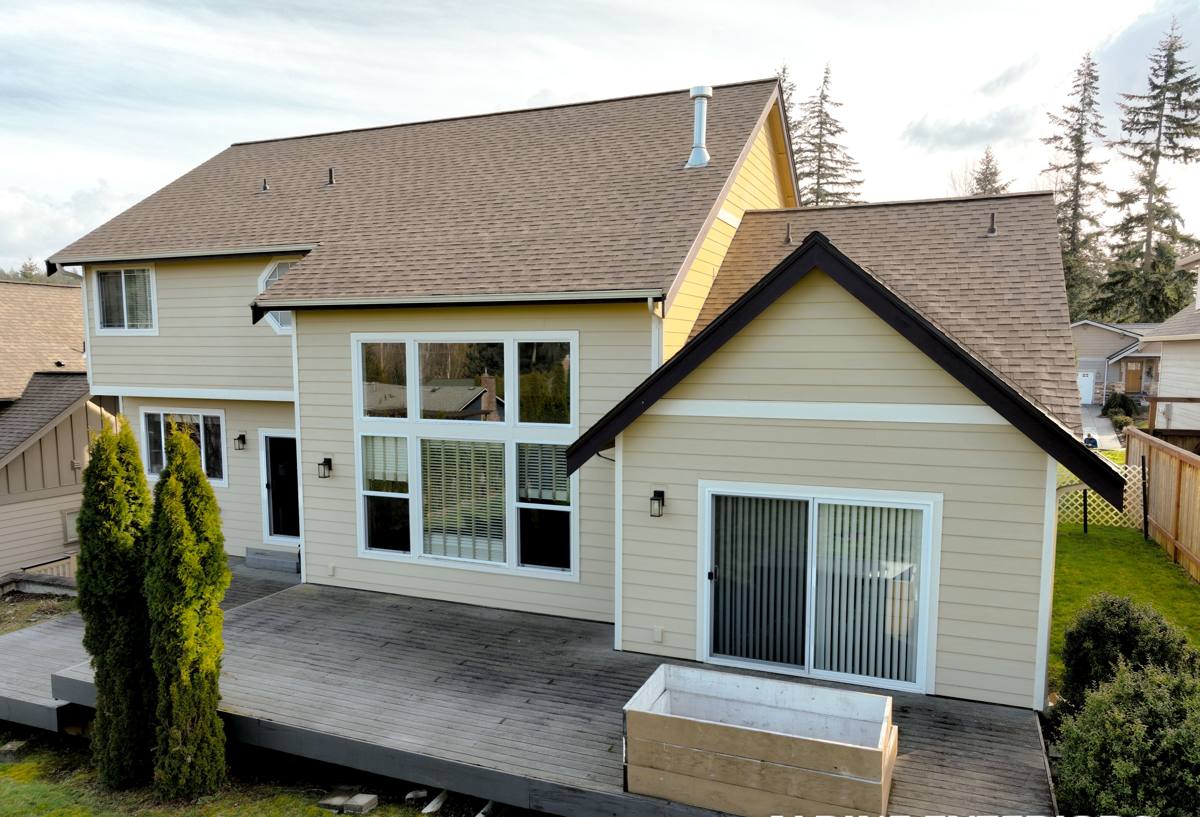
What Salt Air, Rain, and Moss Actually Do to a Roof
Salt Air
Airborne salt is corrosive to exposed metal — flashing, fasteners, vent stacks, gutter hardware. Over time it accelerates rust on lower-grade metal components and can degrade the coatings on some roofing accessories faster than the manufacturer's general climate ratings assume. This is one of the reasons we're particular about the grade of flashing and fastener hardware we use on homes near the water.
Wind-Driven Rain
Cherry Point catches weather straight off the water with little to break it up. Rain here doesn't always fall straight down — it drives sideways under wind pressure, which means it can work its way under shingle tabs, around poorly sealed penetrations, and into any gap in the underlayment that a calmer inland roof would never test. A roof system built for average rainfall, rather than wind-driven rainfall, is the single most common weak point we find during inspections in this area.
Moss
Whatcom County's damp, shaded, mild-temperature stretches are close to ideal moss-growing conditions, and waterfront neighborhoods like Cherry Point tend to stay damp longer into the season because of the marine air. Moss isn't just cosmetic — it holds moisture against the roofing surface, lifts shingle edges as it grows, and breaks down granule protection over time. A roof design that ignores moss resistance is signing up for a shorter service life.
How to Tell You Need a Full Replacement, Not a Repair
Not every roofing problem on a Cherry Point home means a full tear-off. But there are signs that reliably point toward replacement rather than patching:
- Granule loss heavy enough that you're finding grit in gutters and downspouts every season
- Shingles that are cupping, curling, or cracking across multiple slopes, not just one isolated area
- Soft spots in the decking when walked, or visible sagging along the roofline
- Recurring leaks in different spots after previous repairs, rather than one leak that keeps reopening
- Heavy, persistent moss or moisture staining across large sections rather than a shaded corner
- A roof that's reached or passed the practical service life of its material, especially if it was never designed for coastal exposure
If what you're seeing is limited to one slope, one flashing detail, or storm damage in a contained area, a repair may genuinely be the right call — we'll tell you that directly rather than pushing a replacement that isn't needed yet.
What a Correctly Built Roof Involves Here
A new roof installation is really a system of layered components, and every layer matters more in a coastal, high-moisture environment than it does inland.
Decking Inspection and Repair
Before anything goes down, the decking gets inspected for soft spots, rot, or delamination — common where moss or past leaks have let moisture sit against the sheathing over time. Any compromised decking gets replaced before new roofing goes on top of it. Roofing over bad decking just hides a problem that will resurface as a leak later.
Underlayment
Given the wind-driven rain this area sees, we treat underlayment as a real second line of defense, not a formality. Synthetic underlayments with strong water-holdout performance, properly lapped and fastened, matter more here than on a sheltered inland lot.
Flashing and Fastener Grade
Around chimneys, valleys, vents, and wall transitions, flashing quality is one of the biggest long-term differences between a roof that stays watertight and one that doesn't. In salt-air locations, we favor flashing and fastener materials with better corrosion resistance rather than the cheapest option that meets code — it costs a bit more up front and pays that back in fewer callbacks over the years.
Ventilation
Proper intake and exhaust ventilation keeps attic moisture from condensing against the underside of the decking — a real risk in a consistently damp marine climate. Poor ventilation is one of the quieter causes of premature decking rot, and it's easy to overlook because the symptoms don't show up until years later.
Moss-Resistant Details
Where appropriate, that can mean moss-resistant shingle products, or targeted metal flashing at ridges and valleys, which naturally discourages sustained moss growth in the areas most prone to holding moisture.
Comparing Roofing Materials for a Cherry Point Home
| Material | Coastal/Moisture Performance | Moss Resistance | Typical Lifespan | Cost Factor |
|---|---|---|---|---|
| Standard asphalt composition shingle | Good with proper underlayment and flashing | Moderate; benefits from moss-resistant granule options | 20-30 years | Lower upfront cost |
| Moss-resistant/algae-resistant shingle | Good | Better than standard shingle | 25-30 years | Modest premium over standard shingle |
| Metal roofing | Excellent shedding of wind-driven rain | Very good; sheds moss readily on steeper pitches | 40-60+ years | Higher upfront cost |
| Synthetic/composite roofing | Good, product-dependent | Good | Varies by product, often 30-50 years | Mid to upper range |
There's no single "correct" material for every Cherry Point home — it depends on your roof's pitch, your budget, how long you plan to stay in the home, and your appetite for long-term maintenance. We'll walk through the honest trade-offs for your specific roof rather than pushing whatever has the best margin.
Our Installation Process
- On-site assessment — We inspect the existing roof, decking condition, ventilation, and any trouble spots specific to your home's exposure to wind and water.
- Material and system recommendation — Based on pitch, exposure, and budget, we recommend a roofing system, not just a shingle brand — that includes underlayment, flashing grade, and ventilation upgrades if needed.
- Written estimate — A clear, itemized estimate so you know what you're paying for and why, before any work starts.
- Tear-off and decking repair — Old roofing is removed, decking is inspected, and any damaged sheathing is replaced.
- Underlayment and flashing installation — Installed with attention to laps and fastening patterns suited to wind-driven rain exposure.
- Roofing material installation — Installed to manufacturer specification, with extra attention to valleys, ridges, and penetrations where leaks most often start.
- Final walkthrough — We review the completed roof with you, including any maintenance recommendations specific to your property.
Permits and Whatcom County Considerations
New roof installations typically require a permit, and code requirements can touch on things like ventilation ratios, ice and water shield in valleys, and fastening schedules. We handle the permitting process as part of the job, so you're not left tracking down inspections or code details yourself. Being familiar with how these requirements apply to homes in and around Blaine — rather than treating it as generic statewide code — helps the job go through inspection without delays.
Maintaining a New Roof in a Cherry Point Climate
Even a well-built roof benefits from routine attention in this environment. A short annual checklist goes a long way:
- Clear gutters and downspouts before the fall rains set in, so water isn't backing up under roof edges
- Check for moss buildup each spring, especially on north-facing or shaded slopes
- Look for lifted or missing shingles after major windstorms off the water
- Keep overhanging branches trimmed back to reduce shade, debris, and abrasion on the roofing surface
- Have flashing around chimneys and vents checked periodically, since these are the first points to show wear in salt air
Why Local Experience in Cherry Point Actually Matters
A roofing crew that mostly works drier, more sheltered parts of Whatcom County can still do competent work — but they may not default to the flashing grade, underlayment approach, or ventilation detailing that a waterfront home in Cherry Point actually needs, because they haven't seen those roofs fail in this specific environment. A crew that regularly works this neighborhood already knows which details matter here and builds them in from the start, rather than treating your home like a standard inland job.
If you're weighing a new roof for a Cherry Point property, we're glad to walk the roof with you, give you a straight read on repair versus replacement, and put together a free, no-pressure estimate using the form below.